
BN-LINK 24-Hour Heavy Duty Mechanical Timer Outlet
4.5Editor score
15-minute pin intervals
No loose removable parts
ETL listed for safety
This guide compares the top grow light timers for indoor plants, hydroponics, and seasonal lighting to help you automate schedules and save energy.
Finding the right grow light timer ensures your indoor plants receive consistent light cycles for optimal growth. Automation eliminates guesswork and helps maintain strict photoperiods needed for flowering or vegetative stages. Without reliable timing, plants may suffer from light stress or energy waste. A quality timer provides the precision required to support healthy development year round.
We evaluated ten highly rated timers based on programming flexibility, durability, and ease of use. Each option was assessed for its ability to handle grow lights and other household appliances safely. The list includes digital and mechanical models suitable for various budgets and setup needs. Our analysis focuses on features that matter most to growers and homeowners.
Each pick highlights unique strengths such as multiple outlets, interval cycling, or outdoor durability. These tools help automate lighting schedules so you can focus on plant care instead of plug manipulation. Prices and availability may change over time so check current listings before purchasing. We aim to provide clear guidance for selecting the best match for your setup.
4.5Editor score

4.3Editor score

4.4Editor score
The following table provides a side-by-side look at key specifications for each timer to help you compare capabilities at a glance.




This digital timer stands out for its flexibility and reliability in indoor growing setups. It earned a 4.3 rating from users who value precise scheduling options for lights. The ability to program eight distinct on/off cycles gives growers control over complex photoperiods without manual intervention.
We may earn a commission when you buy through this link, at no additional cost to you.
Its dual outlets allow simultaneous control of paired lights or auxiliary equipment like fans. The backup battery ensures settings remain intact during power interruptions which is vital for consistent growth cycles. Daylight savings adjustment simplifies seasonal changes without reprogramming the unit entirely.
While the interface is straightforward it may take time to master all programming features. The limited number of outlets means it works best for single station setups. These trade-offs are acceptable given the robust functionality and safety certifications it offers.
Buyers seeking precise automation for indoor gardens will find this timer ideal. Its combination of programmability and safety features makes it a top recommendation for serious growers. For those needing simple daily cycles it remains a solid versatile choice.
Eight daily schedules allow complex lighting patterns for various plant stages.
ETL listing and backup battery ensure safe operation and consistent schedules.
We may earn a commission when you buy through this link, at no additional cost to you.
VIVOSUN offers a robust digital timer with twenty programmable groups for intricate scheduling needs. Its 4.2 rating reflects satisfaction with its advanced features and ease of programming. The independent outlets allow different devices to follow separate schedules which suits mixed equipment setups.
We may earn a commission when you buy through this link, at no additional cost to you.
The larger LCD display enhances readability compared to many compact units. A child lock function adds safety for households with curious kids. The countdown setting provides utility beyond standard cycling allowing timed operations for specific tasks.
Some users find the button layout slightly dense for quick adjustments. The side-entry design protects ports but may be hard to reach behind furniture. These minor inconveniences are outweighed by the depth of control provided.
Ideal for growers managing multiple systems this timer provides unmatched programmability. Its safety features and independent controls make it suitable for professional home setups. Beginners might prefer simpler models but power users will appreciate the options.
Separate outlet scheduling enables diverse device management from one unit.
Child lock and large screen improve safety and accessibility for all users.
We may earn a commission when you buy through this link, at no additional cost to you.
This mechanical timer provides reliable performance without electronic complexity. It holds a 4.5 rating for its durability and ease of use in basic lighting automation. The 24-hour cycle with 15-minute pin intervals offers sufficient precision for most grow lights.
We may earn a commission when you buy through this link, at no additional cost to you.
Its no loose parts design prevents lost components and ensures long-term usability. The grounded outlet supports high-wattage appliances safely. Simple push-pin scheduling makes setup quick for users uncomfortable with digital interfaces.
Limited to daily repetition this timer cannot handle week-long variations in light schedules. The mechanical dial may wear over extended heavy use. For consistent daily cycles these limits are acceptable and the price remains attractive.
Best for budget-conscious buyers needing simple automation this timer delivers solid value. Its simplicity makes it ideal for beginners or secondary lights. While less flexible than digital units it performs reliably for routine tasks.
Built-in dial eliminates loose pins to ensure long-lasting mechanical operation.
Push-pin design allows quick setup without manuals or learning curves.
We may earn a commission when you buy through this link, at no additional cost to you.
This four-pack offers excellent value for automating multiple grow lights or lamps. Rated 4.5 by users it provides basic mechanical reliability for consistent daily cycling. Each unit supports 30-minute intervals sufficient for standard light schedules.
We may earn a commission when you buy through this link, at no additional cost to you.
The manual override switch allows immediate control without reprogramming. Fireproof ABS material enhances safety in indoor environments. With four units you can distribute scheduling across several rooms or systems easily.
Limited to one outlet per timer means multiple units are needed for paired devices. The 30-minute intervals lack precision for delicate plants requiring short light bursts. For general indoor use these limits are manageable given the bulk discount.
Ideal for expanding setups this bundle lets you equip an entire grow area. The simplicity ensures low maintenance and reliable operation. Beginners buying multiple timers will find this package cost-effective and practical.
Four timers allow comprehensive automation for multi-light indoor gardens.
Fireproof materials and override switches provide safe easy daily control.
We may earn a commission when you buy through this link, at no additional cost to you.
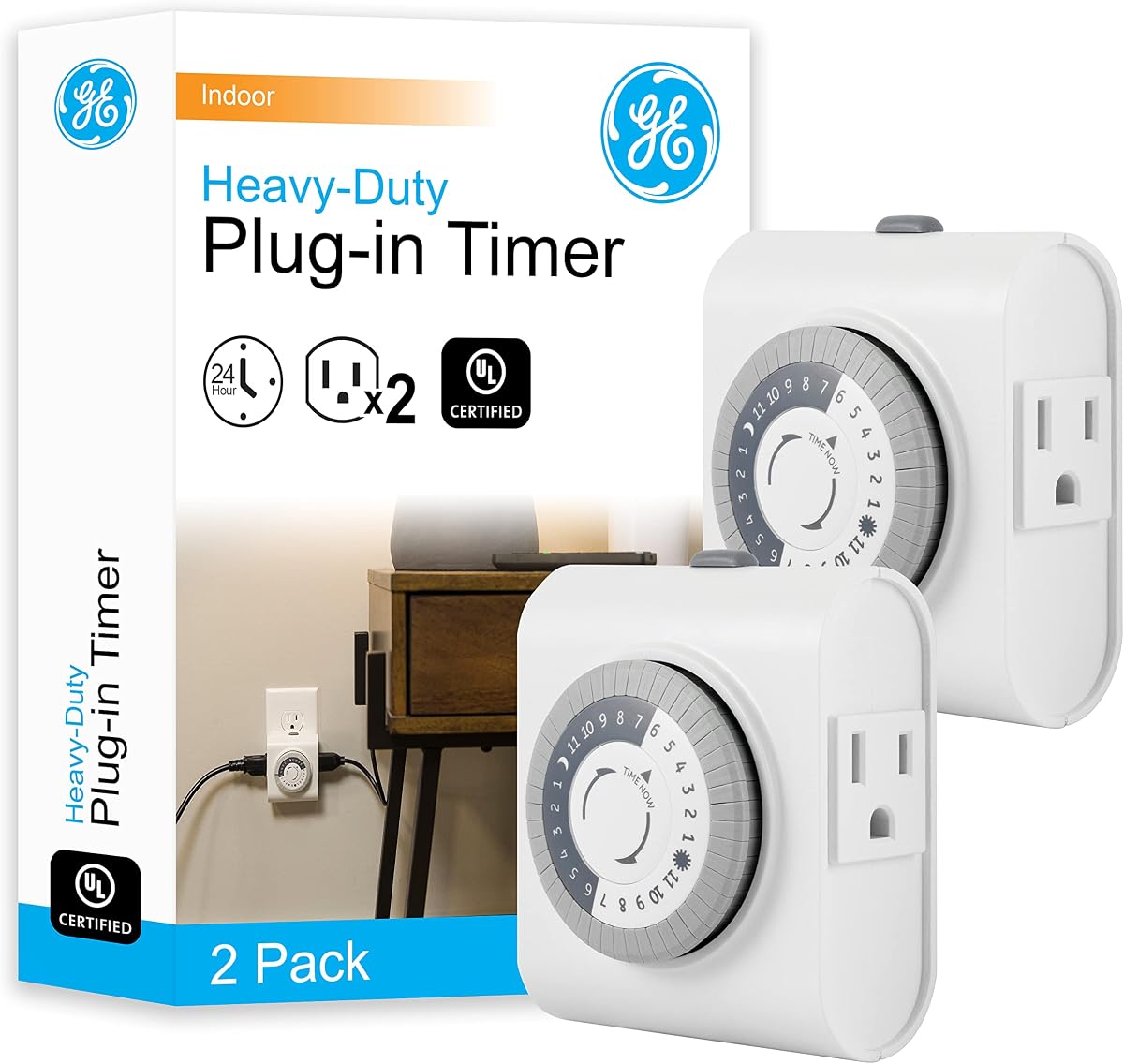
GE provides two compact mechanical timers with dual outlets for synchronized control. Their 4.6 rating highlights user satisfaction with reliability and ease of use. Pushpins simplify scheduling without complex digital menus or batteries required.
We may earn a commission when you buy through this link, at no additional cost to you.
Each unit controls two outlets which reduces outlet demand for multi-light setups. The compact design blends into living spaces without clutter. Manual override allows temporary changes without resetting the entire cycle.
Daily cycles limit flexibility for varying photoperiods across the week. The pushpin design may be slightly less durable than built-in dials in heavy use. For standard indoor gardening these trade-offs are acceptable and widely accepted.
Best for users needing paired outlet control this set offers simplicity and trust. The high rating reflects solid build quality and practical function. It suits growers who prioritize straightforward daily automation.
Two outlets per unit streamline control for paired grow lights or fans.
Pushpin interface ensures quick setup without technical skills or power.
We may earn a commission when you buy through this link, at no additional cost to you.
This digital timer excels in quiet operation ideal for living spaces. A 4.5 rating reflects satisfaction with its silent functionality and reliable memory retention. The compact design avoids blocking adjacent outlets which is practical for tight spaces.
We may earn a commission when you buy through this link, at no additional cost to you.
Three daily repeat programs allow basic flexibility without overwhelming complexity. The large display simplifies setting adjustments at a glance. Memory retention keeps schedules intact if unplugged briefly without reconfiguration.
Single outlet limits control for paired devices requiring one timer. Three groups may not suffice for advanced growers needing varied cycles. These constraints are minor for casual indoor gardening needs.
Best for bedrooms or quiet areas this timer delivers discreet automation. Its memory and simplicity appeal to users wanting set-and-forget reliability. It suits those prioritizing low noise over advanced scheduling.
Clickless mechanism ensures noiseless cycling perfect for home living spaces.
Settings remain after brief power loss reducing reprogramming needs.
We may earn a commission when you buy through this link, at no additional cost to you.
This dual outlet mechanical timer provides robust performance for high-wattage grow lights. Its 4.4 rating stems from durability and straightforward setup. The built-in pin dial offers precise 15-minute intervals for consistent daily scheduling.
We may earn a commission when you buy through this link, at no additional cost to you.
Two outlets allow simultaneous control of paired equipment. UL listing ensures electrical safety under heavy loads. No batteries or electronics mean it works reliably even during long power outages.
Mechanical dials may eventually loosen with frequent manual adjustments. The daily cycle lacks flexibility for week-long lighting patterns. These limitations are acceptable for growers prioritizing durability over complex programming.
Best for heavy-duty applications this timer offers reliability and safety. Its dual outlets and rugged construction suit commercial home setups. Simplicity ensures it functions without electronic complications or battery changes.
Robust mechanical design withstands daily adjustments and high loads.
Pin dial interface removes electronic dependencies for consistent operation.
We may earn a commission when you buy through this link, at no additional cost to you.
This timer is designed for outdoor exposure to protect lighting systems. Rated 4.5 it combines waterproof durability with standard mechanical simplicity. The 48-pin layout allows precise scheduling for outdoor grow lights or decor.
We may earn a commission when you buy through this link, at no additional cost to you.
Rainproof casing shields internals from moisture extending device life. Two grounded outlets support outdoor pumps or fixtures safely. ETL listing ensures it meets safety standards for wet environments.
It may feel bulky indoors due to weatherproof casing. The manual dial limits flexibility compared to digital options. For outdoor applications these trade-offs are necessary for protection.
Ideal for outdoor grow lights this timer ensures reliable weatherproof automation. Its safety and durability make it suitable for garden or patio setups. Users needing indoor use may prefer lighter options.
Rainproof casing ensures safe operation in outdoor garden environments.
Dual grounded outlets protect connected devices from electrical risks.
We may earn a commission when you buy through this link, at no additional cost to you.
This timer offers advanced cycling beyond standard 24-hour patterns. It holds a 4.4 rating for versatility in managing lights needing varied on-off intervals. The infinite repeat mode supports specialized hydroponic or ventilation needs.
We may earn a commission when you buy through this link, at no additional cost to you.
Safety features like V0 fireproof housing and child lock protect households. The countdown delay helps prevent sudden power surges to connected electronics. A large screen ensures clear visibility for all settings.
Complex programming may overwhelm users wanting quick daily cycles. Higher cost reflects premium features not always needed for basic plants. For specialized grow setups the added control justifies the investment.
Best for advanced growers this timer provides unmatched cycling flexibility. Its safety and versatility suit systems needing precise power interruption. Casual users may find it more than required.
Infinite repeat and countdown modes suit specialized hydroponic lighting.
Fireproof housing and child lock ensure safe home operation.
We may earn a commission when you buy through this link, at no additional cost to you.
This timer supports short-cycle intervals for specialized ventilation or watering. Its 4.5 rating reflects reliability in hydroponic or aeroponic systems needing intermittent power. Customizable on-off cycles range from seconds to minutes for precise control.
We may earn a commission when you buy through this link, at no additional cost to you.
Day and Night modes allow automatic switching based on light conditions. The photocell option automates cycles by ambient light levels reducing manual effort. Simple dial setup keeps operation intuitive for non-electronic users.
Complexity may deter users seeking simple daily on-off routines. Extra cost for sensor features may not suit all growers. For those needing brief cycles this functionality provides essential utility.
Best for hydroponic setups this timer delivers tailored interval control. Its safety and sensor options support advanced automation needs. Casual indoor gardeners may prefer simpler daily timers.
Short intervals support precise control for ventilation and water pumps.
Photocell sensor adds automatic dusk-to-dawn switching for convenience.
We may earn a commission when you buy through this link, at no additional cost to you.
Selecting a grow light timer requires understanding how it supports your setup and schedule needs.
Digital timers allow multiple daily programs while mechanical units usually follow daily cycles. Choose digital for varying light schedules across the week or mechanical for simple consistent routines.
Check how many programs a unit supports if you need complex cycles for plant growth phases.
Single outlet timers work for one device while dual outlet units control paired lights or fans. Ensure the timer matches your total equipment count without needing extra outlets.
Dual outlets streamline setups by reducing the number of plugs required for multiple devices.
Mechanical timers often use 15 or 30-minute intervals whereas digital ones can adjust to minutes. Precise intervals matter for plants needing strict light exposure durations.
Look for models offering short interval settings if your grow schedule demands exact timing.
Timers should be ETL or UL listed to ensure safe electrical operation under load. Check the wattage rating to ensure it handles your grow lights without overheating.
Prioritize grounded outlets and fireproof materials especially for high-wattage grow equipment.
Digital timers with battery backup preserve schedules during power outages which prevents disruptions. Mechanical units naturally retain settings but may require resetting if physically unplugged.
Memory retention ensures your plants receive consistent light cycles regardless of grid stability.
Outdoor timers require waterproof casings to protect against moisture and weather elements. Indoor models are compact but not rated for wet conditions.
Match the timer environment to your grow location to prevent corrosion or electrical hazards.
Push-pin mechanical timers offer quick setup while digital units may require reading manuals. Consider your comfort with electronics when choosing between manual and digital interfaces.
User-friendly displays and buttons reduce frustration and help maintain correct scheduling.
Plug the timer into the wall outlet before connecting your grow light or accessory device. Set the current time using the dial or buttons to synchronize the internal clock with local time.
For mechanical timers press pins down to mark on times and leave them up for off periods. Digital models use menus to input start and end times for each program group.
Test the timer by setting a short cycle to confirm the connected device powers on and off as expected. Periodically check settings to ensure consistency especially after power outages or daylight savings changes.
Most rated timers support 15A loads which accommodate typical indoor grow lights. Always check the wattage rating on the timer before connecting high-power bulbs to prevent overheating.
Mechanical timers retain settings naturally but may lose synchronization if the power remains off. Digital timers with battery backup store settings and continue accurate timing after power returns.
Digital timers offer more flexibility but often require more steps to program. Mechanical timers are quicker for daily on-off schedules but lack weekly variations.
Only use timers rated as waterproof for outdoor applications. Indoor timers may fail when exposed to moisture or rain in garden settings.
Mechanical timers typically use 15 or 30-minute intervals while digital ones can adjust to single-minute steps. Choose based on your need for exact photoperiod control.
Mechanical timers keep pin positions but digital timers reset unless they have battery backup. Reinsert the timer and verify settings if it was unplugged briefly.
The BN-LINK Indoor 7-Day Programmable Digital Timer Outlet stands out for its balance of flexibility and reliability. Mechanical options like the BN-LINK 24-Hour Heavy Duty Timer offer value for simpler schedules.
Prioritize timers with adequate outlet count and safety ratings to protect your equipment. Advanced users may prefer digital units with memory and countdown features for specialized needs.
Check current pricing and availability before purchasing since details change over time. Selecting the right timer helps maintain consistent light cycles essential for healthy indoor plant growth.