
Entina Tina2C
4.4Editor score
Starter mini size
WiFi control included
STEM modules available
This guide compares the top 3D printers for educational use, highlighting features like ease of use, safety, and performance for students and classrooms.
Finding the right 3D printer for educational use requires balancing ease of use with robust performance. Schools and home educators need machines that minimize setup time while maximizing creative potential for students of all ages.
We compared ten leading models based on speed, safety features, software compatibility, and overall reliability. Each product was evaluated for its ability to support STEM learning objectives and withstand frequent classroom use.
Each pick below highlights key strengths and potential limitations to help you make an informed decision. Keep in mind that product availability and pricing may change over time so verify details before purchasing.
4.4Editor score

4.7Editor score

4.5Editor score
The following table provides a side-by-side comparison of all ten models. Use this to quickly identify key specifications like speed, build volume, and special educational features.




The Bambu Lab A1 stands out as a top choice for educational settings due to its fully automated calibration and high-speed performance. With a 4.7 rating it delivers precision and reliability that suits both beginners and advanced students.
We may earn a commission when you buy through this link, at no additional cost to you.
Its full-auto calibration eliminates the need for manual leveling, allowing students to focus on design rather than technical adjustments. The high acceleration of 10,000 mm/s² ensures quick print times which is crucial for classroom projects.
While the AMS lite for multi-color printing is sold separately, the base unit remains highly capable. Some users may find the build volume smaller than industrial models, but it remains sufficient for most educational prototypes.
This printer is ideal for schools seeking a reliable machine that minimizes maintenance and maximizes student creativity. The combination of speed and user-friendly features makes it a strong recommendation for STEM programs.
The full-auto calibration ensures every print starts smoothly without requiring technical expertise from students.
Active motor noise canceling allows printing during class hours without causing distractions.
We may earn a commission when you buy through this link, at no additional cost to you.
The Entina Tina2C is designed specifically for kids and beginners, offering a simplified experience that reduces frustration. With a 4.4 rating it provides a friendly entry point into 3D printing with guided setup via app.
We may earn a commission when you buy through this link, at no additional cost to you.
It supports both WiFi and offline modes allowing flexibility in classroom environments where network access may vary. The built-in STEM modules and large model library encourage creativity and learning without needing external resources.
The compact size is perfect for small desks or limited classroom space but limits the size of printable objects. Material support is basic but sufficient for standard PLA projects common in educational settings.
This model is highly recommended for elementary or middle school programs focused on introducing 3D printing concepts. Its ease of use and affordability make it accessible for schools with limited budgets.
The Poloprint Cloud app provides AI search and STEM courses tailored for young users.
Support for offline printing ensures classes can continue even without internet access.
We may earn a commission when you buy through this link, at no additional cost to you.
The Snapmaker U1 offers a unique multi-toolhead system that enables true multi-material printing without manual swaps. With a 4.5 rating it suits advanced educational programs needing complex part fabrication.
We may earn a commission when you buy through this link, at no additional cost to you.
The 5-second tool changer reduces waste and increases productivity significantly compared to traditional systems. This feature allows students to experiment with different materials like flexible TPU and rigid PLA in one print.
While the price is higher than entry-level models the efficiency gains justify the cost for dedicated maker spaces. The system may be complex for very young students but is perfect for high school or college levels.
This printer is best suited for institutions focused on engineering or product design courses. Its robust capabilities and automation features streamline workflows for professional-level educational projects.
The automatic tool changer reduces material waste by up to five times during complex prints.
Support for rigid and flexible materials enables functional prototypes in single prints.
We may earn a commission when you buy through this link, at no additional cost to you.
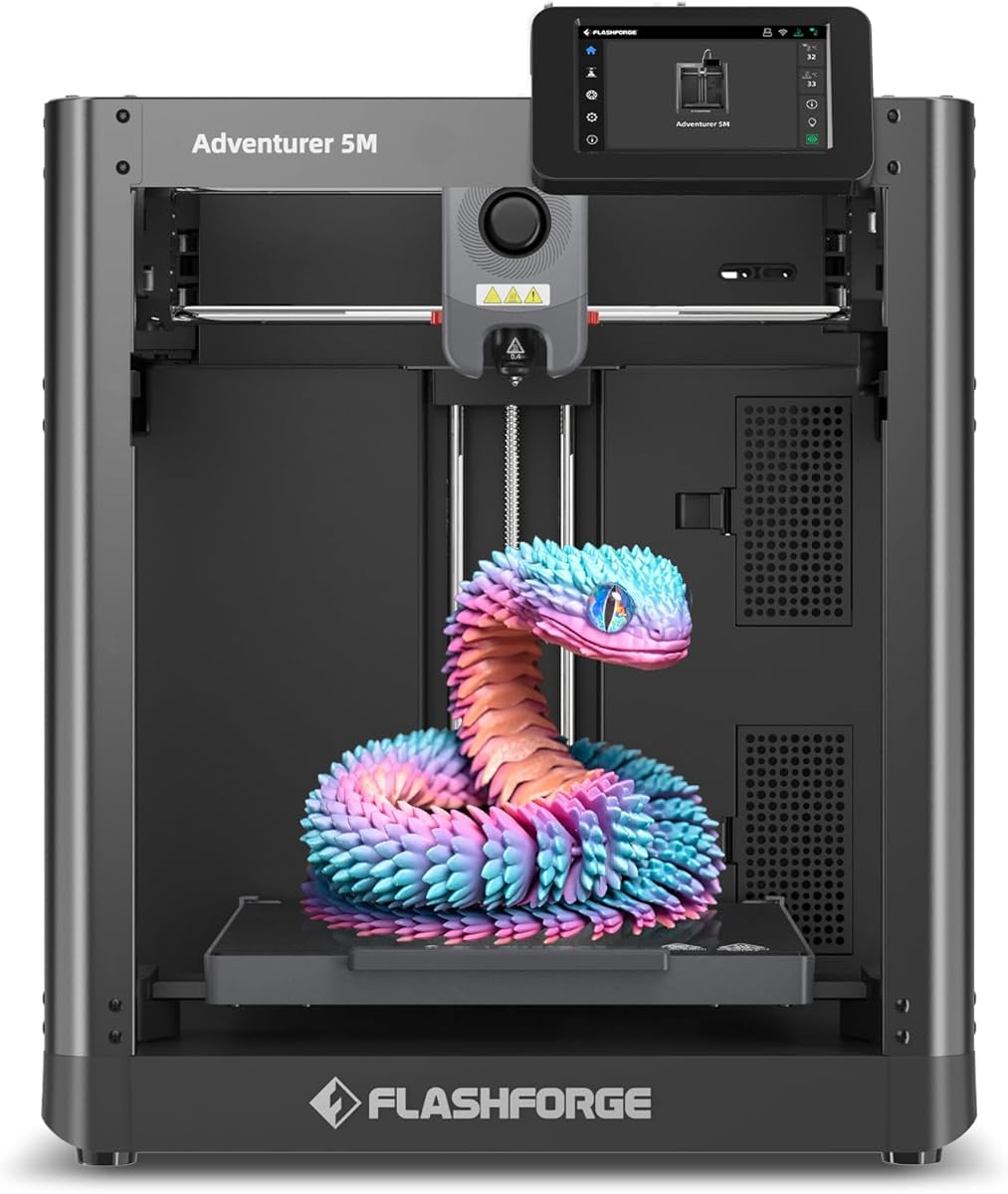
The FLASHFORGE Adventurer 5M offers high-speed performance suitable for rapid prototyping in educational environments. With its CoreXY structure and direct extruder it provides a balance of speed and precision for various projects.
We may earn a commission when you buy through this link, at no additional cost to you.
Features like auto leveling and app monitoring reduce the administrative burden on teachers during class time. The detachable nozzle allows for quick changes between different filament types for diverse assignments.
However the lower average rating suggests some reliability concerns compared to competitors. Users may experience initial setup hurdles which require careful supervision when working with student groups.
This model is recommended for schools needing fast turnaround for large batches of student prints. The speed features are beneficial for time-constrained curricula but maintenance should be considered.
The Flash Studio app allows teachers to monitor prints remotely and manage status alerts.
High acceleration and travel speeds minimize wait times between student design iterations.
We may earn a commission when you buy through this link, at no additional cost to you.
The Bambu Lab P1S features an enclosed design that allows printing of advanced materials like ABS and ASA. With a 4.5 rating it offers reliability and high-speed performance suitable for high school or college labs.
We may earn a commission when you buy through this link, at no additional cost to you.
Its ability to handle engineering-grade filaments makes it versatile for technical courses requiring durable parts. The auto bed leveling and quick setup ensure students spend more time designing than troubleshooting.
The multi-color capability requires an AMS unit which adds to the cost. While the base printer is capable, full color potential is unlocked only with additional components.
This printer is recommended for programs needing high-quality prints or specific materials. The enclosed chamber maintains safety and quality control in busy educational environments.
The enclosed body maintains temperature for stable printing of ABS and other engineering materials.
Setup takes about 15 minutes allowing quick deployment in new classroom settings.
We may earn a commission when you buy through this link, at no additional cost to you.
The FLASHFORGE AD5M combines durability with ease of use through its all-metal CoreXY structure. With a 4.3 rating it provides reliable printing for educational programs needing consistent results.
We may earn a commission when you buy through this link, at no additional cost to you.
Its fully automatic calibration system ensures flawless first layers reducing wasted filament during student projects. The quick-swap nozzle simplifies maintenance tasks that might otherwise disrupt lesson plans.
Remote monitoring via app allows teachers to manage devices across a lab efficiently. However the software interface may have a learning curve for those new to 3D printing ecosystems.
This model is well-suited for schools with multiple printers where centralized control is beneficial. Its robust design and power loss recovery make it a practical choice for long print jobs.
The Orca-flashforge slicer enables network monitoring and batch file transmission for labs.
Resume after outage saves ongoing layers preventing loss of progress during power cuts.
We may earn a commission when you buy through this link, at no additional cost to you.
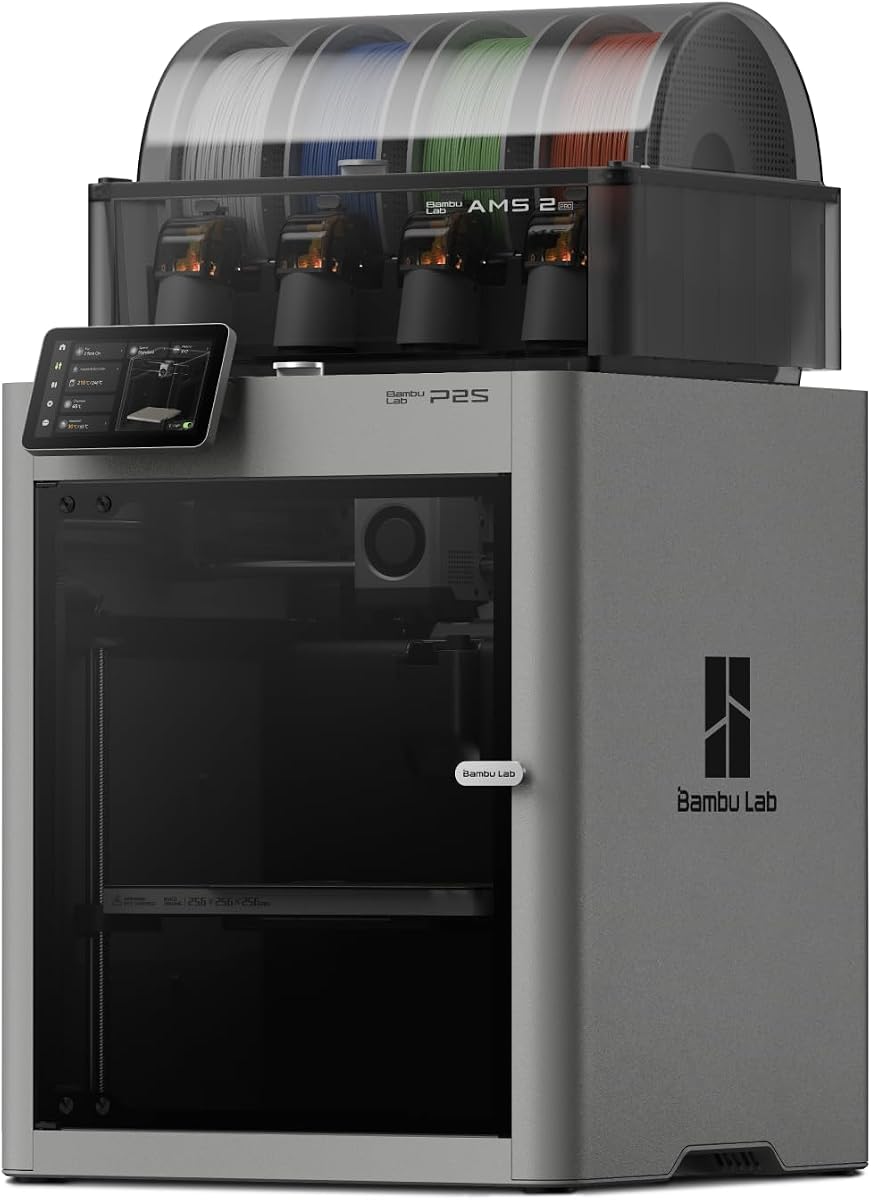
The Bambu Lab P2S Combo provides a complete multi-color printing experience with the AMS 2 Pro included. With a 4.7 rating it stands out for its precision and advanced features tailored for serious educational use.
We may earn a commission when you buy through this link, at no additional cost to you.
Its high-speed capabilities and AI failure detection ensure efficient use of class time and material resources. The built-in filament drying helps maintain print quality by keeping moisture out of the spool.
While the price is premium the included AMS unit simplifies multi-color projects without additional hardware purchases. Setup is quick allowing teachers to start lessons immediately after unboxing.
This model is ideal for schools focusing on industrial design or art where color differentiation is key. The advanced automation reduces the need for constant supervision during long prints.
The AMS 2 Pro dries filament up to 65°C ensuring consistent quality for all prints.
AI detection alerts users to issues early preventing wasted prints in busy labs.
We may earn a commission when you buy through this link, at no additional cost to you.
The Ugee Funbox is tailored for children with safety certifications and AI-powered features that simplify creation. With a 4.6 rating it provides a safe environment for young learners to explore design.
We may earn a commission when you buy through this link, at no additional cost to you.
Its UL GREENGUARD certification ensures low emissions and safe air quality in classrooms. The AI tools allow kids to turn drawings or photos into 3D models instantly without needing CAD skills.
The print volume is smaller which limits larger builds but suits small educational projects well. While it only prints single-color PLA the toy library and assembly kits foster creativity.
This printer is best for elementary classrooms or home education focused on creative play and STEM. The safety features and guided courses make it a reliable choice for younger students.
Four AI engines let kids turn voice, text, or photos into printable 3D models.
HEPA filters and low-emission materials ensure clean air during printing sessions.
We may earn a commission when you buy through this link, at no additional cost to you.
This version of the Adventurer 5M includes vibration compensation to improve print quality at high speeds. With a 4.3 rating it offers strong performance for general educational printing tasks.
We may earn a commission when you buy through this link, at no additional cost to you.
The dual-sided PEI plate provides versatility for different materials like PLA and PETG. Its power loss recovery and run-out sensors help prevent failed prints in unattended classroom settings.
The open design allows better cooling but may require more ventilation depending on the material used. Noise levels are present during high-speed operation which might be distracting in quiet environments.
This printer is a solid option for programs needing speed and reliability without high costs. Its safety features like run-out sensors make it practical for schools with limited staff oversight.
Vibration compensation eliminates ghosting ensuring cleaner finishes on printed objects.
The PEI plate supports various materials and offers textured and smooth sides.
We may earn a commission when you buy through this link, at no additional cost to you.
The Bambu Lab A1 Mini Combo offers a compact solution with multi-color printing included via AMS lite. With a 4.2 rating it fits well in spaces where desk real estate is limited.
We may earn a commission when you buy through this link, at no additional cost to you.
Its pre-assembled design and fast setup allow immediate use for lessons. The AMS lite enables color changes without manual intervention which is excellent for detailed small parts.
The build volume is small limiting the size of printable objects but perfect for jewelry or figurines. Noise cancellation ensures a quiet environment suitable for classrooms or offices.
This model is ideal for individual student workstations or small projects requiring color detail. Its compact size and automation make it accessible for varied educational needs.
The combo includes AMS lite allowing multi-color prints right out of the box.
Pre-assembled design ensures the first print setup takes around 20 minutes.
We may earn a commission when you buy through this link, at no additional cost to you.
Selecting the right 3D printer for educational use involves evaluating safety, software, and maintenance needs. Below are key factors to consider before purchasing.
Ensure the printer is enclosed and has proper air filtration to protect students from fumes. Models with UL certifications or HEPA filters provide cleaner environments for classrooms.
Look for enclosed designs and certifications that minimize exposure to harmful particles.
Automatic calibration reduces downtime and frustration during student projects. Printers with auto-leveling save valuable class time and improve success rates.
Choose models with full-auto calibration to minimize technical barriers for students.
User-friendly software and mobile apps help students manage prints remotely. Integrated libraries of models or learning modules add educational value.
Select printers with robust software ecosystems that include guided learning tools.
Higher speed capabilities are essential for classroom environments where time is limited. Consider build volume to ensure it accommodates the scale of your student projects.
Balance speed and size to match the curriculum's demands and available desk space.
Support for various filaments like PLA PETG or ABS expands project possibilities. Enclosed models often support more technical materials for advanced learners.
Verify filament compatibility based on the types of projects your program will run.
Robust construction and easy maintenance features ensure longevity in busy classrooms. Quick-swap nozzles and power recovery reduce interruptions during critical work.
Prioritize durable builds with tools that minimize maintenance tasks for staff.
Consider not only the printer cost but also accessories like filaments or AMS units. Budget-friendly options may lack advanced features that benefit educational outcomes.
Evaluate total cost of ownership including consumables and potential upgrades.
Network monitoring features allow teachers to control multiple printers from one interface. This capability is crucial for schools with several units in different classrooms.
Check for multi-device management capabilities if scaling your 3D printing lab.
Begin by placing the printer on a stable surface and ensuring proper ventilation for the materials you plan to use. Follow the manufacturer's initial setup steps which often include calibration and filament loading.
Regularly clean the build plate and check nozzle condition to maintain consistent print quality. Use recommended filaments and avoid materials not compatible with your specific printer model.
Schedule routine maintenance checks such as tightening screws or replacing nozzles. Keep firmware updated to access new features and ensure continued reliability over time.
Printers with fully enclosed bodies and low emission certifications like Ugee Funbox or Bambu Lab P1S are safest. These models include HEPA filters and prevent exposure to harmful particles.
Auto calibration removes the need for manual bed leveling which reduces setup time and errors. Students can focus on designing models instead of troubleshooting technical issues during projects.
Yes models like the Bambu Lab A1 and SNAPmaker U1 offer advanced capabilities suitable for high school projects. They support various materials and complex designs for engineering courses.
Multi-color printers enhance creativity but are not strictly necessary for all projects. Start with single-color models and upgrade as student needs grow to manage costs effectively.
Software compatibility is critical for accessing models and managing prints efficiently. Look for printers with open or user-friendly software that integrates well with standard design tools.
PLA is the best starting filament due to its ease of use and low odor. It is safe for classroom environments and works well with most educational printer models available.
The top picks for 3D printers for educational use include the Bambu Lab A1 Entina Tina2C and Snapmaker U1. These models offer reliability and features tailored for student needs.
Prioritize safety calibration and ease of use to ensure successful learning outcomes. Choose a model that fits your curriculum and budget to maximize educational impact.
Always check current pricing and availability before purchasing as details may vary over time. Verify support options to ensure ongoing assistance for your school or home setup.