
Pyle Premium Direct Injection
4.5Editor score
Affordable entry level
Simple plug and play
Effective hum elimination
Finding the right bass direct box ensures your low end translates clearly from stage to speaker. A good unit manages impedance, eliminates hum, and protects your signal from interference during critical performances.
We evaluated ten highly-rated models based on build quality, transformer technology, and real-world feedback. Our selection covers passive and active options suitable for beginners and seasoned professionals alike.
Each pick highlights specific strengths like durability, sound clarity, or versatility. Keep in mind that prices and availability can change quickly, so verify current details before making your final decision.
4.5Editor score

4.8Editor score
4.8Editor score
As an Amazon Associate we earn from qualifying purchases.
The following table offers a side-by-side look at the key specifications and features of each model. This helps you quickly identify which unit matches your specific recording or live sound needs.




The Whirlwind IMP 2 stands out as a top performer in our comparison. It combines high fidelity sound with a compact footprint that fits perfectly on any pedalboard or rack.
We may earn a commission when you buy through this link, at no additional cost to you.
Its built-in TRHL transformer ensures clean signal conversion without introducing noise. This makes it ideal for connecting instruments to mixers where tone integrity is paramount.
While it lacks a pad switch for high output sources, its performance in standard scenarios is exceptional. The riveted construction adds significant durability compared to glued alternatives.
If you need a reliable single channel solution that balances cost and quality, this unit is the clear winner for most users and engineers.
The TRHL transformer converts instrument signals to mic levels efficiently. This preserves tonal details while ensuring compatibility with standard mixing consoles.
Despite its small size, the chassis is built to withstand heavy use. It is lightweight enough for touring yet tough enough for permanent studio installation.
We may earn a commission when you buy through this link, at no additional cost to you.
The Pyle Premium Direct Injection Box offers incredible value for musicians on a tight budget. It provides essential features like ground lift and attenuation without a high cost.
We may earn a commission when you buy through this link, at no additional cost to you.
Its ability to eliminate hum makes it useful in noisy venues or setups with multiple devices. The input attenuator helps manage signal levels from powerful sources.
Build quality is simpler than professional units, but it holds up for home or small gig use. It serves well as a backup unit or starter tool.
For those needing a functional direct box without breaking the bank, this model delivers solid performance for its price point.
This box allows beginners to access balanced XLR connections easily. It removes the barrier of cost for proper signal routing to a PA system.
The input attenuator prevents clipping from high output instruments. This feature adds versatility that is often missing in cheaper budget direct boxes.
We may earn a commission when you buy through this link, at no additional cost to you.
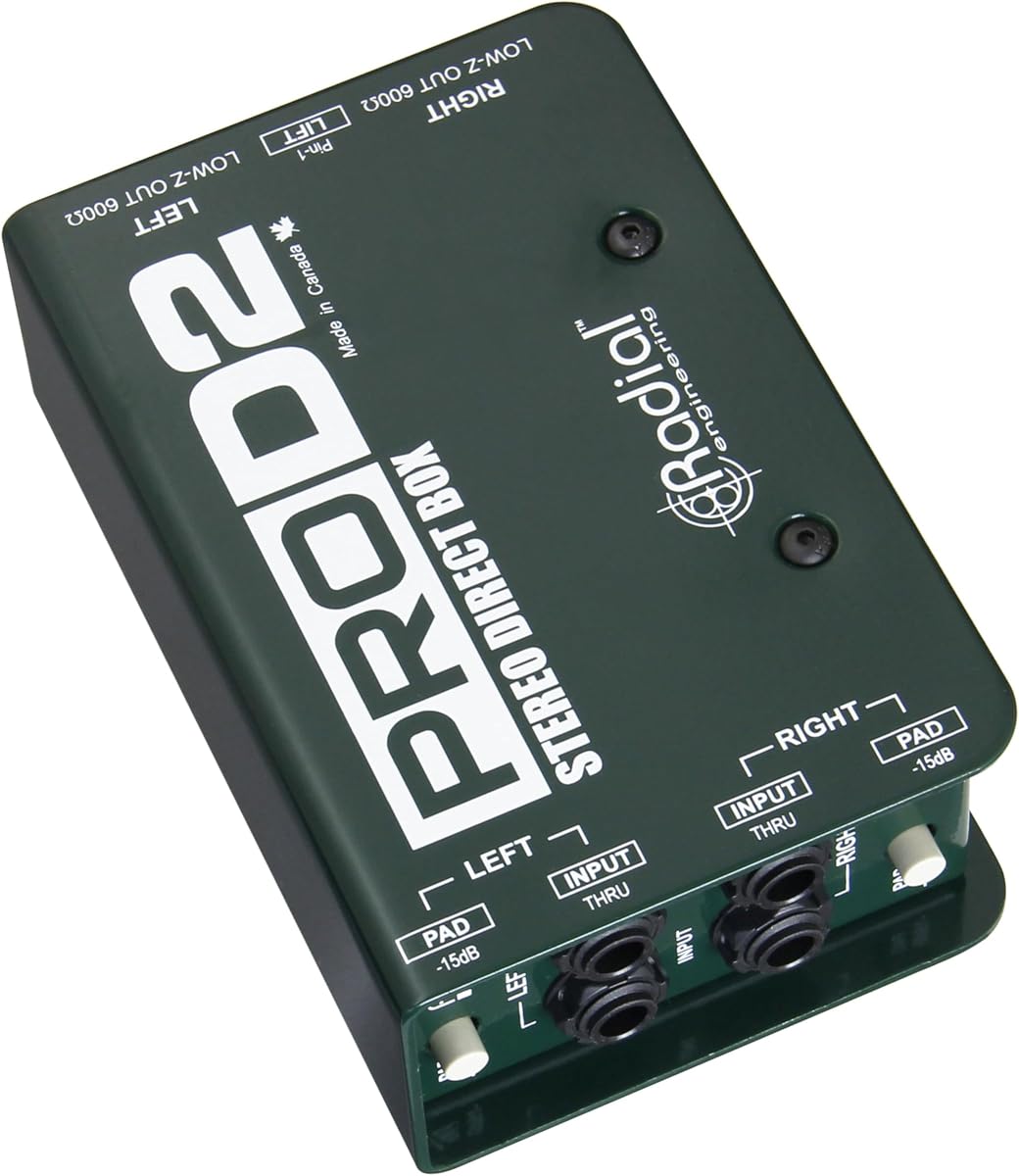
The Radial ProD2 represents the pinnacle of passive direct box design. It handles stereo signals with ease, making it perfect for keyboards or synths alongside bass.
We may earn a commission when you buy through this link, at no additional cost to you.
Its isolation transformer provides excellent rejection of interference and ground loop noise. This ensures clean audio even in electrically noisy environments.
The chassis is rugged enough to survive the rigors of touring without compromise. It is a long-term investment that performs flawlessly over many years.
If you demand the highest quality and stereo capability, this unit is the definitive choice for professional applications.
This box keeps left and right channels separate without summing. It maintains the width and depth of stereo instruments during live mixing.
The custom transformer blocks electromagnetic interference completely. This ensures your signal remains pristine regardless of cable length or venue conditions.
We may earn a commission when you buy through this link, at no additional cost to you.
The Pyle PDC21 features a steel chassis that adds significant weight but also durability. It is a solid passive option for those needing a robust box.
We may earn a commission when you buy through this link, at no additional cost to you.
Its hum eliminator effectively removes buzz from unbalanced signals. This is crucial for getting a clean tone from older equipment or noisy venues.
The attenuator helps manage levels for various instruments. While basic, it provides the necessary tools for reliable signal conversion.
This model is best suited for users who prioritize construction over advanced features.
The all steel chassis protects internal components well. It adds to the longevity of the unit during travel or heavy studio use.
Noise cancellation features ensure clear output. This makes it easier for engineers to mix signals without unwanted interference.
We may earn a commission when you buy through this link, at no additional cost to you.
The Radial Pro DI is a compact powerhouse known for its rugged I-beam construction. It fits easily into tight rack setups or pedalboards without taking up space.
We may earn a commission when you buy through this link, at no additional cost to you.
Its custom transformer delivers clean signal transfer suitable for professional recording. This ensures your bass tone translates accurately to the PA system.
While it lacks extra switches like pads, its simplicity means fewer points of failure. It is a workhorse for bassists needing a direct signal path.
For anyone wanting a reliable small box, this unit is highly recommended by pros.
The I-beam chassis provides strong structural integrity. It protects the internal transformer from physical shocks and drops.
With minimal controls, operation is straightforward. This reduces setup time during live performances when speed is essential.
We may earn a commission when you buy through this link, at no additional cost to you.
The PYLE-PRO PDC22 offers two input channels in a single box. This is convenient for setups with multiple instruments needing DI conversion.
We may earn a commission when you buy through this link, at no additional cost to you.
Its steel chassis adds significant durability and a high-quality feel. The hum eliminator helps clean up signals before they reach the mixer.
While the knobs may feel less premium, the core functionality works well. It provides versatility for small bands at a low cost.
This unit is a practical choice for dual instrument routing.
Having two inputs allows for quick switching. This saves space and cables when running two signals to one output.
The hum eliminator effectively cancels out interference. This ensures your recordings or live mixes remain clean and focused.
We may earn a commission when you buy through this link, at no additional cost to you.
The Bolanle DB2 is a compact and portable unit designed for musicians on the go. Its scratch-resistant design ensures it stays looking new despite frequent use.
We may earn a commission when you buy through this link, at no additional cost to you.
It includes a ground lift switch to eliminate noise interference. The signal attenuation switch helps prevent overload on high-gain sources.
This box balances features and cost effectively. It serves well as a reamp box or stereo converter for synths.
Ideal for touring musicians needing a lightweight yet capable box.
The attenuation switch allows precise level matching. This prevents clipping and ensures optimal input levels for your mixer.
Its compact size makes it easy to pack. This is perfect for gigging artists who need reliable gear in limited space.
We may earn a commission when you buy through this link, at no additional cost to you.
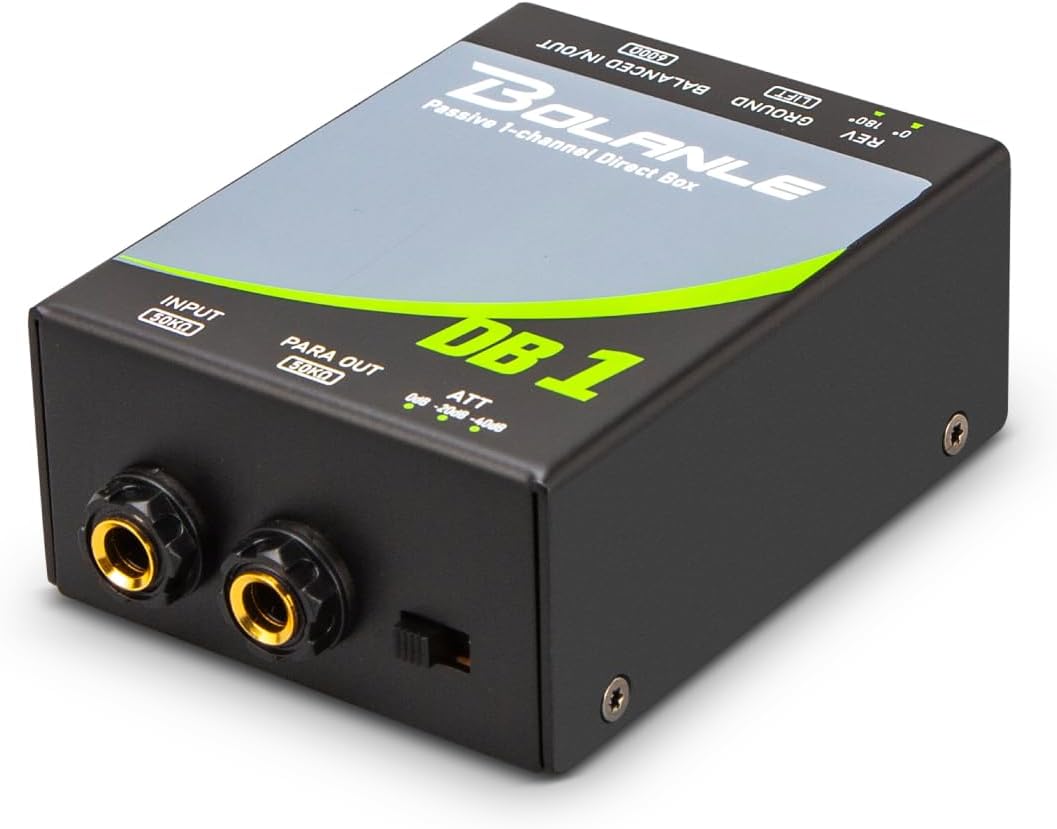
The Bolanle DB1 offers pure signal conversion without needing external power. This makes it extremely reliable for live shows where power access is limited.
We may earn a commission when you buy through this link, at no additional cost to you.
Its parallel output allows you to send signal to a guitar amp and mixer simultaneously. This is handy for both live monitoring and recording.
Built to withstand frequent use, it is a solid companion for traveling musicians. The hum eliminator ensures clean signal transmission.
Choose this for simplicity and reliability in mobile setups.
This feature allows dual signal routing easily. You can connect to a PA and amp without needing a splitter.
Passive design means no batteries or adapters. This reduces complexity and ensures your signal stays active anytime.
We may earn a commission when you buy through this link, at no additional cost to you.
The Bolanle J22 is a versatile active unit that offers three power options. This flexibility ensures it works even when phantom power is unavailable.
We may earn a commission when you buy through this link, at no additional cost to you.
Its active design provides clearer signal conversion for high impedance sources. The stereo channels keep your instrument width intact.
With a ground lift switch and USB power, it handles any scenario. It is built for pros needing high fidelity without breaking the bank.
This box is a powerful tool for complex setups.
USB or battery options mean you never run out of power. This eliminates last-minute issues on stage during performances.
The active circuitry preserves left and right separation. This ensures your stereo instruments sound wide and detailed.
We may earn a commission when you buy through this link, at no additional cost to you.
The Radial Pro48 is a high-resolution active direct box powered by phantom power. It delivers a clear and transparent signal path for sensitive instruments.
We may earn a commission when you buy through this link, at no additional cost to you.
The built-in 15dB pad is useful for high output basses. This prevents signal saturation and maintains tonal clarity.
Its compact size makes it easy to store in a gig bag. It is trusted by engineers for its reliable performance.
Ideal for professionals needing top-tier active signal conversion.
Using 48V phantom power ensures consistent operation. This avoids the hassle of battery changes during long sessions.
Active design offers better transient response than passive. This captures the attack and detail of your instrument accurately.
We may earn a commission when you buy through this link, at no additional cost to you.
Selecting the right direct box involves understanding your specific needs and environment. Consider these key factors to make an informed decision.
Passive boxes rely on internal transformers and require no power. They are generally simpler and rugged, ideal for standard bass guitars. Active units require power via battery, USB, or phantom. They offer higher signal clarity and handle high impedance signals better.
Choose passive for durability and simplicity. Choose active for complex signals or high fidelity needs.
Single channel boxes are common for standard bass lines. Dual channel units support stereo instruments like keyboards or synths. If you only need to connect one bass, a single channel is sufficient.
Opt for dual channels if you plan to use stereo keyboards in the future.
Touring musicians need a box that can withstand physical shock. Look for steel chassis and internal mounting like I-beams. Studio models can sometimes be lighter but still need reliability.
Prioritize steel construction for live work. Aluminum may suffice for home recording.
Ensure the box has standard 1/4 inch inputs and XLR outputs. Some models also offer parallel outputs for guitar amps. Having flexible outputs helps in diverse live setups.
Check for parallel outputs if you need to drive an amp simultaneously.
Ground lift switches break ground loops that cause hum. Pads reduce input levels to prevent clipping on high volume instruments. These controls are essential for clean signal management.
Look for both features to ensure a clean signal path.
The transformer is the heart of the sound quality. High grade transformers minimize phase shift and frequency loss. Brands like Radial and Whirlwind use custom transformers for clarity.
Invest in units with custom transformers for the best audio fidelity.
Direct boxes range from affordable entry-level to premium professional. Budget options work well for beginners but may lack features. Professional units are an investment that lasts for years.
Determine if you need pro features or just basic connectivity.
Active units require stable power. Phantom power is common in venues. Battery powered units work anywhere but need monitoring. USB options add flexibility for modern setups.
Ensure your venue supports your chosen power source.
Start by connecting your instrument to the high impedance input. Then connect the XLR output to your mixer. If your mixer has phantom power, engage it if using an active unit.
Always engage the ground lift switch if you hear a hum. This solves most noise issues in live environments. If using high gain sources, engage the pad to prevent distortion.
Store your box in a padded case when not in use to protect the connectors. Regularly check cables for wear to ensure optimal performance. Avoid placing heavy objects on top of the unit.
Yes, a direct box converts the high impedance signal of your bass to a low impedance mic level. This allows your sound to travel long cables without signal loss and noise.
Active DI boxes need power to boost and buffer the signal, offering better clarity for passive instruments. Passive boxes use transformers and require no power, making them simpler and rugged.
Absolutely. Direct boxes are commonly used with keyboards to interface with PA systems. For stereo keyboards, a dual channel unit ensures both left and right channels are maintained.
Muddy sound often comes from impedance mismatch. A direct box corrects this by converting the signal to a level the mixer expects. Using a pad can also help control high frequencies.
Not always. Many active boxes support 48V phantom power from a mixer. Some also support USB or battery options for flexibility when phantom power is unavailable.
Use the ground lift switch on your direct box to break ground loops. This eliminates interference caused by multiple devices sharing a ground.
Going direct is standard for PA systems as it ensures consistent sound across venues. You can parallel the signal to your amp stage monitor if you prefer an amp feel.
We reviewed ten top models ranging from budget-friendly to premium professional units. The Whirlwind IMP 2 and Radial ProD2 lead in quality, while Pyle offers great entry options.
Consider your specific needs regarding power, channels, and portability. Investing in a durable unit ensures reliability for years of performances and recordings.
Always verify the current availability and details before purchase to ensure you get the exact model you need. Check current listings for the latest updates.