
Coral M.2 Accelerator B+M Key
5.0Editor score
4 TOPS peak performance
2 TOPS per watt efficiency
Debian Linux compatibility
This guide compares the top M2 Accelerator Cards for AI inference and computing power to help you choose the right hardware for your edge deployment needs.
M2 Accelerator Cards are specialized hardware modules designed to boost machine learning performance on edge devices. They handle complex tasks like image recognition and data processing efficiently.
We compared ten top-rated cards based on performance specs compatibility power efficiency and real-world AI deployment capabilities. Each option was analyzed for its unique strengths in various computing environments.
Each pick highlights key features use trade-offs and ideal use cases for developers and enterprises. Please note that prices fluctuate frequently so verify current costs before purchasing.
5.0Editor score

4.3Editor score

4.6Editor score
This side-by-side comparison outlines the core specifications and capabilities of each selected M2 Accelerator Card to help you quickly identify the best fit for your specific project requirements.


The MX3 M.2 AI Accelerator stands out as a top choice for developers needing high-performance AI processing in a compact form factor. It delivers exceptional efficiency for demanding computer vision workloads.
We may earn a commission when you buy through this link, at no additional cost to you.
Its flexible integration allows seamless connection to existing systems via the standard M.2 M-key interface. The card supports Linux operating systems and includes a comprehensive SDK to simplify development workflows.
While highly efficient the MX3 requires Linux compatibility which might limit some Windows-only setups. Additionally specific hardware like the Raspberry Pi 5 needs a dedicated HAT for full compatibility.
Developers and enterprises seeking robust AI inference capabilities should consider the MX3. Its balance of performance efficiency and developer tools makes it a reliable pick for edge computing projects.
The MX3 is engineered to handle complex AI tasks efficiently delivering high throughput for vision applications.
It integrates easily into systems via the M.2 M-key form factor supporting standard Linux environments.
We may earn a commission when you buy through this link, at no additional cost to you.
This accelerator card features dual Google Edge TPUs delivering a combined peak performance of 8 TOPS for machine learning inference tasks. It is designed for compact deployments requiring high efficiency.
We may earn a commission when you buy through this link, at no additional cost to you.
The card uses an M.2 2230 E-key form factor making it suitable for embedded systems. It operates at 2 TOPS per watt ensuring low power consumption during intensive workloads.
Users should note that it relies on the Edge TPU ecosystem which may require model compilation. Also compatibility depends on having an available PCIe Gen2 x1 interface per TPU.
Ideal for edge AI applications this card offers strong performance per watt. Developers needing dual TPU capabilities in a small footprint will find this solution effective.
Two integrated Edge TPUs provide a combined 8 TOPS peak performance for demanding ML inference.
With 2 TOPS per watt the card maintains low power usage while delivering high throughput.
We may earn a commission when you buy through this link, at no additional cost to you.
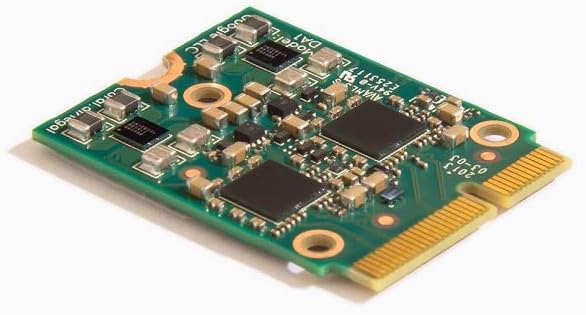
The Coral M.2 Accelerator offers impressive 4 TOPS performance using the Edge TPU coprocessor for high-speed machine learning inference. It is a top-rated budget-friendly option for edge AI.
We may earn a commission when you buy through this link, at no additional cost to you.
It integrates smoothly with Debian-based Linux systems and supports TensorFlow Lite models. This allows users to compile models without building them from scratch saving development time.
While powerful it is tied to the Edge TPU ecosystem which requires specific model formats. Also it works best with Debian-based systems limiting broader OS compatibility.
For cost-conscious developers needing reliable ML inference this card is an excellent choice. Its efficiency and software support make it a standout for embedded vision projects.
The Edge TPU delivers 4 TOPS with 2 TOPS per watt efficiency for fast mobile vision models.
Supports TensorFlow Lite and AutoML Vision Edge for easy deployment of custom image models.
We may earn a commission when you buy through this link, at no additional cost to you.
This expansion card combines storage and networking capabilities offering two M.2 NVMe slots and a 10GbE port. It is ideal for QNAP NAS systems needing performance boosts.
We may earn a commission when you buy through this link, at no additional cost to you.
The Marvell Ethernet controller enables high-speed networking while the NVMe slots support caching or storage. It works with QNAP OS Windows and Linux systems flexibly.
Designed primarily for NAS environments this card may not suit general desktop AI workloads. The PCIe Gen3 x8 interface requires compatible motherboard slots.
For QNAP users needing enhanced storage and network speeds this card is a strong fit. Its integrated design simplifies adding high-performance capabilities to NAS devices.
Supports two M.2 2280 PCIe Gen3 x4 NVMe SSDs for caching or expanded storage.
Includes a 10GbE port supporting multiple speeds for high-speed device connectivity.
We may earn a commission when you buy through this link, at no additional cost to you.
The Rocket 1604L provides four dedicated M.2 NVMe ports on a PCIe Gen5 x16 card delivering maximum bandwidth for storage expansion. It supports mainstream operating systems out of the box.
We may earn a commission when you buy through this link, at no additional cost to you.
Designed for high-speed storage this card offers four lanes per port for up to four NVMe devices. It is compatible with Intel AMD and ARM platforms providing broad system support.
While excellent for storage this card does not include AI accelerators. It requires a PCIe Gen5 x16 slot which may not be available on older systems.
System builders needing massive NVMe storage capacity will appreciate this card. Its PCIe 5.0 support ensures future-proof performance for high-throughput applications.
Utilizes PCIe 5.0 x16 bus interface for cutting-edge data transfer speeds.
Supports mainstream x86 Intel AMD and ARM platforms for flexible deployment.
We may earn a commission when you buy through this link, at no additional cost to you.
This adapter transforms your system into a dual-TPU workstation enabling faster object detection and real-time video analytics. It allows two Coral M.2 cards to run simultaneously.
We may earn a commission when you buy through this link, at no additional cost to you.
Engineered for AI demands the adapter features a heatsink and PCIe Gen3 x4 to 4X Gen2 x1 splitting. It maximizes existing hardware without needing new systems.
Users must already own two Coral M.2 cards to utilize this adapter. The PCIe Gen2 lane split may limit bandwidth compared to dedicated PCIe slots.
For developers scaling edge AI projects this adapter offers a cost-effective path. It consolidates dual TPU power into one PCIe slot efficiently.
Enables dual-TPU machine learning for faster computer vision and video analytics tasks.
Maximizes existing Coral hardware investments instead of buying entire new systems.
We may earn a commission when you buy through this link, at no additional cost to you.
The ASUS Hyper M.2 x16 Gen5 card supports up to four PCIe 5.0 M.2 drives with impressive bandwidth. It includes a large heatsink and active fan for thermal management.
We may earn a commission when you buy through this link, at no additional cost to you.
With a 6-pin power connector it delivers up to 14 watts to support latest NVMe drives. It supports RAID functions across platforms for bootable arrays.
This card is focused on storage not AI acceleration. It requires PCIe 6-pin power which may add complexity to some builds.
For workstation builds needing massive NVMe capacity this card is ideal. Its cooling and RAID features ensure reliable high-speed storage performance.
Adapted server-grade PCB supports up to four PCIe 5.0 M.2 drives for smooth data transfers.
Large heatsink and active fan reduce temperatures for unthrottled transfer speeds.
We may earn a commission when you buy through this link, at no additional cost to you.
Powered by the Hailo-8 processor this module delivers 26 TOPS for real-time low latency AI inference. It supports multiple streams and frameworks like TensorFlow and PyTorch.
We may earn a commission when you buy through this link, at no additional cost to you.
Its scalable design enables simultaneous processing of multi-streams and models. It operates at 2.5W and works on Linux and Windows systems making it versatile.
The higher price point reflects its advanced capabilities and performance. Integration requires understanding module-specific mounting and power requirements.
Enterprise and advanced developers seeking top-tier AI performance should choose this module. Its power efficiency and framework support make it a premium edge choice.
Delivers 26 TOPS with 2.5W typical power consumption for efficient edge AI.
Enables simultaneous processing of multi-streams and multi-models for complex deployments.
We may earn a commission when you buy through this link, at no additional cost to you.
This Coral module offers 4 TOPS peak performance for machine learning inference tasks. It features an M.2 A+E key interface for easy integration into embedded systems.
We may earn a commission when you buy through this link, at no additional cost to you.
The low power design provides 2 TOPS per watt ideal for energy-efficient applications. It supports Linux and Windows operating systems with wide OS compatibility.
Developers must ensure their systems have an A+E key slot. The Edge TPU ecosystem requires model compilation for optimal performance.
Industrial and embedded projects needing reliable ML inference should consider this module. Its rugged design and compatibility make it suitable for harsh environments.
Integrates Edge TPU delivering 4 TOPS peak performance for ML inference tasks.
Operates from -20°C to +85°C suitable for harsh industrial environments.
We may earn a commission when you buy through this link, at no additional cost to you.
Designed exclusively for Coral M.2 Accelerator with Dual Edge TPU modules this adapter maximizes inference performance. It fits standard M.2 2280 B+M slots with PCIe protocol support.
We may earn a commission when you buy through this link, at no additional cost to you.
It supports bidirectional Gen2 bandwidth with upstream and downstream lanes for data flow. A stainless steel mounting screw ensures vibration-resistant PCB fixation for durability.
Users must note it is incompatible with Raspberry Pi CM4 USB enclosures to prevent errors. The PCIe protocol requirement limits use with SATA M.2 slots.
For dual TPU setups this adapter is a reliable addition. Its design ensures secure installation and maximizes the performance of Coral hardware.
Designed exclusively for Coral dual TPU modules to maximize AI inference performance.
Includes stainless steel mounting screw for vibration-resistant PCB fixation.
We may earn a commission when you buy through this link, at no additional cost to you.
Selecting the right M2 Accelerator Card depends on your specific AI workloads power constraints and system compatibility requirements.
Evaluate the TOPS (Tera Operations Per Second) rating needed for your models. Higher TOPS support more complex or real-time tasks.
Choose a card matching your model complexity for optimal efficiency.
Check the M.2 key type such as M-key E-key or B+M key to match your device slot. Verify OS support like Linux or Windows.
Ensure physical and software compatibility to avoid integration issues.
Look at watts per TOPS to gauge energy efficiency especially for embedded devices. Low power cards help maintain system thermal stability.
Prioritize energy-efficient models for battery-powered or heat-sensitive applications.
Review SDK availability framework support like TensorFlow Lite and developer documentation. Robust tools simplify model deployment and optimization.
Strong software support reduces development time and complexity.
Confirm the card dimensions such as 2230 or 2280 fit your chassis. Consider adapter needs for specific slots or dual TPU setups.
Match the form factor to your hardware constraints for proper installation.
Verify PCIe generation and lane allocation like Gen3 x1 or Gen2 x1 to ensure bandwidth sufficiency. Some cards require multiple slots or adapters.
Select an interface that supports your data throughput needs.
Compare card prices against performance features and total cost of ownership. Higher cost cards may offer better efficiency or long-term value.
Balance initial investment with operational savings and capabilities.
Align the card with your use case whether video analytics object detection or general inference. Some are optimized for specific frameworks or models.
Choose cards tailored to your application for best results.
Install the card into a compatible M.2 slot securely using screws to prevent dislodgement. Ensure thermal paste or heatsinks are applied if required.
Install necessary drivers and SDKs from the manufacturer. Compile or convert models to formats supported by the accelerator like TensorFlow Lite.
Monitor temperatures and update firmware regularly to maintain performance and reliability. Avoid physical shocks and keep the system clean of dust.
An M2 Accelerator Card provides specialized hardware acceleration for machine learning inference tasks like image recognition and data processing. It offloads computation from the main CPU to improve speed and efficiency.
Yes most require a specific M.2 slot with the correct key type and PCIe interface. Always check your device manual for slot compatibility before purchasing.
Some models support Windows but many are optimized for Linux systems. Verify the manufacturer's OS compatibility list to ensure your operating system is supported.
You typically need to compile models using the provided SDK to convert them into optimized formats like Edge TPU compiled models. Follow the developer documentation for your specific accelerator.
Some cards support multi-card setups with adapters or dual TPU designs. Check if your motherboard supports multiple PCIe slots and if the card allows expansion.
Power usage varies but many efficient cards use around 0.5 to 2.5 watts per TOPS. This allows them to run on low-power embedded systems without excessive heat.
Yes high-performance models like the Hailo-8 or MX3 are designed for real-time low latency AI inference suitable for video analytics and object detection.
Most manufacturers provide documentation developer wikis and community support. Check the product page or vendor site for access to technical resources and support channels.
The top picks including the MX3 Dual Edge TPU and Hailo-8 offer excellent performance for various AI needs. Each provides unique strengths in efficiency compatibility or cost.
Prioritize factors like software support power efficiency and system integration when making your selection. The right card enhances your project without unnecessary complexity.
Remember to check current pricing and availability before purchasing to ensure the best deal. Technologies evolve quickly so verify the latest specs from the manufacturer.