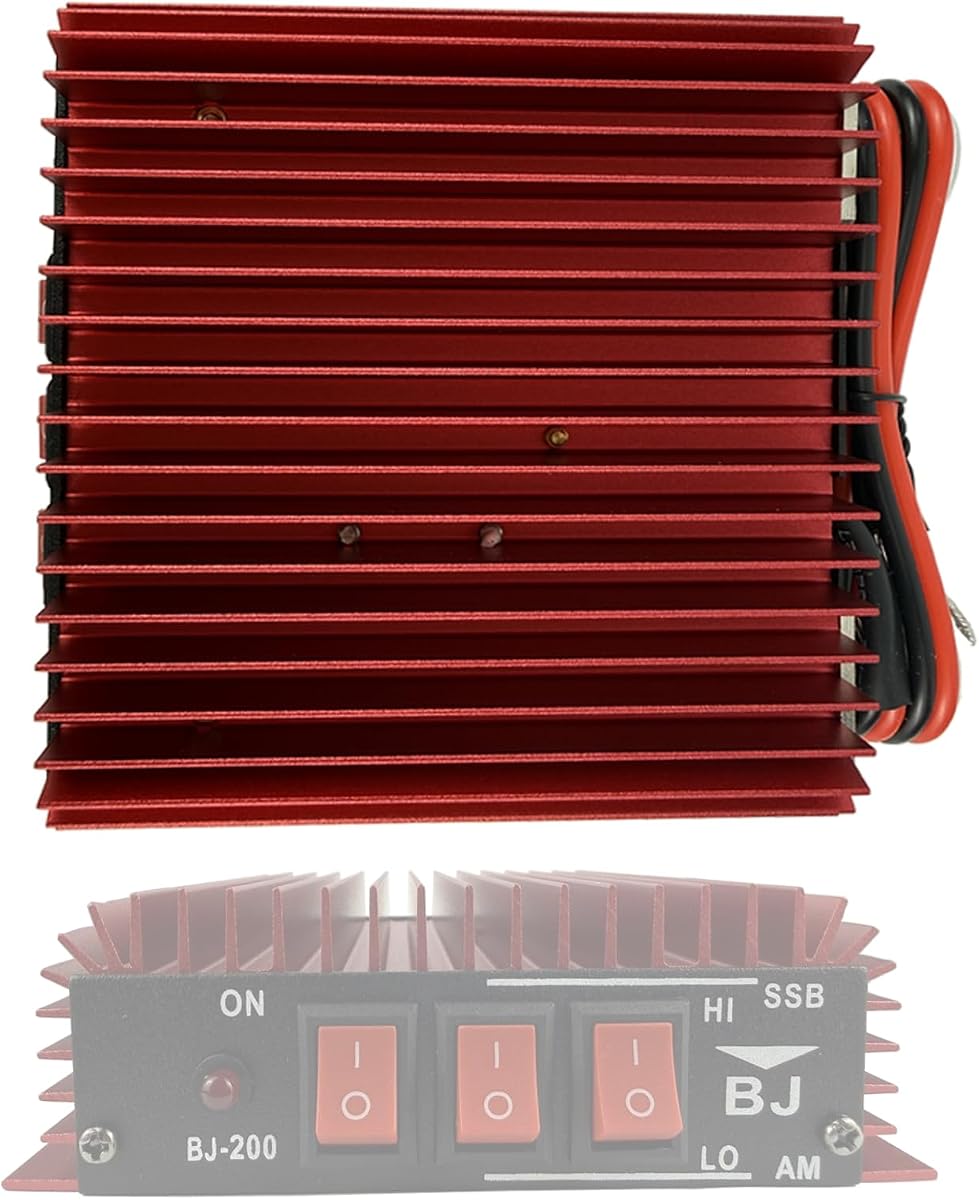
BJ-200 Linear Power AMP, 3-30MHz Radio AMP 50W FM 100W AM 150W SSB for 3-5W Input 2-Way Radio Transceiver, 13.8V
5.0Editor score
150W SSB output
Compact aluminum heat sink
Polarity reversal protection
This guide compares the top ten linear amplifiers for ham radio, evaluating performance, compatibility, safety features, and user ratings to help you choose
Selecting the right linear amplifier for your ham radio station is crucial for extending your communication range and ensuring signal clarity across various bands and modes.
We evaluated ten top-rated models based on output power, cooling systems, protection circuits, and compatibility with popular transceivers to provide a comprehensive overview for enthusiasts.
Each selection highlights key strengths and potential trade-offs, helping you find the ideal match for your setup while keeping in mind that product availability and specs can change.
5.0Editor score

4.2Editor score

3.9Editor score
The following table provides a side-by-side comparison of all ten selected amplifiers, focusing on their core specifications, output capabilities, and distinct features to aid your decision-making process.


The Xiegu GPA100 stands out as a top contender for operators seeking reliable power amplification with minimal hassle. It delivers up to 100 watts on HF bands and maintains excellent signal purity across various modes including SSB and CW.
We may earn a commission when you buy through this link, at no additional cost to you.
Its intelligent cooling system automatically manages thermal output to ensure safe operation during extended sessions. The ability to wirelessly connect via Bluetooth to specific transceivers like the IC-705 simplifies setup significantly for modern stations.
While the price is higher than budget options, the build quality and automatic features justify the investment for serious hobbyists. The protection circuits prevent damage from high SWR or overheating, offering peace of mind.
This amplifier is ideal for those looking to expand a low-power station into a more robust setup without complex cabling. It balances performance and convenience effectively for HF operations.
The auto band switching feature allows operators to move between frequencies without manual intervention, streamlining contesting or emergency comms.
Built-in safeguards detect issues like low efficiency or overcurrent instantly, protecting both the amp and your transceiver from potential harm.
We may earn a commission when you buy through this link, at no additional cost to you.
The BJ-300 Plus offers a compelling option for users needing high power without spending a fortune. It supports multiple modes like AM and SSB making it versatile for different communication styles.
We may earn a commission when you buy through this link, at no additional cost to you.
Installation is straightforward with standard PL-259 connectors and simple power switches. The integrated cooling fan helps maintain stability during prolonged use which is essential for thermal management.
However, it lacks the advanced automation found in higher-end models requiring manual adjustments for band changes. The lower rating suggests some variability in component quality or consistency.
This model suits beginners or those upgrading existing setups who prioritize raw power over smart features. It provides a solid entry point into linear amplification.
Operators can switch between high and low power settings easily to conserve power when full output is not necessary.
Reverse polarity protection ensures that accidental wiring mistakes do not destroy the unit or your power supply.
We may earn a commission when you buy through this link, at no additional cost to you.
This variant of the BJ-300 provides similar capabilities to its counterpart with a focus on a compact design suitable for smaller spaces. It maintains the high output ratings for various modulation types effectively.
We may earn a commission when you buy through this link, at no additional cost to you.
The red aluminum heat sink is a notable design choice that aids in efficient heat dissipation during operation. This helps prevent overheating which is critical for longevity in amplifiers.
While it shares the same basic functionality, users should be aware of the manual control limitations compared to modern automated solutions. It remains a practical choice for budget-conscious builders.
Ideal for those needing a reliable booster for CB or ham bands without complex integration requirements. It offers consistent performance for casual or local communications.
The specific choice of a large heat sink ensures that internal components stay within safe temperature limits during transmission.
We may earn a commission when you buy through this link, at no additional cost to you.
The BJ-300 is designed to handle significant output levels which makes it suitable for extending communication range in various HF applications. It accepts low power input and boosts it effectively for long distance contacts.
We may earn a commission when you buy through this link, at no additional cost to you.
Construction includes overvoltage protection to guard against power surges that could damage the unit. The aluminum heat sink construction ensures durability and helps manage heat during active transmission periods.
Users should note the simplicity of the controls which might require manual adjustment depending on operating conditions. This lack of automation can be a drawback for frequent band hoppers.
This unit is a practical choice for users prioritizing raw output and cost efficiency. It fits well into setups where manual control is acceptable or manageable.
Supporting a range of input powers allows compatibility with a variety of transceivers including low power portable units.
We may earn a commission when you buy through this link, at no additional cost to you.
Rated highly by users, the BJ-200 delivers consistent performance across FM AM and SSB modes making it a trusted choice for many operators. It supports the standard 13.8V DC power supply found in most mobile setups.
We may earn a commission when you buy through this link, at no additional cost to you.
Its compact form factor makes it easy to install in vehicles or base stations without taking up too much space. The red aluminum heat sink contributes to its reliability during continuous operation.
The simplicity of the design means fewer points of failure which can be beneficial for field operations. However it lacks the advanced monitoring features found in more premium units.
This amplifier is excellent for users seeking a dependable boost for two-way radios without complexity. It is particularly useful for vehicle installations or portable setups.
Supporting FM AM and SSB ensures you can use the amp for various types of transmissions without needing different gear.
We may earn a commission when you buy through this link, at no additional cost to you.
The Xiegu XPA125B combines a power amplifier with an automatic antenna tuner saving space and simplifying connections. It is designed specifically to pair well with QRP radios needing higher output power.
We may earn a commission when you buy through this link, at no additional cost to you.
The large LCD display provides real-time data on power SWR and temperature allowing operators to monitor the system easily. Its protection circuits manage bypass mode if conditions become unsafe to protect equipment.
While the integration is powerful, the price point is higher than standalone amps. The automatic tuning is a major convenience but requires understanding the display to operate effectively.
This unit is best for those wanting a streamlined station setup with both amplification and tuning. It offers a high level of integration for modern ham stations.
Having the tuner and amp in one box reduces cabling and allows for a cleaner desktop or rack arrangement.
We may earn a commission when you buy through this link, at no additional cost to you.
This amplifier board is designed for DIY enthusiasts who want to upgrade a kit or transceiver with a dedicated boost module. It offers clean linear power across the shortwave spectrum ideal for CW and SSB modes.
We may earn a commission when you buy through this link, at no additional cost to you.
The board is finished with marked ports to facilitate easy connection to existing transceiver systems. It includes thermal management features to prevent overheating during continuous transmit cycles.
Because it is a board rather than a full enclosure it requires assembly and enclosure integration. This makes it less convenient than standalone units but highly flexible for custom projects.
Suitable for builders looking to enhance signal strength without buying a full commercial unit. It provides a cost effective way to boost specific frequency ranges.
Designed specifically for CW and SSB it ensures minimal distortion which is vital for clear Morse and voice transmission.
We may earn a commission when you buy through this link, at no additional cost to you.
The BJ-200 version optimized for 12 to 14 volts is specifically designed for mobile applications where voltage can fluctuate. It ensures stable operation even during engine starts which is critical for reliability.
We may earn a commission when you buy through this link, at no additional cost to you.
Connection is straightforward with SO-239 connectors that match standard CB radio systems. The simple wiring reduces the risk of installation errors for mobile users.
While it lacks advanced features it serves a specific purpose for mobile CB or ham setups. It provides a direct power boost for mobile communication needs.
This unit is ideal for vehicle installations where simplicity and voltage tolerance are key. It offers a practical solution for mobile operators.
The wide input range ensures the amplifier functions correctly even if the vehicle's electrical system varies slightly.
We may earn a commission when you buy through this link, at no additional cost to you.
This amplifier is designed primarily for reception rather than transmission making it a useful tool for weak signal environments. It offers a high gain of 32dB across a massive frequency range from 0.1 to 2000MHz.
We may earn a commission when you buy through this link, at no additional cost to you.
Its low noise figure ensures that weak signals are amplified without adding much static which is essential for SDR and HF listening. The low current draw allows it to run on batteries for field use.
Unlike other amplifiers it is not intended for boosting transmit power so it should be used strictly for receiving. This distinction is vital to avoid misuse or damage.
It is an excellent addition for listeners and SDR users seeking better clarity on weak signals. It enhances the front end of your receiving setup.
By boosting weak signals early in the chain it improves the overall signal to noise ratio significantly for better reception.
We may earn a commission when you buy through this link, at no additional cost to you.
This version of the XPA125B is tailored to work seamlessly with Xiegu transceivers like the G90 and X5105. It provides a high level of integration allowing for automatic tuning and consistent power output.
We may earn a commission when you buy through this link, at no additional cost to you.
The build quality is emphasized with premium materials to ensure long-term reliability. Support is available through Xiegu technicians which can be a significant advantage for maintenance.
While it works best within its ecosystem it offers a robust solution for those already invested in Xiegu equipment. The automation simplifies the operation significantly.
Ideal for owners of Xiegu radios looking to upgrade power without sacrificing ease of use. It ensures compatibility and performance for the host system.
The automatic tuning aligns perfectly with the radio's settings removing the need for manual adjustments during operation.
We may earn a commission when you buy through this link, at no additional cost to you.
Selecting the right amplifier involves considering power needs, compatibility, and safety features to ensure optimal performance for your station.
Determine the maximum power output you need based on your operating mode and distance goals. Higher wattage extends range but requires robust cooling and power supply management to maintain stability.
Focus on the watts provided for SSB and CW modes as these are most common in HF operations.
Ensure the amplifier accepts the input power levels of your transceiver to prevent overdrive or underutilization. Some models are optimized for specific brands or low power QRP radios.
Check if the unit supports automatic band switching to match your radio's settings for seamless operation.
Effective thermal management is vital to prevent overheating during long transmission sessions. Look for units with high efficiency fans or large aluminum heat sinks for stable performance.
A robust cooling system ensures the amplifier operates safely even in warm environments or during high duty cycles.
Advanced units include safeguards against high SWR overcurrent and overheating to protect your equipment. These features prevent damage to both the amplifier and your transceiver.
Prioritize models with auto bypass modes that shut down output when abnormal conditions are detected.
Simple wiring and standard connectors make installation straightforward for most users. Look for clear instructions and compatible connectors like PL-259 or SO-239.
Units with wireless control or auto tuning reduce the need for complex cabling and manual adjustments.
Consider the physical dimensions of the amplifier to ensure it fits your workspace or mobile setup. Compact designs are preferable for portable operations or limited desk space.
A smaller footprint often pairs with adequate heat dissipation for efficient performance.
Set a realistic budget that balances cost with necessary features. Entry level models offer raw power while premium units provide automation and monitoring tools.
Remember that higher price often reflects better build quality and longer term reliability.
Check for durable materials like aluminum heat sinks and robust enclosures that withstand field conditions. Quality components contribute to consistent performance over time.
Premium materials ensure the unit remains reliable even with frequent use.
Always connect the amplifier between your transceiver and antenna system using high quality cables to minimize signal loss. Ensure all connections are secure to prevent impedance mismatches or arcing.
Monitor the amplifier temperature during extended transmissions to avoid overheating. Use the provided cooling fans or allow rest periods between heavy duty sessions.
Regularly check all protection circuits and indicators to ensure they are functioning correctly. Clean dust from vents and heat sinks to maintain optimal thermal performance.
A linear amplifier boosts the signal from your transceiver to a higher power level for longer distance communication. It maintains signal integrity without adding distortion which is essential for clear voice and data transmissions.
Most amplifiers are compatible with a range of radios but you should check input power requirements. Some models are optimized for specific brands to ensure seamless automatic band switching.
Yes, most linear amplifiers require a stable 13.8V DC power supply capable of handling high current. Ensure your power supply meets the amp's current draw to avoid voltage drops.
Ensure the cooling fan is unobstructed and allow the unit to rest between long transmissions. Avoid using the amp in direct sunlight or poorly ventilated spaces.
High power amplifiers can generate significant heat and voltage so always handle them with care. Ensure proper grounding and use protection circuits to avoid electrical hazards.
Automatic band switching saves time by changing frequencies without manual intervention. It streamlines operations especially when moving between multiple bands during contests.
Higher priced models often offer better build quality automation and protection features. If you operate frequently or need reliability for critical communications, the investment pays off.
Use a 12 to 14 volt amplifier with standard connectors that fit vehicle wiring. Ensure secure mounting and proper grounding to prevent interference.
We have reviewed ten top linear amplifiers ranging from budget friendly units to premium models with integrated features. Each offers distinct advantages for different operator needs and station setups.
Prioritize models that match your transceiver capabilities and provide adequate cooling for your operating style. The balance of power and protection is key to a successful upgrade.
Always check current product details and availability before purchasing to ensure you get the right fit for your requirements. Stay updated on the latest tech to maximize your communication range.