
Sipeed Tang Nano 20K
4.5Editor score
20K LUT FPGA Logic
Open Source Linux Support
Compact Development Board
This guide compares the top ten FPGA retro consoles available today, evaluating their FPGA logic resources, emulator compatibility, and connectivity options
FPGA retro consoles offer a unique way to experience classic games with near-original hardware accuracy. Unlike software emulation, these devices use reconfigurable logic to recreate the behavior of vintage chips precisely.
We evaluated ten leading models based on their logic capacity, input latency, video output quality, and community support. Our analysis focuses on technical specifications that matter most to serious gamers and developers.
Each pick highlights specific strengths like portability, development tools, or raw performance. Note that availability and pricing change frequently, so verify details on the product page before purchasing your chosen device.
4.5Editor score
4.5Editor score

4.5Editor score
This side-by-side comparison highlights the key specifications of all ten models. We focus on logic capacity, screen type, connectivity options, and specific target audiences for each device.




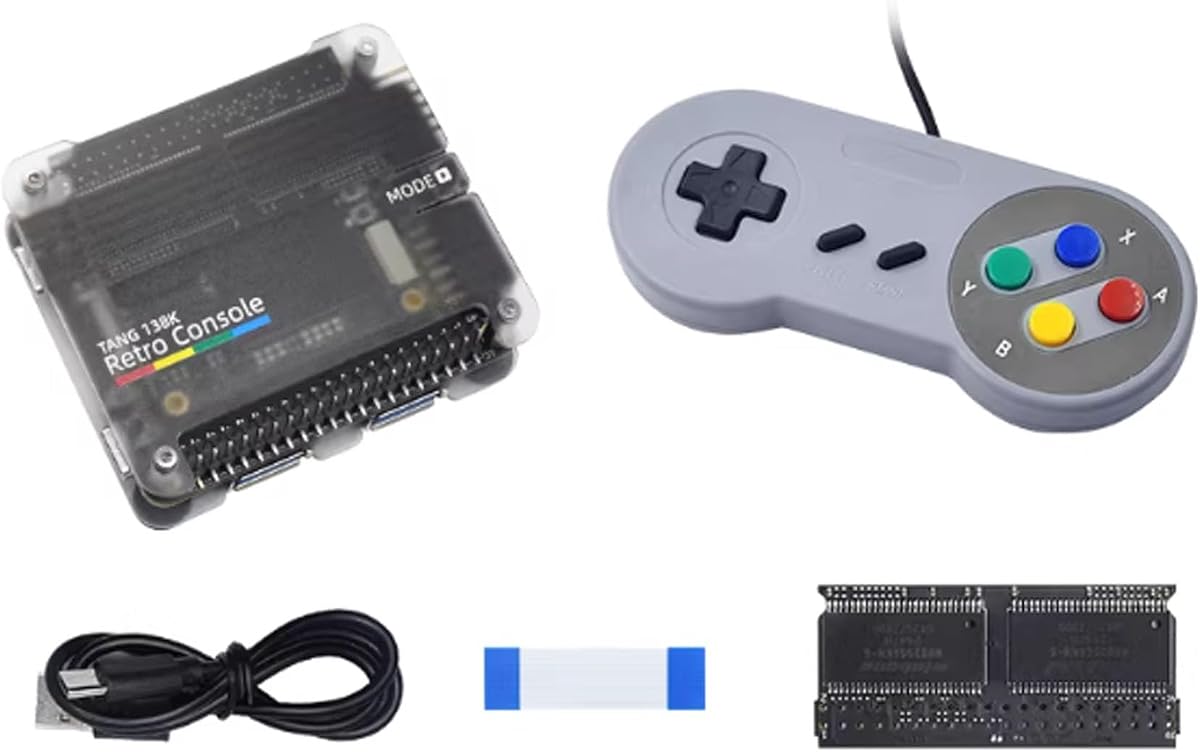
This model stands out as a powerful FPGA solution for retro enthusiasts. It features a 138K LUT architecture that supports advanced emulation cores with high fidelity.
We may earn a commission when you buy through this link, at no additional cost to you.
The inclusion of a RISC-V core allows for flexible system integration. Users can run Linux or custom firmware to manage game libraries efficiently.
While it lacks pre-installed games, the expandability is unmatched. You can add custom I/O or connect it to other systems seamlessly.
Ideal for developers who want control over their hardware environment. It balances raw power with a compact form factor for tabletop or portable use.
The 138K LUTs provide ample resources for running demanding cores like Amiga or complex SNES systems without latency.
With USB 3.0 and dual PMOD ports, connecting controllers and external hardware is straightforward and reliable.
We may earn a commission when you buy through this link, at no additional cost to you.
This console bridges the gap between a game device and a development kit. It is designed for those who wish to tweak and modify the firmware directly.
We may earn a commission when you buy through this link, at no additional cost to you.
The onboard BL616 MCU simplifies the debugging process for developers. You can switch between cores like NESTang and MDtang easily via software.
Video output is handled through HDMI at high resolutions, ensuring crisp graphics on modern displays. It supports saving game progress for longer sessions.
This device is best suited for tinkerers who value customization. If you want to build your own gaming system or contribute to open source projects, this is the tool.
The embedded BL616 MCU provides tools for developers to test new FPGA code without needing external hardware interfaces.
It functions as both a retro console and a development board, offering endless possibilities for custom projects.
We may earn a commission when you buy through this link, at no additional cost to you.
This premium board is optimized for integration with Raspberry Pi ecosystems. It serves as a high-performance engine for retro logic cores.
We may earn a commission when you buy through this link, at no additional cost to you.
The dual PMOD ports allow for connecting various peripherals like rotary encoders or additional display modules. HDMI output ensures clear video on TVs.
While it is more of a component than a complete handheld, it fits well into custom cases. Users can build their own portable or desktop retro station.
It is a great choice for hardware enthusiasts who already own a Raspberry Pi. You can leverage existing software while upgrading the FPGA logic speed.
Designed to fit as a PCIe HAT for Pi 5, enabling a powerful combo of CPU and FPGA for complex emulation.
The board features reliable power delivery and high-density connections for stable long-term operation.
We may earn a commission when you buy through this link, at no additional cost to you.
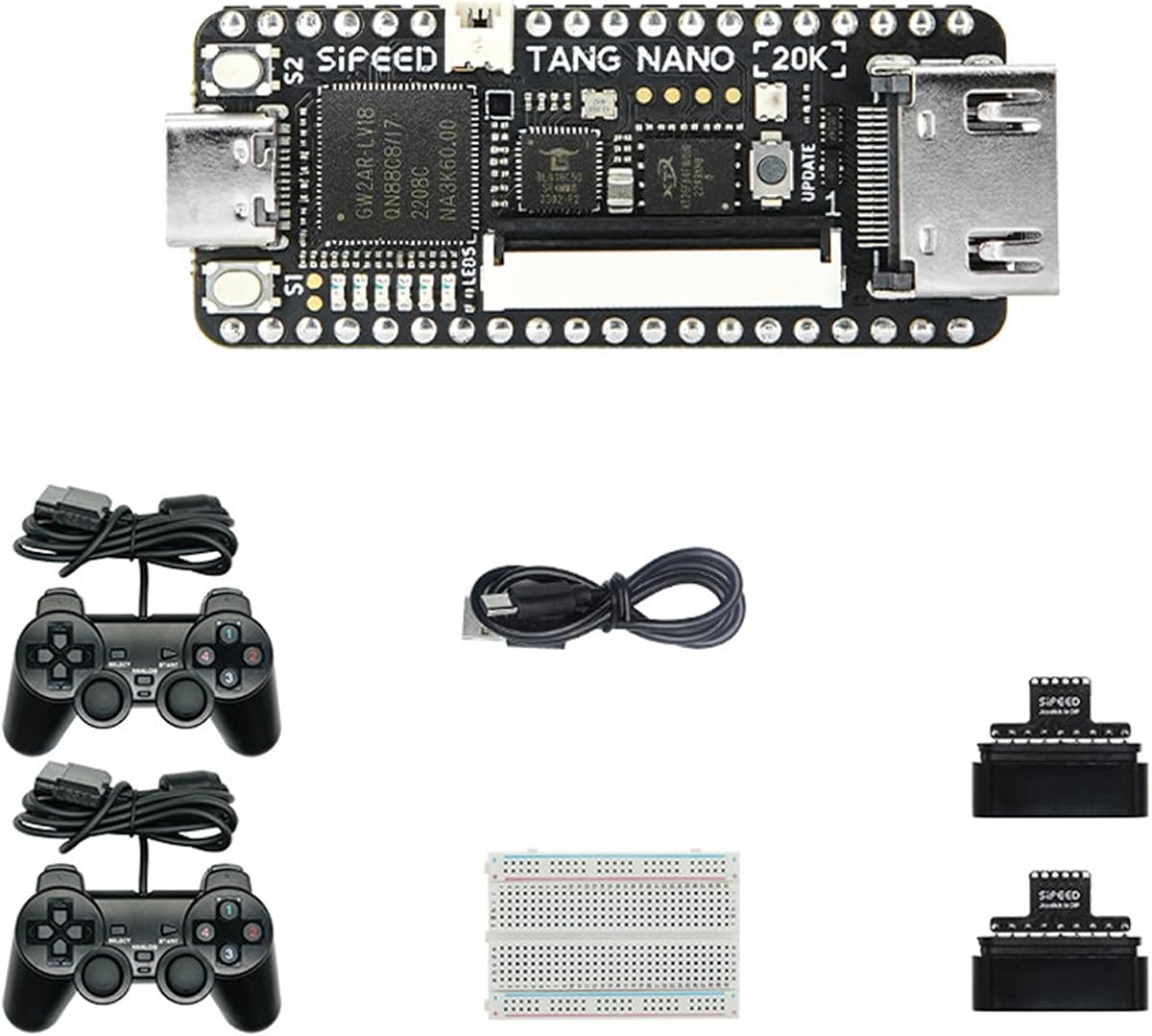
The Nano 20K offers an accessible introduction to FPGA retro gaming. It provides enough logic resources to emulate simpler systems like NES or GBA efficiently.
We may earn a commission when you buy through this link, at no additional cost to you.
Running a Linux-based system makes it flexible for various tasks beyond just gaming. You can use it to experiment with digital signal processing or custom logic.
Its open-source nature ensures continuous updates from the community. This means you can find new cores and tools regularly to enhance performance.
Perfect for hobbyists looking to dip their toes into FPGA programming. It is a low-risk way to learn about hardware acceleration without breaking the bank.
Ideal for beginners who want to understand how FPGA development works while playing retro games.
The ability to run a Linux OS opens up a wide range of possibilities for customization and app integration.
We may earn a commission when you buy through this link, at no additional cost to you.
This variant often comes with additional accessories to help start your project. It focuses on providing a complete environment for testing and development.
We may earn a commission when you buy through this link, at no additional cost to you.
The BL616 debugger is built-in to make flashing new FPGA images easier. This reduces the need for external programming tools during the development phase.
Video output options include HDMI and RGB LCD, giving you flexibility in display choices. You can connect to a monitor or build a custom handheld shell.
For those who want a turn-key solution to start learning, this kit is a strong contender. It simplifies the initial setup process significantly.
The included debugger allows for rapid iteration on FPGA designs without extra hardware costs.
Users can choose between standard HDMI or custom RGB displays for unique project builds.
We may earn a commission when you buy through this link, at no additional cost to you.
This board is a single-board computer that doubles as a retro console. It runs a lightweight Linux system which makes it highly programmable.
We may earn a commission when you buy through this link, at no additional cost to you.
Multiple display outputs allow you to experiment with different screen technologies. You can drive an OLED or LCD directly from the board using the available ports.
Performance is sufficient for 8-bit and some 16-bit systems like NES and SNES. It does not struggle with complex games but requires proper tuning.
Ideal for students or educators interested in computer architecture. It provides a hands-on way to learn about how CPUs and FPGAs interact in real time.
Having a full OS on the board allows for scripting and automation tasks that other consoles cannot handle.
The hardware supports driving multiple screens, which is rare for devices in this price range.
We may earn a commission when you buy through this link, at no additional cost to you.
This is a portable arcade experience designed to fit in your wallet. It comes with over 300 classic games preloaded so you can start playing immediately.
We may earn a commission when you buy through this link, at no additional cost to you.
The USB-C port enables multiplayer gaming with another unit using a link cable. This feature revives the classic experience of local play without online lag.
The OLED screen provides sharp visuals in any lighting condition. The device is built with durable materials to withstand daily carry and drops.
Perfect for both casual gamers and aspiring developers. You can play your favorite games or start learning C++ coding right on the device.
No setup is needed because the system comes fully loaded with a vast library of games.
The open-source nature encourages users to create and share their own game modifications.
We may earn a commission when you buy through this link, at no additional cost to you.
The Trimui Brick Pro focuses on visual fidelity and control accuracy. Its IPS screen delivers vibrant colors and sharp resolution for modern retro gaming.
We may earn a commission when you buy through this link, at no additional cost to you.
Dual Hall Effect joysticks prevent drift, ensuring smooth and precise movement. This is a significant upgrade over traditional potentiometer controls found in cheaper units.
The 5000mAh battery supports long sessions of gameplay without interruption. You can enjoy hours of play on a single charge.
This console is a top pick for those who prioritize screen quality. It handles older systems with ease and provides a comfortable handheld experience.
The fully laminated IPS screen reduces glare and improves contrast for better visibility.
Hall Effect technology ensures that the joysticks remain precise and drift-free over time.
We may earn a commission when you buy through this link, at no additional cost to you.
This device is known for including a solid set of games right out of the box. It simplifies the process of getting started with retro emulation.
We may earn a commission when you buy through this link, at no additional cost to you.
Running on a Linux system, it allows for updates and adjustments to the interface. Users can customize the experience to match their preferences easily.
The design is compact and fits well in one hand for travel. It is a reliable option for those who want a no-fuss gaming device.
It is a strong recommendation for buyers looking for value. You get both the hardware and the software you need to enjoy classic titles immediately.
The inclusion of games saves time and effort on configuration for new users.
A Linux OS ensures compatibility with a wide variety of emulators and tools.
We may earn a commission when you buy through this link, at no additional cost to you.
This version emphasizes the open-source nature of the software. It allows you to have full control over the interface and emulator selection.
We may earn a commission when you buy through this link, at no additional cost to you.
The screen is fully laminated which enhances contrast and reduces reflection. It is ideal for outdoor gaming or bright indoor environments.
With 8GB internal storage plus support for large cards, you can store thousands of games. The dual USB-C ports allow for accessories and OTG capabilities.
Choose this model if you want a complete customizable solution. It offers the best balance of hardware quality and software flexibility on the market.
You can edit the menu interface and system settings to make the device truly your own.
Support for up to 1TB allows for massive libraries of games without space anxiety.
We may earn a commission when you buy through this link, at no additional cost to you.
Selecting the right FPGA retro console requires understanding the technical specifications that drive performance. We break down the key factors to consider before making your purchase.
Logic units determine how complex a game system you can emulate. Devices with 60K or 138K LUTs handle advanced systems like Amiga, while 20K units suit simpler 8-bit machines.
Choose a model with enough logic to support your favorite system without latency.
Resolution and panel type affect visual clarity. IPS screens with 1024×768 resolution provide sharp graphics for retro games on modern displays.
Look for fully laminated screens to reduce glare and improve contrast during play.
Some units run Linux, offering flexibility for development and customization. Others are locked to a specific firmware for ease of use.
Decide if you prefer an open system for tinkering or a closed system for stability.
USB-C ports enable modern charging and data transfer. HDMI output is essential for connecting to TVs for a bigger screen experience.
Ensure the console supports controllers you already own to save on extra costs.
Portability depends on battery capacity. Models with 5000mAh batteries can last hours on a single charge.
Prioritize devices with fast charging to minimize downtime between gaming sessions.
Internal storage is often limited, so SD card support is crucial. Look for support for cards up to 1TB to store large libraries.
Verify the speed class of the SD card slot to avoid loading delays.
Handhelds face wear and tear, so durable materials are important. Polycarbonate and aluminum frames withstand drops better than plastic shells.
Check for quality controls like Hall Effect joysticks that prevent drifting over time.
An active community ensures new games and updates are available. Open-source projects often have more frequent improvements than closed systems.
Join forums to see what patches and cores are available for your chosen device.
Begin by installing your game files on a high-speed SD card. Most devices require you to drag ROMs into specific folders on the card before booting.
Use the USB-C port to connect your device to a computer for file transfer. Ensure you use a reliable cable to avoid connection drops during updates.
Keep your console in a cool, dry place when not in use. Avoid direct sunlight to protect the screen from potential UV damage.
FPGA consoles mimic the actual hardware of old systems, resulting in lower latency and more accurate gameplay. Software emulation is more flexible but can have input delay or timing issues that affect the experience.
Not necessarily. Many come with pre-loaded games or easy setup tools. However, some models are designed for developers who wish to create their own cores or firmware.
You need to load your own game files (ROMs) onto the device storage. Ensure you own the rights to the games you download to comply with legal standards.
Most modern units support cards up to 1TB. It is best to use Class 10 or UHS cards to ensure fast loading times and smooth performance.
Download the latest firmware from the official website or community source. Transfer it to the SD card or internal storage and follow the update instructions in the menu.
Some models feature USB-C multiplayer via link cables or wireless adapters. Others rely on online services for multiplayer, though this depends on the specific emulation core used.
We reviewed ten excellent models ranging from development boards to full handhelds. The Sipeed Tang Console 138K leads in raw power and flexibility for enthusiasts.
When choosing, prioritize the factors that matter most to your use case. Battery life and screen quality are vital for travel, while logic density matters for complex games.
Prices and availability fluctuate regularly in the market. Always check the latest details on the product pages to ensure you get the best deal before buying.