
AMD Ryzen 7 7800X3D
4.8Editor score
8 Cores and 16 Threads
96MB L3 Cache
5nm Process Technology
This expert guide compares the top ten CPUs for 3D rendering workflows including core counts cache sizes and architecture to help professionals choose the
Choosing the right CPU for 3D rendering is critical for productivity and efficiency in professional workflows. High core counts and advanced cache architectures significantly reduce render times and improve overall system responsiveness during complex modeling tasks.
We compared ten leading processors based on core specifications cache sizes and architectural efficiency. Our analysis focuses on how each CPU handles demanding rendering workloads across different software platforms and simulation environments used by creatives today.
Each pick highlights specific strengths for different user needs from budget builds to workstation class performance. Prices and availability change frequently so please verify current details before purchasing to ensure you get the best value for your specific project requirements.
4.8Editor score

4.8Editor score

4.2Editor score
This side by side comparison table outlines the key specifications of all ten processors to help you quickly identify which model aligns with your rendering needs and budget constraints for your next workstation build.




The AMD Ryzen 9 9950X stands out as a top performer for 3D rendering workflows. With 16 cores and 32 threads it handles complex scene calculations efficiently. Its high boost clock ensures smooth interactivity during viewport navigation.
We may earn a commission when you buy through this link, at no additional cost to you.
This processor leverages the new Zen 5 architecture for improved instructions per cycle. The large cache helps reduce latency when loading textures and geometry. It supports PCIe 5.0 for next gen storage and GPU connectivity.
While powerful it does require a dedicated liquid cooler for optimal thermal management. Users must also budget for DDR5 memory which adds to the initial cost. These requirements are standard for high end workstation builds today.
It is ideal for professionals who need balanced performance for rendering and simulation tasks. The unlocked multiplier allows enthusiasts to push frequencies further for maximum throughput. We recommend it for serious 3D artists and engineers.
The 32 threads allow parallel processing of complex rendering tasks reducing wait times significantly.
A robust cache structure improves data access speed which benefits rendering engines heavily.
We may earn a commission when you buy through this link, at no additional cost to you.
This processor is designed for extreme professional workloads involving heavy 3D rendering and simulation. It offers 32 cores and 64 threads for unmatched multi core throughput. The massive 160MB cache supports large datasets effectively.
We may earn a commission when you buy through this link, at no additional cost to you.
It supports eight channel DDR5 memory which provides immense bandwidth for data transfer. The 128 PCIe lanes allow for multiple GPUs and high speed storage drives simultaneously. This makes it perfect for GPU accelerated rendering workflows.
The cost is significant and requires a specialized motherboard that supports the socket. Power consumption is high so robust cooling is essential for stable operation under load. These constraints limit it to enterprise or studio environments.
We recommend this for studios needing maximum rendering speed without compromising on capacity. It excels in multi user rendering farms or complex CAD assemblies. It is a true workstation class solution for demanding tasks.
The 64 threads enable parallel rendering of complex scenes at incredible speeds.
With 128 lanes you can connect multiple GPUs and NVMe drives without bottlenecks.
We may earn a commission when you buy through this link, at no additional cost to you.
The Ryzen 7 7800X3D offers exceptional value for entry level 3D rendering tasks. Its 96MB L3 cache significantly boosts performance in specific applications. It runs efficiently on the modern AM5 platform with good power draw.
We may earn a commission when you buy through this link, at no additional cost to you.
While it has fewer cores than higher models the cache helps speed up tasks. It is ideal for artists who render primarily on GPU or use less demanding scenes. The 5nm process ensures cool operation and long term reliability.
It does require a separate cooler which adds to the total build cost. The 8 core limit means it is not suited for massive multi thread rendering farms. However for individual creators it strikes a great balance.
We suggest this for freelancers or hobbyists wanting high performance without breaking the bank. It handles modeling and simulation well while leaving budget for better GPUs. It is a smart start for any 3D pipeline.
The massive 3D V-Cache reduces latency and boosts rendering efficiency significantly.
Users benefit from modern features and upgrade paths without expensive hardware costs.
We may earn a commission when you buy through this link, at no additional cost to you.
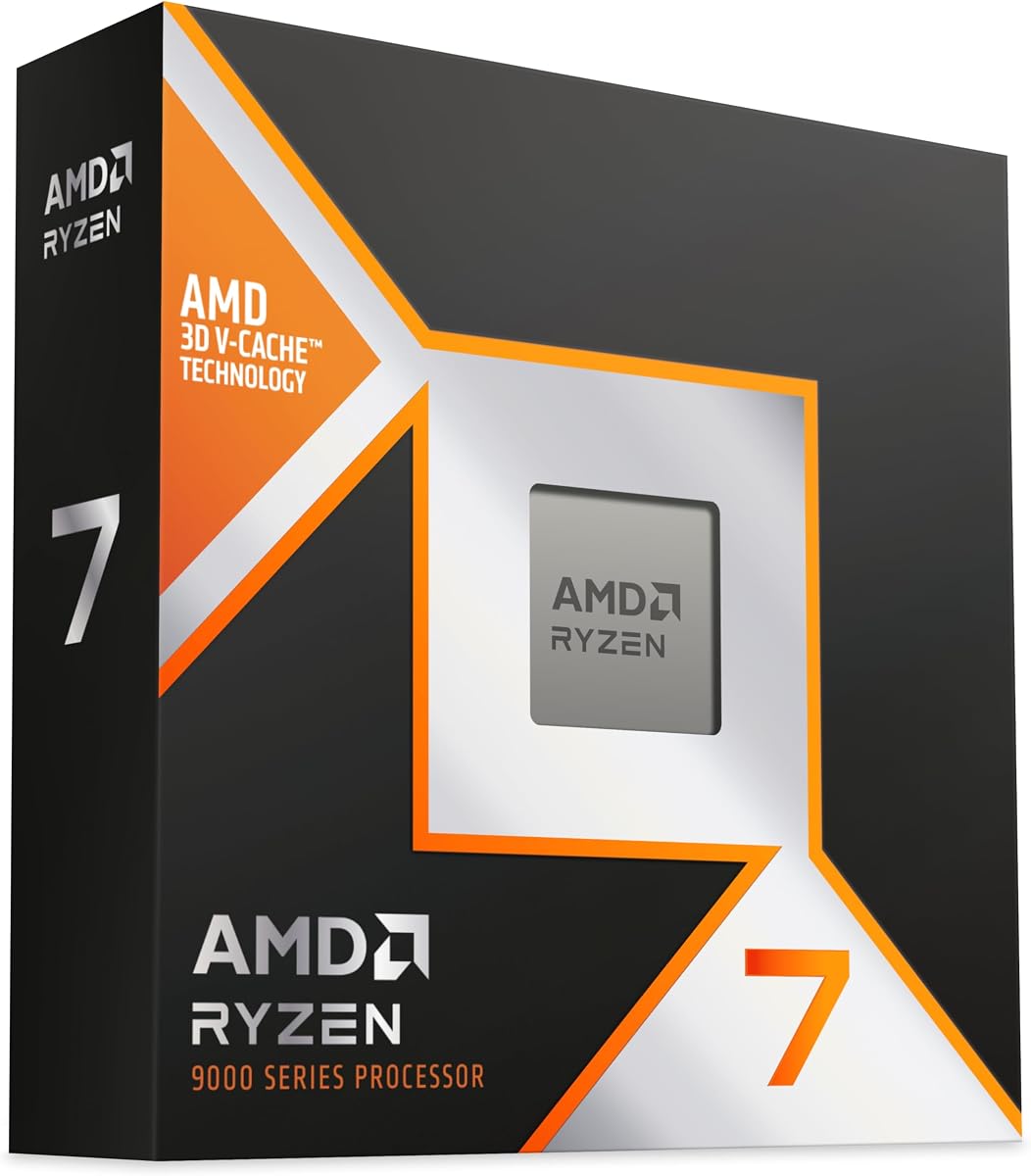
This processor brings the latest Zen 5 technology to high cache desktop builds. It features 8 cores and 16 threads with a massive 96MB L3 cache. This combination ensures fast data access and smooth workflow performance.
We may earn a commission when you buy through this link, at no additional cost to you.
The architecture delivers a significant IPC uplift over previous generations. Clock speeds reach up to 5.2GHz which helps with single thread tasks. It is built on a drop in ready AM5 socket for future proofing.
However it does not include a cooler which is standard for this tier. The price point is high for an 8 core chip but justified by the cache. It is best for users prioritizing efficiency and speed.
We recommend it for gamers who also do light to medium 3D rendering. The thermal performance is better than before allowing for sustained speeds. It is a strong choice for hybrid use cases.
The new architecture provides better performance per watt and faster execution.
Drop in ready AM5 infrastructure ensures compatibility with future upgrades easily.
We may earn a commission when you buy through this link, at no additional cost to you.
This processor combines high core counts with the latest Zen 5 architecture. It offers 16 cores and 32 threads for heavy multi tasking. The boost clock reaches up to 5.7GHz for incredible single core performance.
We may earn a commission when you buy through this link, at no additional cost to you.
It is designed for both content creation and gaming needs. The AM5 socket ensures long term support and upgradeability. It handles complex rendering loads while maintaining system responsiveness during active work.
The price is premium compared to standard models. It also requires a robust cooling solution as the cooler is not included. These factors are typical for top tier desktop processors in this class.
We suggest this for creators who need versatility in both work and leisure. It handles simulation and rendering tasks well without throttling. It is a powerful engine for demanding workstation users.
Balanced design delivers top performance for both professional and personal tasks.
Socket compatibility ensures users can upgrade easily as new chips release.
We may earn a commission when you buy through this link, at no additional cost to you.
This desktop processor uses the latest Zen 5 technology for speed. It includes high cache capacity to accelerate data access tasks. It fits into the modern AM5 platform for long term usability.
We may earn a commission when you buy through this link, at no additional cost to you.
It focuses on single thread efficiency which helps with modeling tasks. The design is efficient allowing for stable operation over long periods. It supports DDR5 memory for faster bandwidth and performance.
Users should note the limited core count for heavy rendering. It is best suited for interactive tasks rather than massive batches. The price reflects the premium architecture and features.
We recommend it for users prioritizing responsiveness in their workflow. It handles daily tasks with ease and supports modern GPUs. It is a solid pick for high end consumer setups.
New architecture ensures faster execution and better power efficiency overall.
Supports latest memory and interface standards for future proofing.
We may earn a commission when you buy through this link, at no additional cost to you.
This processor brings modern architecture to entry level builders. It features 6 cores and 12 threads for moderate tasks. The boost clock reaches 5.4GHz which helps with responsiveness in apps.
We may earn a commission when you buy through this link, at no additional cost to you.
It is unlocked for overclocking so enthusiasts can push limits. DDR5 support ensures high speed memory performance for the platform. It draws less power than higher core models for better efficiency.
It is limited to lighter workloads due to fewer cores. Complex multi thread rendering will take longer compared to higher models. But for general use it offers excellent value and speed.
We suggest this for beginners or budget focused workstations. It handles basic modeling and rendering without excessive heat. It is a great foundation for affordable 3D projects.
Offers modern features at a lower price point for entry users.
High boost ensures smooth single core tasks and good responsiveness.
We may earn a commission when you buy through this link, at no additional cost to you.
This processor is built for reliable workstation performance. It includes 16 cores and 32 threads for consistent rendering output. It supports DDR4 memory which is widely available and affordable.
We may earn a commission when you buy through this link, at no additional cost to you.
It runs at a stable 4GHz base clock for steady workloads. The design focuses on stability and longevity for professional environments. It is a trusted choice for many enterprise setups.
It does lack the newest AM5 features and DDR5 bandwidth. This might limit peak speed compared to newer consumer chips. But for reliability it remains a strong contender for studios.
We recommend it for users needing stability over raw speed. It handles long render jobs without issues due to robust design. It is ideal for professional studios valuing uptime.
Designed for long hours and stable operation in critical environments.
Supports affordable DDR4 memory for lower cost builds.
We may earn a commission when you buy through this link, at no additional cost to you.
This processor offers high core counts with Arrow Lake architecture. It features 24 cores and a boost up to 5.5GHz. It supports PCIe 5.0 for fast storage and GPU connectivity.
We may earn a commission when you buy through this link, at no additional cost to you.
The cache is 36 MB which helps with data handling. It is designed for high performance tasks requiring strong multi thread power. It uses DDR5 memory for bandwidth and speed.
It is an Amazon exclusive model with specific shipping restrictions. It requires a motherboard with Intel 800 series chipset for support. These factors might limit availability for some buyers.
We suggest this for those wanting Intel performance with hybrid cores. It handles rendering well and supports modern features. It is a strong alternative to AMD in this tier.
Mix of P and E cores balances performance and efficiency tasks.
PCIe 5.0 support ensures future connectivity options for devices.
We may earn a commission when you buy through this link, at no additional cost to you.
This processor offers strong value on the AM4 platform. It features 16 cores and 32 threads for solid multi core tasks. It supports DDR4 memory which is cost effective for builders.
We may earn a commission when you buy through this link, at no additional cost to you.
It has a large 72 MB cache for data handling. The boost clock reaches 4.8GHz which is decent for many apps. It is unlocked for overclocking to push limits if needed.
It relies on the older AM4 socket which limits future upgrades. Boost clocks are lower than new Zen 5 models but still capable. It remains a budget friendly option for many.
We recommend it for budget builders with existing AM4 gear. It handles rendering well at lower costs than newer platforms. It is a practical choice for upgrading older systems.
Offers high core count at a lower price point than new.
Supports cost effective memory that is widely available.
We may earn a commission when you buy through this link, at no additional cost to you.
Selecting the right CPU requires balancing core counts architecture and budget to match your workflow needs effectively.
Core count directly impacts multi thread rendering speed. Look for at least 16 cores for efficient production rendering.
More cores generally mean faster completion of heavy tasks.
Large cache improves data access speed and reduces latency. It is crucial for complex scenes with many textures.
Prioritize models with high L3 cache for better performance.
Check socket support to ensure future upgrade paths are available. AM5 and newer sockets offer long term compatibility.
A stable platform protects your investment over years.
DDR5 memory provides higher bandwidth for data transfer. It complements the CPU speed for rendering tasks.
Ensure your choice supports the memory standard you want.
Efficient designs reduce heat and power costs during long renders. Look for high IPC performance to save energy.
Power efficiency matters for 24/7 rendering operations.
Evaluate the cost per core and performance per dollar. Balance budget against your specific rendering requirements.
The best value depends on your workflow complexity.
Install the processor carefully on the motherboard ensuring the pins are not bent. Secure it firmly with the retention arm before attaching the cooler.
Apply a quality thermal paste to the top of the CPU. Use even pressure to spread the paste for optimal heat transfer.
Run monitoring software to check temperatures and usage levels. Keep the system dust free to maintain cooling efficiency.
The best CPU depends on your specific needs and budget. For high end professional workloads the Threadripper PRO 7975WX offers unmatched core counts. For balanced performance the Ryzen 9 9950X provides excellent speed.
Ideally you should aim for at least 16 cores for efficient rendering. More cores allow for parallel processing of complex scenes. Budget models with 6 to 8 cores work for lighter tasks.
Yes larger cache significantly improves data access speeds. It helps reduce latency when loading textures and models. Models with high cache are often faster in complex scenes.
DDR5 offers higher bandwidth and is the modern standard. It pairs well with newer CPUs for better performance. DDR4 is acceptable for older platforms to save costs.
Absolutely high load rendering generates significant heat. A quality liquid cooler or large air cooler is essential. Proper cooling prevents thermal throttling during long sessions.
Yes many of these models are excellent for both tasks. The Zen 5 processors have strong single core performance for games. Balancing both needs is possible with the right selection.
The Ryzen 9 9950X and Threadripper PRO 7975WX lead for professionals seeking raw speed. The Ryzen 7 7800X3D offers a budget friendly entry point for smaller studios.
Prioritize core counts and platform support to ensure your system lasts years. Balancing performance with power efficiency is key for sustainable workflows.
Always check current prices and availability as these change frequently. Choose a model that fits your specific budget and rendering demands today.