
HiLetgo 5pcs DHT11 Temperature Humidity Sensor Module
4.5Editor score
Single wire digital output
Pre calibrated measurement module
Wide voltage supply range
This guide compares the top Arduino temperature sensor models for accuracy, range, and connectivity to help you select the right device for your project needs.
Finding the right temperature sensor for your Arduino project is essential for accurate data logging and environmental monitoring. The market offers many options ranging from simple digital modules to waterproof probes designed for harsh conditions.
We evaluated ten highly rated sensors based on their accuracy, communication protocols, voltage requirements, and ease of integration. This list covers versatile choices for hobbyists, students, and professionals working on diverse applications.
Each pick highlights specific strengths and ideal use cases so you can match the hardware to your goals. Please note that availability and pricing may vary over time so verify current details before ordering.
4.5Editor score

4.9Editor score

4.7Editor score
The following table provides a side by side overview of key specifications for each selected sensor to help you quickly identify the best fit for your specific project requirements.


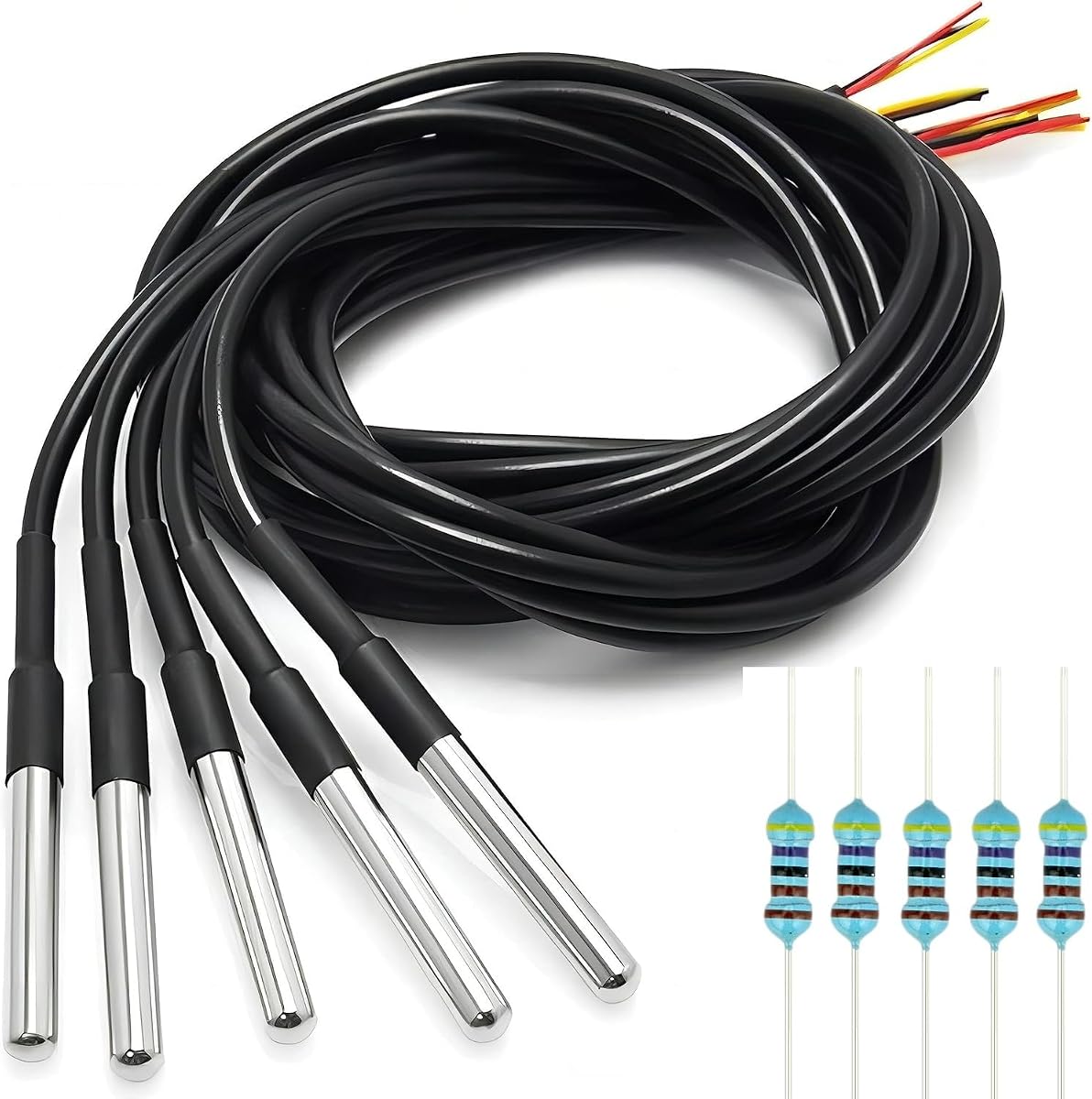


This set delivers excellent accuracy with its stainless steel probes capable of surviving harsh wet environments. It is a top choice for users who need reliable long term monitoring in challenging conditions.
We may earn a commission when you buy through this link, at no additional cost to you.
The adapter boards feature integrated pull up resistors which simplifies the connection to microcontrollers. This reduces clutter and potential wiring errors during the prototyping phase.
While you may need to add a 4.7K resistor for stability in some setups the robust construction justifies the minor extra work. The temperature range is extensive enough for most industrial and hobby needs.
Buyers seeking a durable solution for water tanks or outdoor weather stations will find this kit invaluable. The complete package saves time and ensures consistent performance from day one.
The waterproof seal ensures consistent readings even when fully submerged in water or exposed to high humidity levels.
Included adapter boards and jumper wires provide everything needed to connect the sensors directly to your Arduino board.
We may earn a commission when you buy through this link, at no additional cost to you.
The DHT11 is a classic entry level sensor offering a balanced mix of temperature and humidity readings at a low cost. Its simple single wire protocol makes it ideal for beginners learning basic monitoring projects.
We may earn a commission when you buy through this link, at no additional cost to you.
Each module comes with on board components like capacitors and resistors to reduce external parts. This design choice streamlines the assembly process for classrooms and hobby workshops alike.
While the measurement accuracy is not as precise as higher end models it suffices for general room monitoring. The limited range means it is less suitable for extreme environments or industrial control.
Ideal for those needing multiple sensors for a grid or backup units this pack offers great value. It remains a staple for educational kits and simple home automation tasks.
The straightforward interface and low price point make this module a frequent choice for student labs and science fairs.
The digital output ensures consistent signals that resist noise interference over long periods of continuous monitoring.
We may earn a commission when you buy through this link, at no additional cost to you.
The SHT31 delivers high precision readings across a broad temperature range making it suitable for demanding applications. Its I2C interface allows for easy integration into complex systems requiring multiple sensors.
We may earn a commission when you buy through this link, at no additional cost to you.
Operating on a wide voltage range ensures compatibility with various microcontrollers without needing additional regulation. The module provides reliable data for professional prototyping and precise environmental control.
Although more expensive than entry level options the accuracy gain is significant for scientific or industrial uses. The digital interface reduces noise susceptibility compared to analog sensors in noisy environments.
Engineers and serious hobbyists who need consistent and accurate data will appreciate the performance of this sensor. It is a robust upgrade for projects where precision is a critical requirement.
The sensor maintains tight tolerances for both temperature and humidity ensuring data integrity over time.
Supporting voltages from 2.4V to 5.5V allows seamless connection to modern low power microcontroller boards.
We may earn a commission when you buy through this link, at no additional cost to you.
This set includes a waterproof probe capable of handling temperatures from freezing to boiling making it ideal for industrial monitoring. The pluggable adapter module simplifies connections and reduces soldering needs for quick prototyping.
We may earn a commission when you buy through this link, at no additional cost to you.
The pull up resistor on the board allows direct connection to most microcontrollers without extra components. This feature makes it convenient for rapid deployment in machinery or equipment monitoring tasks.
Users should note the lead wires have a maximum temperature rating slightly below the sensor itself. This trade off is acceptable for most general uses but requires care in high heat zones.
For those needing a rugged sensor for tanks or outdoor setups this option provides reliable performance. The 1 meter length offers flexibility for placement away from the main controller.
The included adapter board supports direct connections reducing setup time and potential wiring mistakes.
The robust waterproof design ensures consistent operation in harsh environments like greenhouses or machine rooms.
We may earn a commission when you buy through this link, at no additional cost to you.
This pack provides five waterproof probes along with the necessary resistors for stable operation. It is an excellent choice for projects requiring multiple sensor points such as room zoning or environmental mapping.
We may earn a commission when you buy through this link, at no additional cost to you.
The probes are designed for underwater use ensuring they survive in moist or wet conditions without damage. This durability makes them a strong candidate for aquariums or outdoor weather stations.
Without adapter boards users must wire the probes directly which requires some soldering or crimping skills. This extra step is manageable for experienced DIYers but may deter absolute beginners.
Anyone needing a bulk supply of accurate sensors will find this set offers great value. The inclusion of resistors simplifies the assembly process for distributed monitoring networks.
The bundle includes enough components to equip several locations without purchasing additional resistors separately.
Sealed probes ensure long life even when submerged or exposed to high humidity environments constantly.
We may earn a commission when you buy through this link, at no additional cost to you.
This module uses a resistive element and NTC device to provide reliable digital temperature and humidity readings. The simple communication protocol reduces programming effort and makes it accessible for beginners.
We may earn a commission when you buy through this link, at no additional cost to you.
Its digital output ensures consistent signals that are easy to read with standard microcontroller inputs. The included wires allow for quick connections to breadboards for immediate testing.
While the accuracy is not suited for high precision tasks it meets general household or classroom needs well. The long term stability ensures consistent performance over extended periods of use.
Buyers looking for an affordable way to add environmental awareness to their projects will find this useful. It remains a popular choice for simple automation and data logging applications.
The digital bus interface simplifies code requirements allowing faster project development cycles.
Robust construction ensures the sensor maintains its calibration and output quality for long periods.
We may earn a commission when you buy through this link, at no additional cost to you.
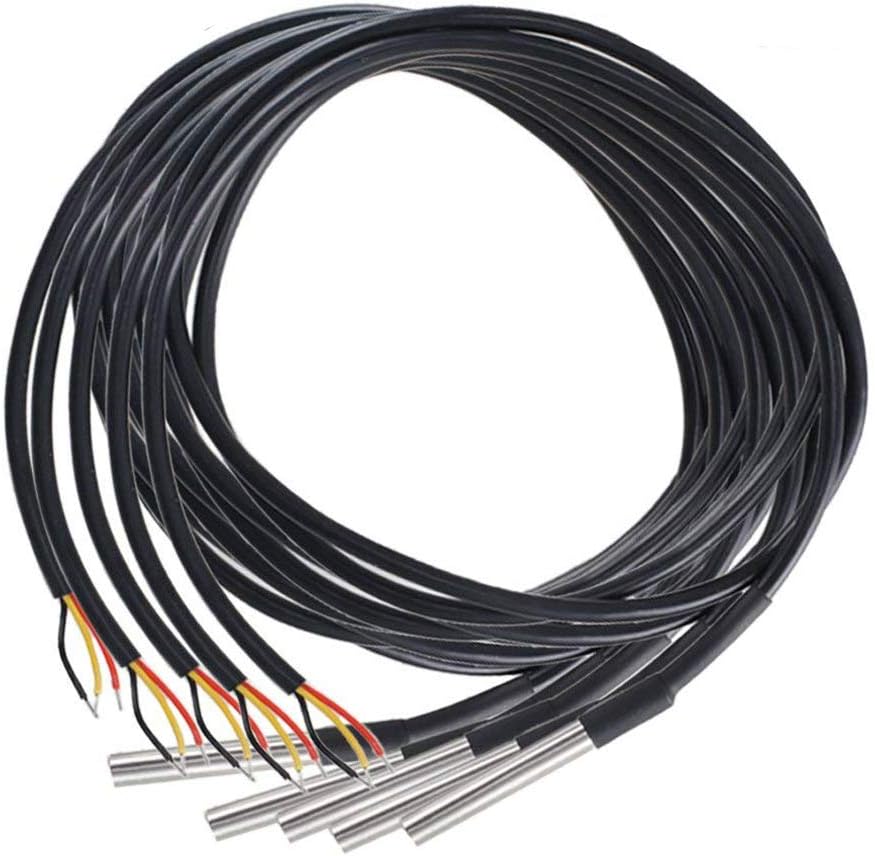
This set offers five waterproof stainless steel probes ideal for measuring temperatures in harsh or wet environments. The one meter cable allows placement in hard to reach areas while keeping the electronics safe.
We may earn a commission when you buy through this link, at no additional cost to you.
The stainless steel casing provides excellent protection against corrosion and physical damage. This makes it suitable for outdoor use or industrial settings where durability is paramount.
Users will need to source their own pull up resistors for stable data transmission. This small requirement does not outweigh the benefits of a robust and ready to use probe.
For projects needing multiple remote sensors this pack provides a solid foundation for distributed monitoring. The build quality ensures long term reliability even under challenging environmental conditions.
The stainless steel housing resists rust and impact ensuring the probe survives rough handling and weather.
One meter cables allow mounting sensors deep inside tanks or far from the control board.
We may earn a commission when you buy through this link, at no additional cost to you.
The AHT30 offers high precision digital readings with an upgraded design for better accuracy than previous models. Its compact size makes it perfect for space constrained projects where board real estate is limited.
We may earn a commission when you buy through this link, at no additional cost to you.
Operating on a wide voltage range ensures compatibility with both 3.3V and 5V systems. The I2C interface allows multiple devices to be connected using just two data pins.
Transmission speed is stable and fast enabling efficient data logging without delays. The module design simplifies the circuit and reduces the need for extra components.
Builders needing a small precise sensor for portable devices will appreciate this module. It balances performance and size effectively for modern embedded systems.
The small module footprint allows integration into compact handheld or wearable electronic devices.
Using I2C means multiple sensors can share data lines without consuming many GPIO pins.
We may earn a commission when you buy through this link, at no additional cost to you.
This five pack provides one meter cables allowing flexible placement in large tanks or rooms. The waterproof design ensures reliability in wet environments making it ideal for diverse monitoring needs.
We may earn a commission when you buy through this link, at no additional cost to you.
The single bus interface simplifies wiring so multiple sensors can connect to one data pin easily. This reduces cable clutter and keeps the setup organized for large scale projects.
Testing is made easier with clear color coded wires and straightforward connection instructions. While a resistor is needed the setup remains intuitive for most hobbyists.
For those needing extended reach and multiple sensors this set offers a practical solution. The long cable length is particularly useful for distributed environmental tracking.
One meter cables allow sensors to be placed far from the main controller without signal loss.
Clear wire color codes simplify the connection process for beginners and pros alike.
We may earn a commission when you buy through this link, at no additional cost to you.
The AM2302 chip in this module offers improved accuracy over standard budget sensors. It provides a wide temperature range and excellent humidity sensing for precise environmental monitoring.
We may earn a commission when you buy through this link, at no additional cost to you.
Its single bus interface simplifies wiring while supporting bidirectional data exchange for accurate readings. The module includes screw holes for secure mounting ensuring it stays in place during use.
Although the update rate is slightly slower than some high speed options the accuracy gain is significant for climate projects. It is a reliable upgrade for those needing better precision.
Builders looking to replace older SHT sensors will find this module a direct and effective upgrade. It combines robust performance with easy integration for practical projects.
The sensor provides detailed humidity data making it ideal for greenhouse or indoor air quality control.
Built in screw holes allow for stable installation preventing movement that could affect readings.
We may earn a commission when you buy through this link, at no additional cost to you.
Selecting the right temperature sensor depends on your specific project needs such as range, accuracy, and environment.
Determine the lowest and highest temperatures your project will encounter. Some sensors cover broad ranges from freezing to boiling while others are limited to room conditions.
Choose a sensor whose range comfortably exceeds your expected operating temperatures to ensure accurate data.
Precision varies widely among sensors with high end models offering sub degree accuracy and budget ones providing approximate values. Consider if your application needs exact data or general trends.
For scientific or industrial tasks prioritize high accuracy modules to ensure reliable decision making based on readings.
Sensors use protocols like single wire, I2C, or analog outputs which affect how you connect them to your board. Some protocols allow more devices on fewer pins than others.
Select a protocol that matches your microcontroller capabilities to simplify wiring and code complexity.
Check that the sensor supports the voltage levels of your controller such as 3.3V or 5V. Mismatched voltages can damage components or lead to unreliable readings.
Opt for wide voltage modules to ensure compatibility across different development boards without extra regulators.
If your sensor will be used outdoors or in wet conditions choose a waterproof or sealed model. Stainless steel probes or epoxy coatings protect against moisture and corrosion.
Robust packaging ensures the sensor survives harsh conditions and maintains performance over time.
Some sensors update data quickly while others take longer to stabilize. Fast response times are vital for active control systems like thermostats.
For logging ambient conditions slower update rates are acceptable and often save power.
Low power sensors are essential for battery operated projects to extend operational life. Check the typical current draw of the module during active measurement.
Prioritize low power models if your project needs to run unattended for weeks or months on a single charge.
Popular sensors have extensive online support including libraries and tutorials that simplify development. Less common models might lack community resources making troubleshooting harder.
Choose widely supported options to benefit from shared code examples and user forums.
Begin by connecting the sensor power and data pins to your Arduino board following the color codes provided. Ensure a pull up resistor is installed on the data line if the module does not include one.
Upload a simple test sketch to verify that the sensor is communicating and returning values. Use the serial monitor to check for any error codes or unexpected data ranges.
Calibrate your sensor by comparing readings with a known accurate thermometer in the same environment. Adjust your code to apply any necessary offsets for higher precision.
The DHT22 offers better accuracy and a wider temperature range than the DHT11. It is slightly more expensive but suitable for projects requiring precise environmental monitoring.
Yes, the DS18B20 uses a unique address system allowing many sensors to share a single data wire. You only need one pull up resistor for the entire network.
Purchase pre sealed waterproof probes designed for submersion or enclose the module in a waterproof IP rated case. Avoid sealing raw wires as moisture can still seep into connections.
Modules that measure both temperature and humidity like the DHT22 or SHT31 are ideal. They provide comprehensive data needed to monitor comfort and air conditions indoors.
While you can write raw code using the protocols most users benefit from existing libraries. These simplify integration and ensure compatibility with common Arduino environments.
Most digital sensors have a long lifespan and can operate continuously for years without significant drift. However, extreme heat or humidity can accelerate aging over time.
The ten products reviewed here cover a wide range of needs from budget friendly starters to high precision industrial probes. Each offers unique benefits depending on your specific project goals and environment.
Prioritize accuracy and durability if your project involves critical monitoring or harsh conditions. For learning or simple tasks, cost effective modules provide reliable performance without extra expense.
Always verify the latest pricing and availability before purchasing to ensure you get the best deal. With the right sensor, your Arduino projects can deliver precise and actionable environmental data.