
Vogzone MCX4121A-ACAT
4.7Editor score
Mellanox ConnectX-4 Lx
Supports RDMA and DPDK
Wide OS Compatibility
This guide compares the top 25GbE network cards for servers and NAS, evaluating performance, compatibility, and value for enterprise and prosumer upgrades.
High-speed networking is essential for modern data centers and professional workstations. Choosing the right 25GbE network card ensures your infrastructure handles demanding workloads without bottlenecks or latency issues.
We evaluated ten leading options based on controller architecture, interface speed, and compatibility with major operating systems. Each product was assessed for its ability to deliver reliable throughput in enterprise and storage environments.
Every selection highlights key specifications and potential use cases to help you make an informed decision. Please note that pricing and availability can fluctuate frequently across different retailers and regions.
4.7Editor score


5.0Editor score
The following table provides a side-by-side overview of the top contenders in the 25GbE network card market, highlighting key specifications and compatibility details.


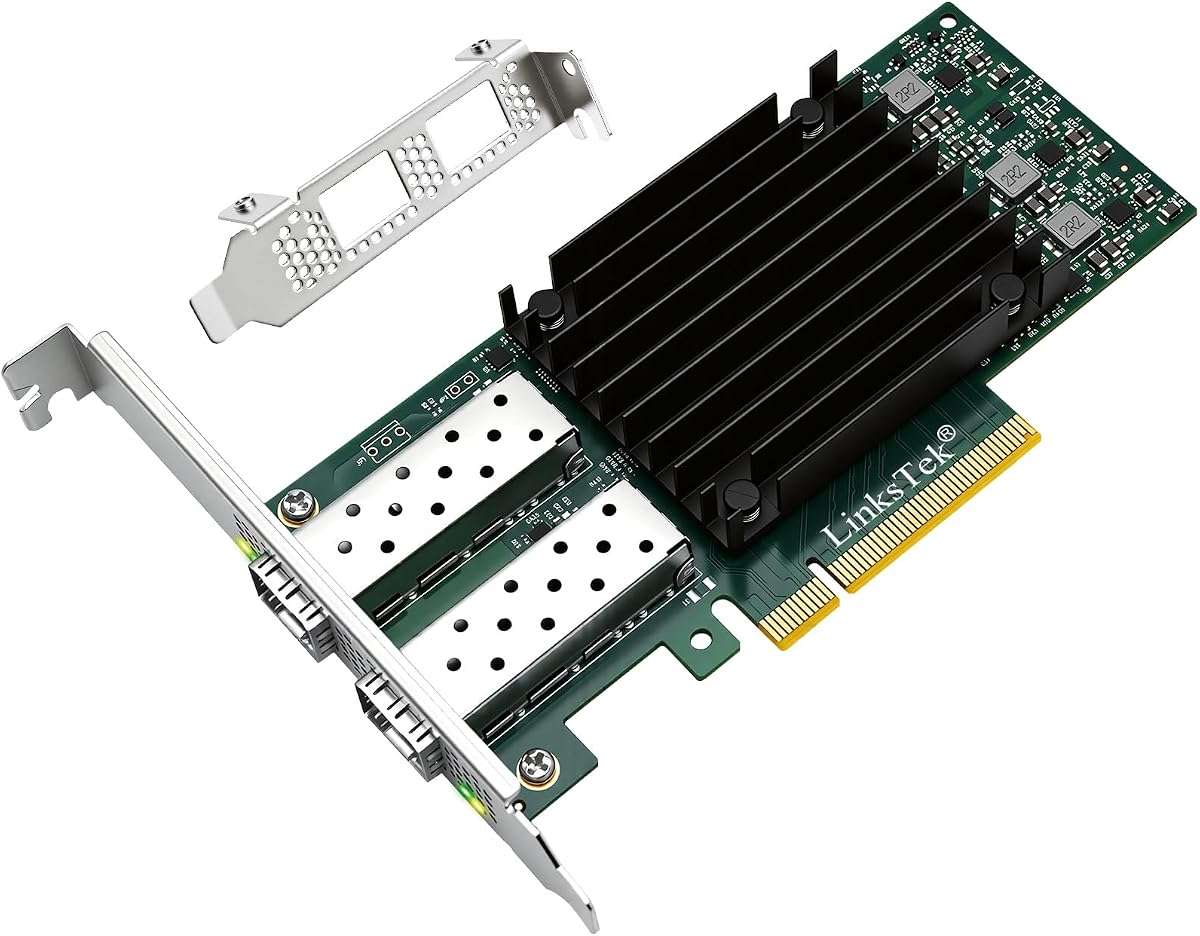


This card is designed for enterprise-level networks requiring reliable data transfer at high speeds. It comes with an Intel E810 controller and supports Forward Error Correction to maintain data integrity.
We may earn a commission when you buy through this link, at no additional cost to you.
The dual 25GbE ports allow for flexible connectivity and port trunking to achieve up to 50 Gbps transfer speeds. This makes it ideal for intensive data transfer scenarios in professional environments.
Compatibility is broad, supporting QNAP QTS, QuTS hero, Windows, and Linux OS. The inclusion of both low-profile and full-height brackets ensures it fits most server chassis.
Ideal for administrators seeking a robust solution with built-in error correction. It balances performance and reliability well for enterprise NAS deployments.
Forward Error Correction ensures that data remains intact during transmission over high-speed links without needing retransmission.
Port trunking combines both ports for increased bandwidth, offering flexibility for different network architectures and workload demands.
We may earn a commission when you buy through this link, at no additional cost to you.
This adapter is purpose-built for use with Synology systems to enable higher simultaneous throughput and storage applications. It requires a specific DSM update to function correctly.
We may earn a commission when you buy through this link, at no additional cost to you.
Features like port failover and load balancing ensure continuous availability and efficient utilization of network resources across multiple connections in your setup.
While it offers strong integration with the Synology ecosystem, it is less flexible for non-Synology environments due to its specific compatibility requirements.
Recommended for Synology NAS users who want a seamless, guaranteed compatible upgrade path without worrying about driver conflicts or installation issues.
Designed specifically for DSM, this card ensures driver stability and feature support within the Synology ecosystem without third-party complications.
Port failover provides redundancy, keeping your network active even if one port fails, which is critical for business continuity.
We may earn a commission when you buy through this link, at no additional cost to you.
An affordable alternative that delivers true hardware-based I/O isolation with unmatched scalability using the original Mellanox ConnectX-4 Lx controller.
We may earn a commission when you buy through this link, at no additional cost to you.
It supports a vast array of features including SR-IOV, DPDK, and RoCE, making it suitable for virtualization and high-performance computing environments.
While it offers great value, users must ensure they source compatible SFP28 modules separately as these are not included in the package.
Excellent for budget-conscious users who need enterprise-grade features like RDMA and extensive OS support without paying for a premium brand.
SR-IOV technology allows efficient management of I/O resources for virtual machines, enhancing performance in cloud and server setups.
Support for RDMA allows direct memory access to bypass the CPU, significantly reducing latency for storage and database workloads.
We may earn a commission when you buy through this link, at no additional cost to you.
This card leverages the newer PCIe 4.0 interface for increased bandwidth, paired with the robust Intel E810 controller for consistent performance.
We may earn a commission when you buy through this link, at no additional cost to you.
It supports a wide range of operating systems including Windows 10/11, various Linux distributions, and VMware ESXi, ensuring versatility in diverse environments.
The lack of Mac support is a limitation for Apple users, but for Windows and Linux server administrators, it is a strong contender with excellent reliability.
Recommended for users upgrading systems that support PCIe 4.0 to take full advantage of the faster bus speeds alongside 25GbE networking.
PCIe 4.0 provides double the bandwidth per lane compared to PCIe 3.0, ensuring the network card is not bottlenecked by the system bus.
Support for numerous Linux distributions and VMware makes it a versatile choice for heterogeneous server environments and cloud infrastructure.
We may earn a commission when you buy through this link, at no additional cost to you.
A cost-effective solution based on the Mellanox ConnectX-4 Lx EN controller that provides a flexible Ethernet solution for cloud and storage platforms.
We may earn a commission when you buy through this link, at no additional cost to you.
It supports advanced features like NVGRE, VXLAN, and GENEVE for overlay networks, which are crucial for modern virtualized and software-defined data centers.
While it requires some driver setup and compatible fiber ports, the high user rating suggests reliable performance once properly configured in a supported environment.
Ideal for virtualization and storage servers requiring RDMA capabilities and intelligent Ethernet features without the premium cost of major brands.
Support for VXLAN and GENEVE allows seamless integration into complex network architectures and multi-tenant environments.
Auto-negotiation of PCIe lanes ensures compatibility with various slots while maintaining high throughput for data-intensive applications.
We may earn a commission when you buy through this link, at no additional cost to you.
This adapter offers official Intel certification and excellent small packet performance, making it ideal for network appliances and NFV deployments.
We may earn a commission when you buy through this link, at no additional cost to you.
It includes intelligent offloads to enable high performance on servers with Intel Xeon processors, maximizing throughput while minimizing CPU utilization.
While it is limited to PCIe 3.0, its optimization for Intel ecosystems provides a level of stability and support that third-party adapters cannot match.
Best for enterprises relying heavily on Intel hardware who need guaranteed compatibility and advanced packet processing capabilities.
Data Plane Development Kit optimization allows for efficient packet processing in virtualized environments, enhancing overall network efficiency.
Advanced network virtualization offloads like VXLAN and NVGRE enable flexible cloud deployments without significant CPU overhead.
We may earn a commission when you buy through this link, at no additional cost to you.
Designed with an OCP 3.0 form factor, this card delivers stable 25GbE throughput with on-chip QoS for traffic management in cloud and NFV workloads.
We may earn a commission when you buy through this link, at no additional cost to you.
It features Flexible Port Partitioning and PCI-SIG SR-IOV to enable virtualization, allowing efficient resource sharing across multiple virtual machines.
The specialized form factor limits use to OCP-compliant servers, but for those systems, it offers a modern and high-performance networking solution.
Ideal for data centers deploying Open Compute Project hardware that require reliable performance with advanced traffic management features.
On-chip QoS and traffic management ensure critical applications receive necessary bandwidth, improving overall network reliability.
SR-IOV support allows virtual machines to access the physical adapter directly, reducing latency in virtualized server environments.
We may earn a commission when you buy through this link, at no additional cost to you.
This adapter adds dual 25GbE connections to Thunderbolt 5 computers and includes optical transceivers for immediate deployment on fiber infrastructure.
We may earn a commission when you buy through this link, at no additional cost to you.
It is ideal for media production and AI workflows that require high-performance networking and shared storage access without internal expansion slots.
The included cables and transceivers make it a plug-and-play solution, though the high price point reflects its specialized premium features.
Recommended for creative professionals and Mac users who need maximum throughput without compromising on compatibility and ease of setup.
Inclusion of SFP28 transceivers and Thunderbolt cables ensures immediate deployment without extra purchases, saving time and effort.
Supports full 25GbE performance over Thunderbolt 5, offering future-ready connectivity for the latest high-end computers.
We may earn a commission when you buy through this link, at no additional cost to you.
A simple way to add dual optical 25GbE connections to any computer with PCIe slots, including Macs, Windows, and Linux systems.
We may earn a commission when you buy through this link, at no additional cost to you.
It supports backward compatibility with 10GbE infrastructure, allowing seamless integration and future upgrades as your storage systems improve.
Be aware that macOS 15.3.1 is not currently supported, so compatibility checks are essential for Apple users planning to upgrade their OS.
Suitable for users who prefer internal card slots over external adapters and need reliable performance across multiple operating systems.
Includes high-performance 25GBASE-SFP28 optical transceivers for immediate connectivity, avoiding the need for separate purchases.
Works with Sonnet Thunderbolt expansion systems, offering flexibility for desktops without internal PCIe slots.
We may earn a commission when you buy through this link, at no additional cost to you.
This intelligent RDMA-enabled adapter offers advanced application offload capabilities for Web 2.0, Cloud, and Telco platforms with dual SFP28 ports.
We may earn a commission when you buy through this link, at no additional cost to you.
While based on the older ConnectX-5 architecture, it still delivers strong performance for many storage and virtualization workloads without needing the latest hardware.
The tall bracket ensures fit in standard server chassis, and the RDMA capabilities help offload storage traffic to maintain server efficiency.
Recommended for users needing a reliable Mellanox card for PCIe 3.0 systems who do not require the latest ConnectX-6 features.
RDMA allows low-latency high-throughput networking, crucial for clustered storage and high-performance computing environments.
Advanced offloads reduce CPU burden by handling network tasks in hardware, improving overall system performance.
We may earn a commission when you buy through this link, at no additional cost to you.
Selecting the right network card requires balancing performance needs, system compatibility, and budget constraints.
The network controller determines the card's performance characteristics and feature set. Intel E810 and Mellanox ConnectX series controllers offer robust support for modern protocols like RDMA and DPDK.
Look for controllers that align with your workload requirements to ensure efficient packet processing and data transfer.
PCIe generation and lane count significantly impact potential throughput. PCIe 4.0 provides double the bandwidth of PCIe 3.0, which is critical for maximizing 25GbE performance.
Verify your motherboard or server supports the required PCIe version to avoid bottlenecks during data-intensive operations.
Most cards feature dual SFP28 ports, allowing flexible connectivity options and redundancy. This setup supports port trunking and failover strategies for improved reliability.
Ensure your switches and cables are compatible with the port types to fully utilize the advertised speeds.
Compatibility with your current operating system is crucial for stable operation. Windows, Linux, and VMware drivers vary by card model and may require specific kernel versions.
Check the manufacturer documentation for supported OS versions before purchasing to ensure seamless integration with your environment.
Advanced virtualization features like SR-IOV and RDMA are essential for cloud and data center workloads. These features offload network tasks from the CPU to the hardware.
Prioritize cards with SR-IOV support if you plan to use multiple virtual machines on a single physical server.
Forward Error Correction (FEC) helps maintain data integrity over long cable runs without requiring retransmission. This is vital for enterprise-level networks demanding high reliability.
Consider cards with FEC support if your infrastructure prioritizes data accuracy and continuous availability.
Some cards come with SFP28 transceivers included, while others require you to source them separately. This can impact the total cost of acquisition for your setup.
Evaluate whether included optics offer better value or if you prefer to choose your own transceiver based on fiber type.
Standard PCIe cards fit most towers and servers, while OCP mezzanine cards are designed for specific data center racks. Ensure the bracket height fits your chassis.
Verify low-profile vs. full-height requirements to guarantee physical installation is possible in your equipment.
Begin by installing the card securely into the appropriate PCIe slot on your server or workstation motherboard, ensuring the bracket is aligned with the chassis.
Next, install the latest drivers from the manufacturer's website to ensure optimal performance and compatibility with your operating system version.
Maintain proper airflow around the card and keep firmware updated to prevent overheating and security vulnerabilities over time.
25GbE offers 2.5 times the bandwidth of 10GbE, allowing faster data transfer for storage and virtualized workloads. It typically uses SFP28 connectors compatible with existing 10G cabling.
You need SFP28 DAC cables or fiber transceivers to support 25GbE speeds. While some older cables work, ensure they are rated for 25Gbps to avoid performance issues.
Yes, most 25GbE cards support auto-negotiation down to 10GbE. However, you will only get 10GbE speeds unless your switch also supports 25GbE.
No, PCIe 3.0 x8 provides enough bandwidth for 25GbE. However, PCIe 4.0 x8 offers headroom for future upgrades or additional expansion cards.
SR-IOV allows a physical NIC to appear as multiple virtual NICs to virtual machines. This improves performance by bypassing the hypervisor for direct hardware access.
RDMA enables direct memory-to-memory data transfer without CPU intervention. This is critical for high-performance computing and low-latency storage applications.
We have explored ten top options ranging from budget-friendly Mellanox alternatives to premium Thunderbolt solutions for Mac and Windows users.
Prioritize compatibility with your switches and operating system while considering future-proofing features like PCIe 4.0 support and RDMA capabilities.
Always verify current availability and pricing with your preferred retailer to ensure you are making the most cost-effective decision for your specific network upgrade.