
10Gb PCIe NIC Network Card Intel 82599EN SFP+
4.5Editor score
Genuine Intel 82599EN controller
No vendor lock on SFP+
Compatible with Proxmox and ESXi
Includes low-profile bracket
This guide compares the top 10GbE network cards for speed and compatibility to help you upgrade your home lab or server with reliable 10G Ethernet adapters.
Upgrading your network infrastructure requires the right hardware to handle high-speed data transfers. A 10GbE network card enables faster file sharing and smoother streaming for demanding applications across your local network.
We evaluated ten leading 10GbE network adapters based on controller quality, port types, and system compatibility. Our analysis covers both copper RJ45 and fiber SFP+ options for diverse networking environments.
Each pick highlights specific strengths like warranty coverage or multi-gigabit support. Note that product availability and pricing can change frequently so check current listings before purchasing.
4.5Editor score

4.2Editor score

4.6Editor score
The following table provides a side-by-side overview of all ten adapters evaluated in this guide to help you quickly compare key specifications.




The TP-Link TX401 offers an accessible entry point into 10GbE networking with a focus on ease of use. Its high rating reflects user satisfaction with its straightforward installation and reliable performance for home users.
We may earn a commission when you buy through this link, at no additional cost to you.
This adapter supports 10GBase-T technology ensuring seamless backward compatibility with lower speed devices. The included CAT6A cable helps maximize throughput while QoS features prioritize critical traffic like gaming packets.
Trade-offs include its single port design limiting redundancy options for advanced server setups. However for most home offices the price and convenience justify this choice.
Buyers seeking a plug-and-play upgrade for their desktop should consider this card. It balances cost and functionality well for non-enterprise environments.
Having a CAT6A cable in the box saves time and ensures the right cable type for 10G speeds.
Both full-height and low-profile brackets allow this card to fit into standard towers and compact cases.
We may earn a commission when you buy through this link, at no additional cost to you.
This adapter is purpose-built for Synology users needing high-performance storage connectivity. Its strong rating indicates excellent compatibility and stability within the DiskStation ecosystem.
We may earn a commission when you buy through this link, at no additional cost to you.
Two ports allow for link aggregation or redundant connections enhancing throughput and reliability. The five-year warranty adds significant value compared to standard two-year offerings from other brands.
The main limitation is its tight integration with Synology systems which may not suit general PC builds. Users outside the Synology environment might find better value elsewhere.
If you operate a Synology NAS and need faster access speeds this is the ideal upgrade path. It ensures seamless integration and long-term support for your storage infrastructure.
Dual ports enable you to combine bandwidth for faster file transfers across your network.
The five-year limited warranty offers peace of mind for your hardware investment over time.
We may earn a commission when you buy through this link, at no additional cost to you.
This card targets server environments requiring fiber connectivity via its SFP+ interface. The Intel 82599EN controller ensures stability and virtualization support for demanding workloads.
We may earn a commission when you buy through this link, at no additional cost to you.
Its design allows connection to SFP+ modules or DAC cables which are common in data centers. The controller supports storage protocols like iSCSI and FCoE enabling versatile network configurations.
Users must note that 1G and 2.5G speeds are not supported which limits flexibility for mixed networks. Additionally SFP+ modules are sold separately increasing initial costs.
For server builders prioritizing fiber connectivity and Intel silicon this card offers solid value. It remains a reliable choice for virtualized and storage-heavy applications.
Support for iSCSI and FCoE allows efficient storage over Ethernet implementations.
The controller supports I/O virtualization enhancing performance in VM environments.
We may earn a commission when you buy through this link, at no additional cost to you.
The VunLink adapter uses the newer Realtek RTL8127 chipset to deliver 10GbE speeds efficiently. Its design focuses on energy efficiency and flexibility with PCIe 4.0 compatibility.
We may earn a commission when you buy through this link, at no additional cost to you.
Multi-gigabit support allows automatic negotiation between 10G 5G and 2.5G speeds which adapts to different network switches. This flexibility makes it suitable for evolving home lab setups.
Driver installation may vary by OS version requiring some technical effort to get running. The passive heatsink design relies on case airflow which may need attention in quiet builds.
Tech enthusiasts wanting a compact yet powerful upgrade should find this card compelling. Its balance of speed and efficiency fits modern mini PC and ITX builds well.
PCIe 4.0 x1 ensures compatibility with the latest motherboards without requiring a large slot.
Auto-negotiation simplifies setup when connecting to switches with varying speed capabilities.
We may earn a commission when you buy through this link, at no additional cost to you.
This adapter provides dual copper ports for versatile connectivity using standard RJ45 cables. The Intel X550AT2 controller supports a wide range of enterprise features and OS platforms.
We may earn a commission when you buy through this link, at no additional cost to you.
Users can manage firmware updates through Windows or Linux without rebooting into BIOS which simplifies maintenance. Support for SR-IOV and offloading technologies enhances performance in virtualized environments.
The need for manual configuration to enable 2.5G or 5G speeds can be inconvenient for some users. It also consumes a PCIe x4 slot which may limit expansion options.
For servers needing multiple ports and advanced management features this is a robust choice. It balances enterprise capabilities with compatibility for various operating systems.
In-system firmware updates allow administrators to refresh adapters without downtime.
On-chip QoS and SR-IOV support optimize traffic management and virtualization performance.
We may earn a commission when you buy through this link, at no additional cost to you.
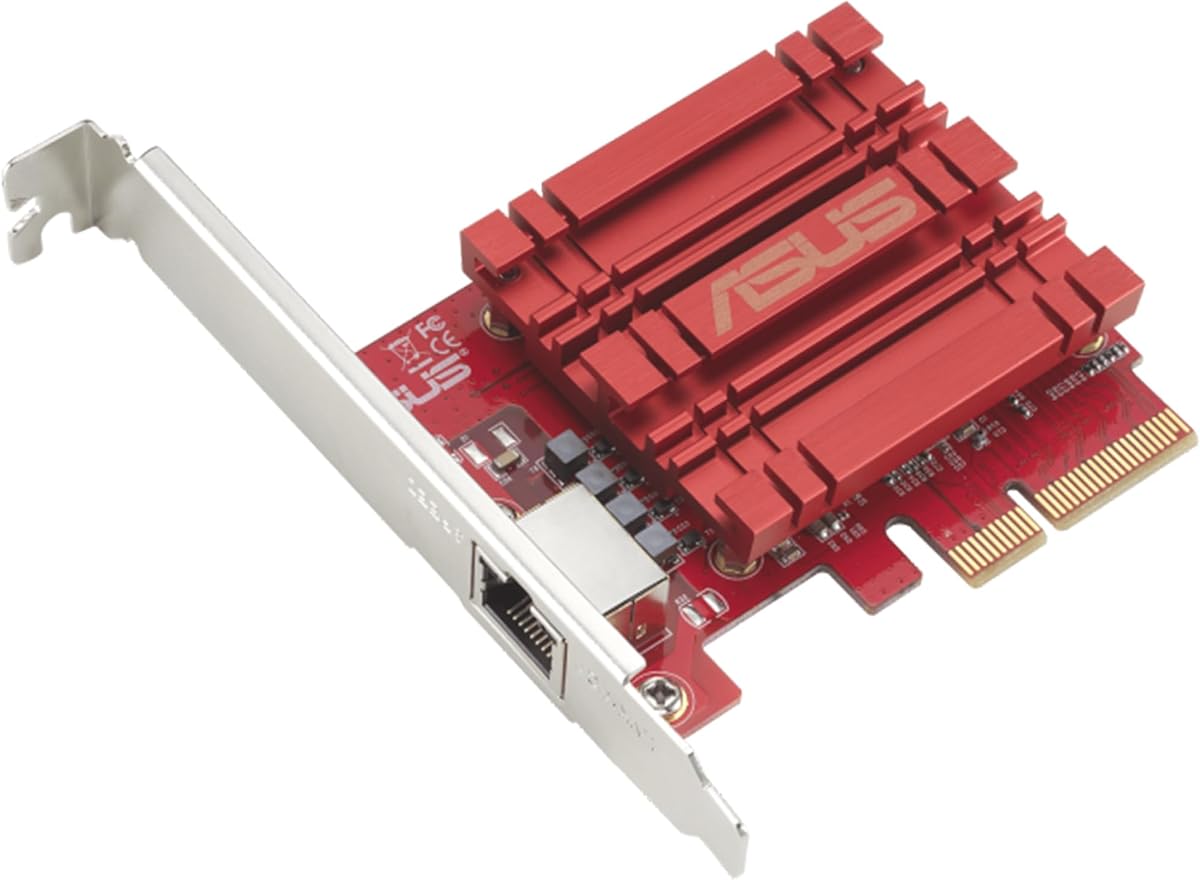
Asus brings its reputation for reliable networking hardware to this 10GbE adapter. It delivers hyper-fast transfer speeds suitable for bandwidth-demanding tasks like media editing or large file transfers.
We may earn a commission when you buy through this link, at no additional cost to you.
The card supports a wide range of operating systems including various Linux kernels which increases its versatility. Built-in QoS technology helps prioritize data packets for smoother online experiences.
It is a straightforward single-port solution without advanced features like link aggregation or specialized firmware tools. Users might prefer competitors offering more flexibility for similar pricing.
Those trusting the Asus brand for quality components will appreciate its consistent performance. It remains a solid option for general desktop upgrades needing higher speeds.
Support for multiple Linux kernels ensures flexibility for diverse user environments.
Built-in prioritization helps reduce latency during heavy network usage.
We may earn a commission when you buy through this link, at no additional cost to you.
This single-port adapter is validated for full compatibility with Synology systems ensuring seamless integration. Its perfect rating suggests users experience few issues with setup or reliability.
We may earn a commission when you buy through this link, at no additional cost to you.
The five-year limited warranty is a strong point that underscores Synology's confidence in this hardware. It supports auto-negotiation for smooth transitions between different network speeds.
Its utility is restricted primarily to Synology environments where broader PC compatibility is not a priority. Also the single port limits options for redundant connectivity.
For Synology users needing a reliable single-port upgrade this adapter is the top choice. It delivers high performance backed by a long warranty period.
Full compatibility and performance validation ensures trouble-free integration with your NAS.
The five-year limited warranty provides long-term assurance for your hardware investment.
We may earn a commission when you buy through this link, at no additional cost to you.
This card offers genuine Intel silicon at an affordable price point making it a budget favorite for server enthusiasts. It is designed to work seamlessly with Proxmox and TrueNAS systems.
We may earn a commission when you buy through this link, at no additional cost to you.
Its SFP+ cage accepts third-party modules without vendor lock-in allowing flexibility in choosing fiber or DAC cables. The passive heatsink design is typical for these cards but requires good case airflow.
Users may find that the card runs warm and needs a small fan in quiet cases to maintain temperatures. However this trade-off is acceptable given the price and performance.
Build-your-own servers or homelabs looking for cost-effective Intel hardware should prioritize this option. It delivers reliable throughput and compatibility without the premium price.
No vendor lock allows use of various third-party optics and cables.
Many users report working without needing extra driver installation on supported systems.
We may earn a commission when you buy through this link, at no additional cost to you.
This adapter stands out for its NDAA and TAA compliance which is essential for government and regulated projects. It supports 2.5G speeds over standard cables which adds flexibility for mixed-speed environments.
We may earn a commission when you buy through this link, at no additional cost to you.
The 2.5GBASE-T specification enables connection to devices that do not support full 10G speeds. Technical support is available during business hours for users needing assistance.
Its feature set is somewhat basic compared to enterprise cards with few virtualization or advanced management capabilities. The rating reflects average user satisfaction relative to competitors.
Government contractors or those needing regulatory compliance will find this card indispensable. It delivers necessary speeds while adhering to strict procurement standards.
NDAA and TAA compliance ensures eligibility for specific government procurement requirements.
Support for 2.5G speeds allows integration with older network devices.
We may earn a commission when you buy through this link, at no additional cost to you.
This card uses the Intel X550-AT2 chip to provide a stable single-port 10GbE solution. It supports a range of speeds including 2.5G and 5G over standard cables.
We may earn a commission when you buy through this link, at no additional cost to you.
Lifetime technology support and a 30-day return policy add confidence for buyers considering this option. However it does not support firmware updates which may limit long-term flexibility.
Users should manually configure speeds if auto-negotiation fails to reach 2.5G or 5G targets. This extra step is minor but worth noting for non-technical users.
For those needing a cost-effective single-port Intel card with support guarantees this is a viable option. It provides reliable performance for general network upgrades.
Support for multiple speeds over copper makes it adaptable to existing network setups.
Lifetime technical support ensures assistance is available whenever issues arise.
We may earn a commission when you buy through this link, at no additional cost to you.
Selecting the right adapter involves understanding your specific network needs and system limitations.
RJ45 ports use copper cables common in homes while SFP+ ports use fiber or DAC cables common in data centers.
Choose RJ45 for ease of use or SFP+ for longer distances and lower latency.
Single port cards save slots and cost while dual port cards enable link aggregation or redundancy.
Assess whether you need extra throughput or failover capabilities before choosing.
Intel controllers often offer better stability and feature support like SR-IOV compared to Realtek chips.
Look for genuine controllers to ensure reliability in demanding server environments.
Some cards require specific drivers or kernel versions especially for Linux or virtualization platforms.
Verify compatibility with your OS before purchasing to avoid installation issues.
Cards vary by PCIe lane usage which impacts available slots for other expansion cards.
Check your motherboard layout to ensure the card fits and works correctly.
Passive heatsinks rely on case airflow so silent builds may need small fans to prevent overheating.
Ensure your case provides adequate ventilation for sustained high-speed transfers.
Warranty periods range from two to five years which can significantly impact long-term value.
Prioritize vendors offering responsive support and clear return policies.
10G speeds typically require Cat6a or better cabling to maintain performance over distances.
Ensure your existing cables are rated for 10G or purchase suitable upgrades.
Install the card into a compatible PCIe slot and secure the bracket before attaching cables to ensure a stable connection.
Install the latest drivers from the manufacturer or enable network settings to negotiate speeds correctly with your switch.
Keep the card clean and free of dust to maintain airflow around the heatsink and prevent overheating during heavy use.
Yes for RJ45 adapters you typically need Cat6a or Cat7 cables to achieve 10G speeds reliably. For SFP+ cards fiber or DAC cables are required which are separate from standard Ethernet cables.
Many modern 10GbE adapters support auto-negotiation allowing them to work with older routers at lower speeds like 1G. However full 10G benefits require a compatible 10G switch or router.
Only if your internet plan exceeds 1Gbps since most home connections are slower. The primary benefit is faster local file transfers between devices on your network.
Not all cards offer equal Linux support. Check compatibility lists or community forums to confirm driver availability for your specific distribution and kernel version.
Most consume around 10 to 15 watts under load. Look for energy-efficient models if power usage is a concern for your system.
Usually no but some systems may require updates to fully support PCIe speeds or boot from these adapters. Check your motherboard documentation for guidance.
Yes but you need a switch that supports link aggregation or multiple connections. This setup increases complexity and cost significantly.
Our top picks cover diverse needs from budget-friendly options to premium server adapters.
Prioritize controller quality and compatibility with your operating system for the best experience.
Always check current pricing and availability before finalizing your purchase decision.