
CENMATE Aluminum 4 Bay
4.3Editor score
Aluminum Alloy Construction
USB A and C Ports
Hot Swappable Support
Finding the right storage expansion solution can transform your workflow. A quality JBOD enclosure allows you to connect multiple drives for massive capacity without complex RAID setups. It is essential for professionals managing large media files or business data archives efficiently.
We evaluated ten leading models based on connectivity speed, drive compatibility, cooling efficiency, and build quality. Our analysis focuses on how well each unit supports independent drive management while maintaining stable performance under heavy loads for various user needs.
Each selection highlights specific strengths like hot-swap capabilities or unique hybrid designs. Prices and availability fluctuate frequently so always verify current listings before purchasing. We aim to provide clear insights to help you choose the right hardware for your storage requirements.
4.3Editor score

4.2Editor score
4.1Editor score
As an Amazon Associate we earn from qualifying purchases.
This side-by-side comparison highlights key specifications across all ten evaluated enclosures to help you identify the model that best fits your specific storage expansion needs.




The TERRAMASTER D4-320 stands out as a top choice for users needing fast and reliable external storage. With a 4.2 rating from users it delivers consistent performance across diverse computing platforms.
We may earn a commission when you buy through this link, at no additional cost to you.
Its USB 3.2 Gen2 interface ensures speeds up to 10Gbps which is crucial for large file transfers. The tool-free tray design simplifies adding or swapping drives without special tools or effort.
While it lacks RAID options the standalone drive access is beneficial for straightforward backup needs. The cooling system works well though it may generate some noise during intense data activity.
This enclosure is ideal for professionals who value speed and ease of use over complex redundancy features. It balances performance and convenience effectively for daily workflows.
Achieves up to 10Gbps for fast file transfers with four drives installed.
Features a unique push-lock design for easy and secure drive installation.
We may earn a commission when you buy through this link, at no additional cost to you.
The CENMATE Aluminum 4 Bay offers exceptional value for those needing reliable storage expansion. It supports both 2.5 and 3.5 inch drives making it versatile for many setups.
We may earn a commission when you buy through this link, at no additional cost to you.
Its aluminum body helps dissipate heat effectively during prolonged use. The inclusion of both USB A and C ports adds flexibility for connecting to older or newer computers easily.
While the USB 3.0 speed is lower than newer standards it remains fast for most backup tasks. Users should be aware of fan noise if placing it in a quiet space.
This model is a strong choice for home users or small offices watching their budget. It provides essential features without unnecessary complexity or high cost.
Equipped with USB A and C 3.0 cables for broader device compatibility.
Includes a dedicated power adapter to ensure consistent drive performance.
We may earn a commission when you buy through this link, at no additional cost to you.
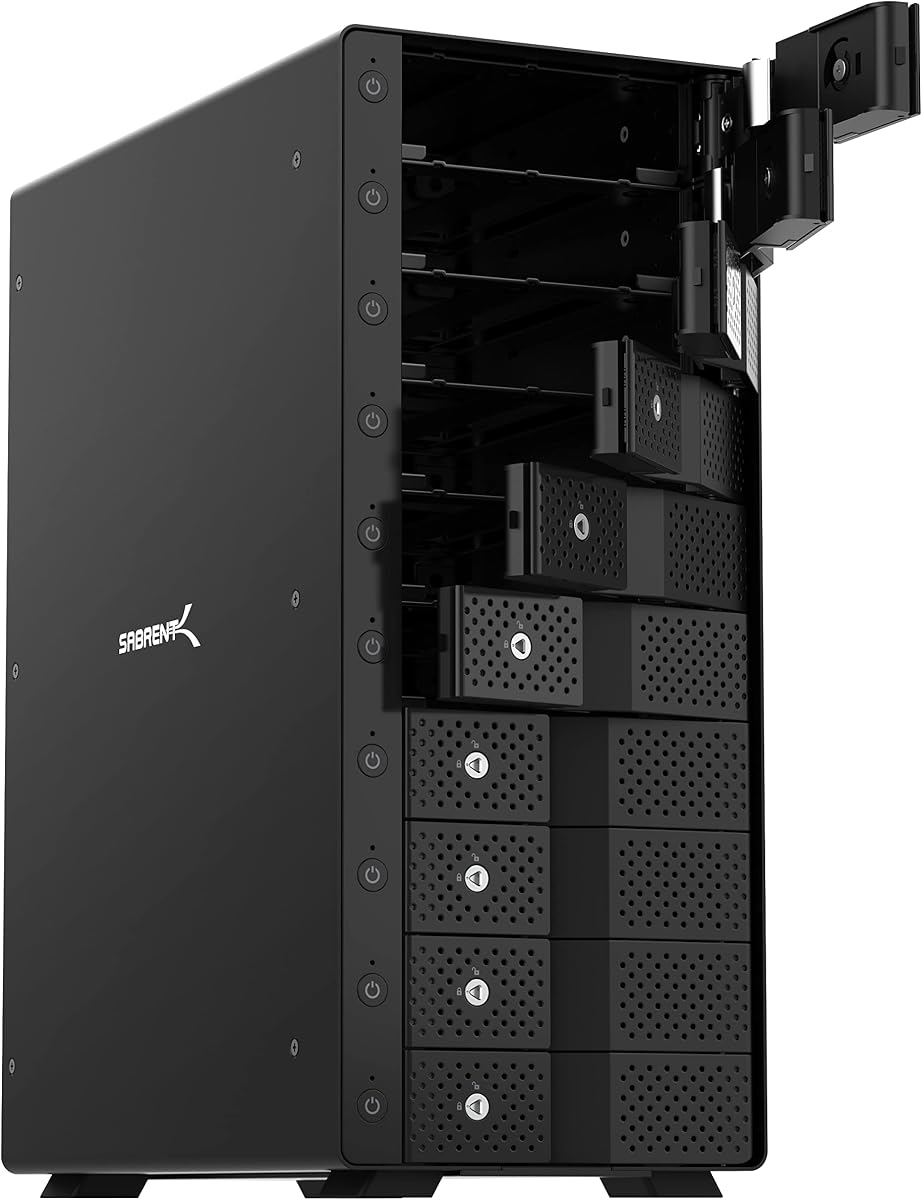
The SABRENT 10-Bay USB-C is designed for users needing massive storage expansion. It supports ten drives allowing up to 200TB of total capacity for extensive archives.
We may earn a commission when you buy through this link, at no additional cost to you.
Its USB-C connection delivers 10Gbps speeds ensuring quick access to large video or photo libraries. The dual 120mm fans keep temperatures stable even with all drives active.
Tray-less design makes adding drives effortless without tools. Each drive has its own switch for precise control over power usage during operation.
This premium unit fits well in professional workstations or media editing suites. While expensive its reliability and scale justify the investment for heavy users.
Supports up to 200TB total across ten individual drive bays.
Per-drive ON/OFF switches let you power only needed drives.
We may earn a commission when you buy through this link, at no additional cost to you.
The IO CREST 8-Bay provides substantial expansion for users needing more than four drives. It handles various SATA drive brands up to 24TB per drive effectively.
We may earn a commission when you buy through this link, at no additional cost to you.
A smart fan with thermal sensors adjusts speed automatically which helps maintain optimal temperatures. Independent switches allow you to manage each drive separately as needed.
While it uses USB 3.0 which is slower than newer standards it remains reliable for backups. The steel housing ensures durability but adds to the weight of the unit.
This enclosure suits small server setups or desktop backups where simplicity is key. It offers a balance of capacity and straightforward management for general storage tasks.
Built-in thermal sensor supports auto and manual fan speed modes.
Independent switches allow you to power off drives individually.
We may earn a commission when you buy through this link, at no additional cost to you.
The QNAP TR-004 shines for those already invested in the QNAP ecosystem. It offers hardware RAID which adds a layer of redundancy not found in standard DAS units.
We may earn a commission when you buy through this link, at no additional cost to you.
With USB-C it ensures fast connections to modern computers or NAS devices. Lockable bays add security to your physical storage setup against unauthorized access.
Users should note that it does not support running NAS applications independently. Compatibility with older QNAP models may require firmware updates to function correctly.
This model is perfect for expanding a QNAP server without adding complex network storage. It simplifies local storage management with trusted hardware reliability.
Supports RAID 0 1 5 and JBOD for data protection flexibility.
Lockable drive bays prevent unauthorized drive removal or theft.
We may earn a commission when you buy through this link, at no additional cost to you.
The QNAP TL-R1200C-RP is built for enterprise environments needing extensive storage. Its rackmount design fits standard server racks to keep data centers organized.
We may earn a commission when you buy through this link, at no additional cost to you.
Redundant power ensures continuous operation even if one power source fails. This is vital for businesses requiring high availability and minimal downtime for data.
USB-C connectivity allows for direct fast connection to servers or workstations. The unit supports up to twelve 3.5 inch SATA drives for massive capacity.
Best suited for IT professionals managing central storage infrastructure. While costly it provides the reliability and scalability expected in critical business applications.
Includes a 250W redundant power supply for uninterrupted operation.
Designed for easy expansion with QNAP NAS systems and servers.
We may earn a commission when you buy through this link, at no additional cost to you.
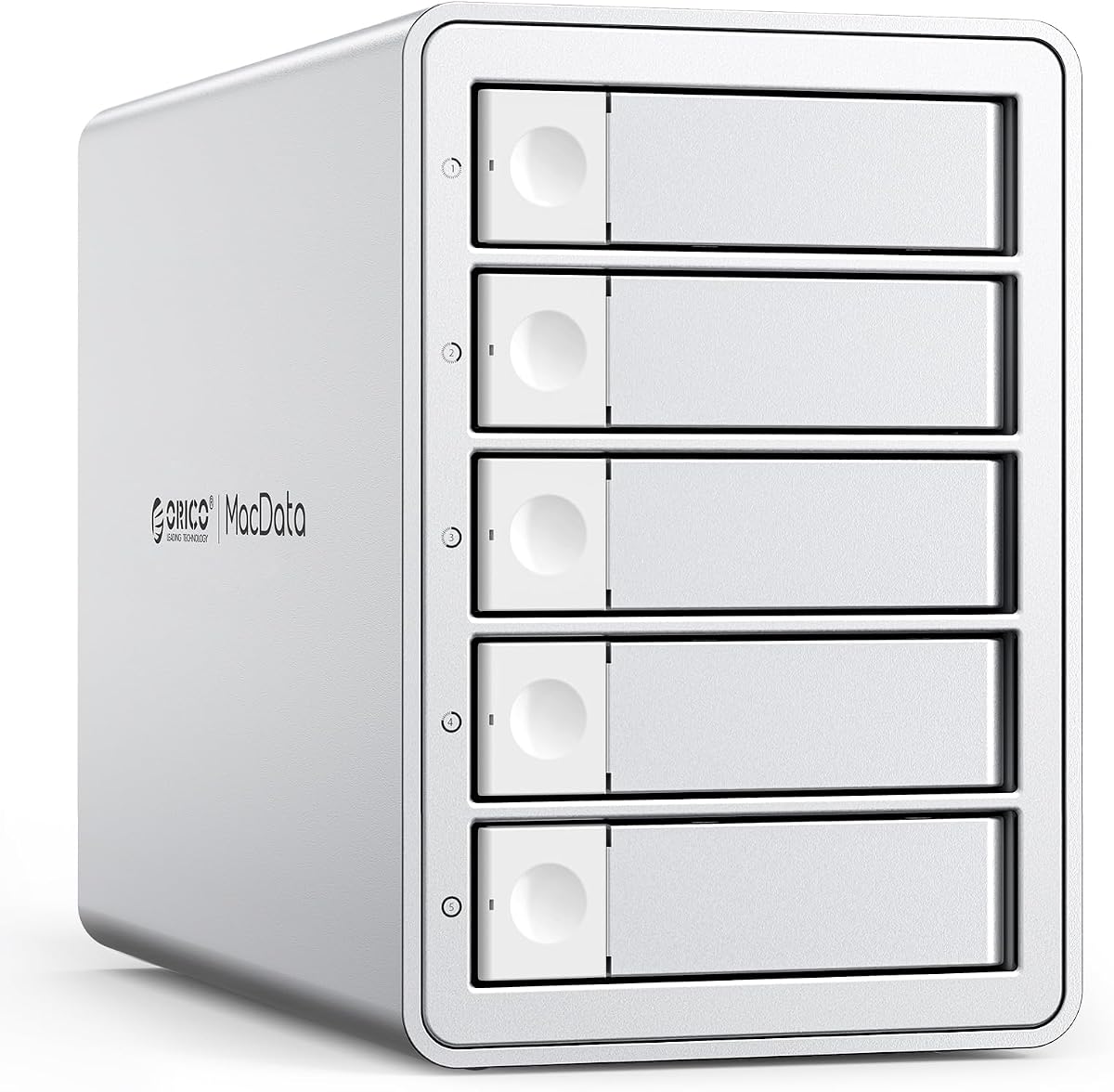
The ORICO 5 Bay earns high marks from users for its robust design and features. It supports multiple RAID modes offering flexibility for speed or data protection.
We may earn a commission when you buy through this link, at no additional cost to you.
A built-in 150W power supply eliminates external bricks keeping the workspace tidy. This is useful for studios where cable clutter can interfere with creative workflows.
The aluminum shell and 80mm fan keep drives cool during heavy loads like video editing. It supports both SSD and HDD for hybrid storage setups easily.
Ideal for creative professionals needing reliable access to large project files. The ease of use and hardware RAID options make it a practical choice.
Hardware controller supports RAID 0 1 3 5 10 JBOD and more.
Built-in 150W power ensures stable operation without external adapters.
We may earn a commission when you buy through this link, at no additional cost to you.
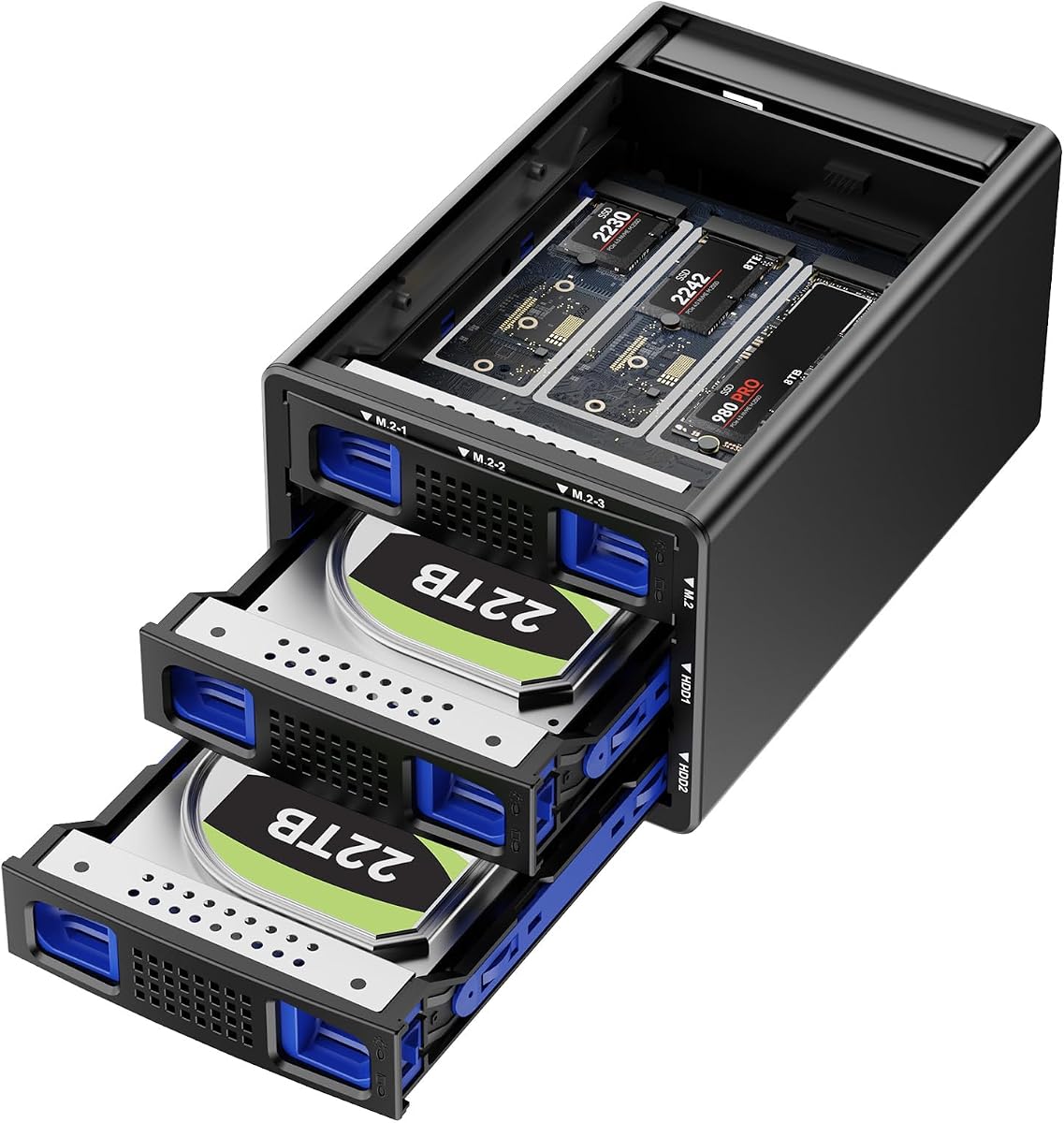
This hybrid enclosure offers a unique mix of traditional HDD storage and fast NVMe SSDs. It is perfect for users wanting speed for active projects and bulk capacity for archives.
We may earn a commission when you buy through this link, at no additional cost to you.
The USB 3.2 Gen 2 interface ensures fast data transfer for both types of drives. You can mix and match drive types for a tailored storage solution on one device.
Users should note the fan runs continuously which may be noisy in quiet rooms. RAID setup requires a reset press which might be confusing for beginners.
Great for power users managing both high-speed and high-capacity needs. It bridges the gap between traditional storage and modern flash performance effectively.
Combines two SATA bays with three M.2 NVMe slots for flexibility.
Utilizes advanced chip for optimized speeds across all drive types.
We may earn a commission when you buy through this link, at no additional cost to you.
The ORICO 4 Bay RAID delivers solid performance for users needing flexible storage protection. It supports eight RAID modes offering options from speed to redundancy or cloning.
We may earn a commission when you buy through this link, at no additional cost to you.
Built-in power and aluminum construction ensure stability and heat dissipation during use. The safety lock adds a layer of security to prevent accidental drive ejection.
With 5Gbps USB 3.0 it handles large file backups efficiently though not as fast as newer USB-C. It is a reliable solution for desktop backups needing redundancy.
Ideal for small businesses or home users protecting critical data locally. Its combination of RAID features and build quality makes it a strong contender.
Eight configuration modes including RAID 0 1 5 and clone options.
Independent safety locks prevent unexpected drive removal or loss.
We may earn a commission when you buy through this link, at no additional cost to you.
The OWC Mercury Elite Pro Quad is tailored for Mac users needing fast external storage. Its USB-C interface delivers up to 947MB/s speeds ideal for creative work.
We may earn a commission when you buy through this link, at no additional cost to you.
It supports both 2.5 and 3.5 inch drives giving flexibility in hardware choice. OWC is known for reliability and support in the Mac ecosystem specifically.
While the rating is slightly lower it offers a dedicated approach to drive management. The limited software means it relies on OS tools which may not suit everyone.
Best for Mac users prioritizing speed and brand trust. It provides a solid hardware platform for storage expansion in professional Apple setups.
Delivers up to 947MB/s for fast file transfers and access.
Comes with a one year limited warranty from OWC support.
We may earn a commission when you buy through this link, at no additional cost to you.
Selecting the right enclosure involves assessing connectivity speed drive compatibility and power efficiency. We break down the key factors to help you decide wisely.
USB 3.2 Gen 2 offers speeds up to 10Gbps which is ideal for large media files. Older USB 3.0 interfaces cap at 5Gbps and may be sufficient for standard backups. Ensure your computer has the correct ports to achieve advertised speeds.
Check the interface type before purchasing to match your system capabilities. USB-C is becoming standard and provides better durability and power delivery.
Most enclosures support 3.5 inch SATA drives but some also handle 2.5 inch SSDs or HDDs. Verify the maximum drive size supported per bay such as 22TB or 30TB limits. This affects your total storage potential significantly.
Choose a model that supports your current drives or future upgrades. Compatibility across drive sizes offers flexibility as your storage needs change.
JBOD mode keeps drives independent which is good for backups and simple access. Hardware RAID adds redundancy or speed but requires setup and may cost more. Decide if you need data protection or raw capacity.
For most personal uses JBOD or independent modes are simpler and less risky. RAID is better for professionals needing continuous data availability.
Active cooling fans are common in multi-bay enclosures to prevent overheating. Some models include silent fans or temperature control features. Noise can be an issue if the unit sits on a desk.
Look for enclosures with intelligent fan control or vibration dampening. Quiet operation is essential for home offices or quiet studio environments.
Built-in power supplies reduce cable clutter but may be heavier. External adapters are common in budget models but can be bulky. Ensure the power rating matches the number of drives you plan to use.
A stable power supply prevents drive crashes or corruption during operation. Built-in options often offer better stability for high-density setups.
Hot swap allows changing drives without shutting down the computer which is convenient. Tool-free trays make installation easier and faster for frequent access. Tray-less designs are quicker but offer less physical protection.
Consider how often you need to access internal drives for changes. Tool-free designs add value for users managing storage dynamically.
Aluminum enclosures dissipate heat better than plastic and look more professional. Steel options are durable but heavier and may rust over time. A sturdy build protects internal drives from physical damage.
Invest in quality materials if the unit will see heavy daily use. Build quality often correlates with longevity and reliability in storage hardware.
Most enclosures work with Windows Mac and Linux but check for specific requirements. Some RAID features may require drivers or software on certain systems. Ensure plug-and-play support if you avoid installing extra software.
Verify compatibility with your primary operating system before buying. Seamless integration reduces setup time and potential configuration issues.
Always insert drives fully and securely before powering on the enclosure to ensure proper detection. If using multiple drives connect the enclosure to a high-speed USB port for optimal performance.
Keep the enclosure in a well-ventilated area to allow airflow around cooling vents. Dust buildup can restrict airflow so gently clean the fans periodically with compressed air.
Avoid moving the enclosure while it is running to prevent drive damage. Power off drives safely through your operating system before disconnecting cables or removing hard drives.
JBOD means Just a Bunch of Disks and treats each drive as a separate volume. RAID combines drives for speed or data redundancy. JBOD offers more flexibility for individual drive access.
Yes most JBOD enclosures support both SATA SSDs and HDDs. Ensure the unit supports 2.5-inch drives if using SSDs. Performance benefits are significant with SSDs for faster access.
Many multi-bay units need external power due to higher drive consumption. Some smaller models draw power from USB but performance may vary. Always check power specs before use.
Copy files manually or use backup software to sync data to the drives. Since drives are independent you can clone one to another for redundancy. Regular backups ensure data safety.
Enclosures generate heat especially with multiple drives active. Ensure fans are working and vents are not blocked. If too hot consider improving airflow around the unit.
JBOD units are fixed bay counts and cannot expand physically. To grow storage add another enclosure or upgrade existing drives to larger capacities. Plan ahead for future needs.
RAID offers redundancy if a drive fails while JBOD does not. For backups JBOD works fine if you keep copies elsewhere. RAID adds protection but not a replacement for offsite backups.
Use the cable provided or a certified high-speed USB cable. Ensure your port matches the cable standard like USB-C 3.2 Gen 2. Poor cables limit speed even with capable hardware.
We explored ten top-rated models each offering unique strengths for different storage needs. From budget options to premium solutions there is something for every workflow and capacity requirement.
Prioritize speed and cooling if you work with large media files regularly. For simple backups look for ease of use and reliable connectivity across your devices.
Prices and availability change often so check current listings before you buy. We hope this guide helps you find the perfect storage expansion for your setup.