
SHILLEHTEK Universal Power Supply Module
4.6Editor score
Universal MB102 breadboard compatibility
Flexible 6.5V to 12V input
Simple plug-and-play design
This expert guide compares the top 12V breadboard power supply modules for makers, featuring ratings, key features, and compatibility details for prototyping
Choosing the right power source is critical for any electronics project. A reliable 12V breadboard power supply ensures your microcontrollers and sensors run smoothly without voltage drops or instability during testing phases.
We evaluated ten top-rated modules based on compatibility, output stability, and ease of use. Each entry offers unique features like dual channels, USB input support, and adjustable voltage options for diverse prototyping needs.
Every review highlights specific strengths and ideal use cases to help you decide. Please note that availability and pricing may fluctuate, so always verify current details before finalizing your purchase for your next build.
4.6Editor score

4.5Editor score

4.8Editor score
This side-by-side comparison highlights the core specifications of each top-rated module. Review output voltages, input options, and special features to find the perfect fit for your specific breadboard project requirements.




This 2-pack power module delivers exceptional value and flexibility for electronics enthusiasts. It supports both USB-C and traditional DC inputs, making it ideal for modern and legacy setups alike.
We may earn a commission when you buy through this link, at no additional cost to you.
Its independent channel control allows you to run different voltages on left and right rails simultaneously. This feature is crucial when prototyping mixed-voltage circuits like Arduino projects with sensors.
While highly versatile, users should note it relies on specific power sources like Type-C chargers. However, the inclusion of two units ensures you always have a backup available for busy workstations.
Buyers seeking a reliable, adaptable power source for prototyping will find this module an excellent investment. It balances functionality, safety features, and cost-effectiveness perfectly for most hobbyist needs.
Supports modern USB-C and classic DC jacks for convenient charging options.
Switch 3.3V and 5V rails independently for complex multi-component circuits.
We may earn a commission when you buy through this link, at no additional cost to you.
This 5-piece pack offers a budget-friendly solution for classrooms or large workshops. It works seamlessly with both 400-point and 830-point solderless breadboards, ensuring broad compatibility.
We may earn a commission when you buy through this link, at no additional cost to you.
Input flexibility allows DC or USB power sources, though the current output is capped at 700mA. This makes it suitable for small projects but less ideal for high-power devices.
The inclusion of 9V connectors adds unique versatility for battery-powered experiments. While output limits exist, the quantity provided ensures replacements are always on hand.
Ideal for educational settings or groups needing multiple units, this pack balances cost and utility. It provides a reliable entry point for beginners exploring breadboard power options.
Fits both 400 and 830-point solderless breadboards seamlessly.
Includes dedicated 9V battery connectors for portable prototyping.
We may earn a commission when you buy through this link, at no additional cost to you.
This kit provides a complete starting package for anyone new to electronics prototyping. It includes an 830-point breadboard, power module, and a dedicated 12V 1A adapter for immediate use.
We may earn a commission when you buy through this link, at no additional cost to you.
The MB-102 module supports standard 5V and 3.3V outputs, compatible with common boards like Arduino and Raspberry Pi. Colorful jumper wires simplify circuit connections for quick testing.
While it has a slightly lower average rating, the comprehensive nature makes it highly practical for students. It eliminates the need to source individual components separately.
Best for beginners needing everything in one box, this kit simplifies the setup process. It ensures you have all essential components to start building circuits right away.
Includes breadboard, power module, and adapter for immediate project setup.
Provides all necessary components to start prototyping without extra purchases.
We may earn a commission when you buy through this link, at no additional cost to you.
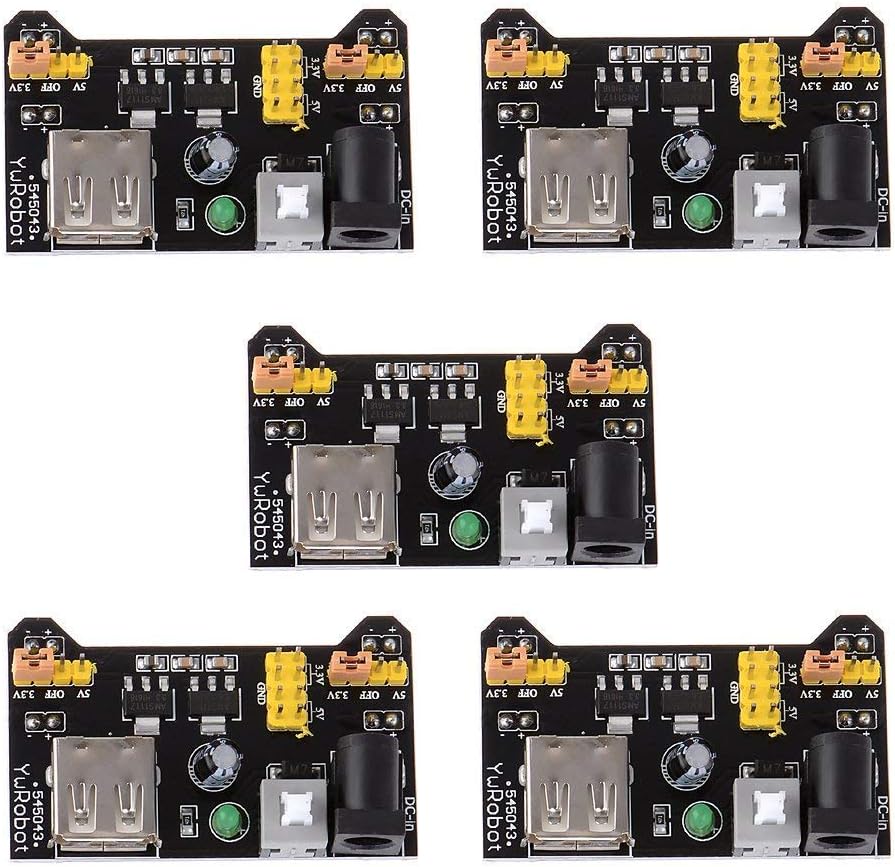
The HiLetgo module is a staple in prototyping communities for good reason. This 5-pack ensures you have backups ready for multiple projects or classroom environments.
We may earn a commission when you buy through this link, at no additional cost to you.
It supports standard 3.3V and 5V outputs via a simple input voltage range. The dual output pins make wiring connections straightforward without extra breakout boards.
While current output is limited, it handles most logic-level components effectively. Users appreciate its compact size which saves valuable space on crowded breadboards.
Reliable and affordable, this module fits well into standard DIY workflows. It is an excellent choice for those needing multiple units without breaking the budget.
Onboard dual pins simplify connection for standard prototyping setups.
Small design saves valuable tie-points on crowded breadboard layouts.
We may earn a commission when you buy through this link, at no additional cost to you.
This module stands out for combining high user satisfaction with budget-friendly pricing. It integrates seamlessly with MB102 breadboards and supports a wide input range for flexibility.
We may earn a commission when you buy through this link, at no additional cost to you.
Designed for Arduino and ESP32 projects, it offers stable 3.3V and 5V outputs via selectable jumpers. Its plug-and-play nature simplifies setup for users of all experience levels.
Although it comes as a single unit, the price point makes it easy to buy extras. It remains a top contender for cost-conscious makers seeking reliable performance.
Perfect for everyday prototyping tasks, this module delivers consistent power without fuss. Its high rating confirms its reliability for standard electronics projects.
Delivers high user ratings at a very affordable price point.
Seamlessly plugs into standard MB102 prototype breadboards without tools.
We may earn a commission when you buy through this link, at no additional cost to you.
This 5-pack offers a robust solution for educational environments needing multiple power units. Each module supports 3.3V and 5V outputs, making them versatile for diverse circuit needs.
We may earn a commission when you buy through this link, at no additional cost to you.
Features like self-locking switches and green LED indicators enhance usability significantly. The included 9V connectors add versatility for portable testing scenarios without mains power.
While output is fixed, it is sufficient for most learning and general-purpose electronics work. Bulk packaging ensures replacements are readily available for large student groups.
An excellent choice for teachers or workshop leaders, this set ensures everyone has power access. It balances affordability with practical features like switches and indicators.
Includes LED indicators and switches for intuitive classroom learning.
Five units ensure every student or team has a power module.
We may earn a commission when you buy through this link, at no additional cost to you.
This kit targets advanced users who enjoy building their own power modules. It integrates LM2596 technology to offer fixed outputs plus adjustable voltage options for custom needs.
We may earn a commission when you buy through this link, at no additional cost to you.
A built-in digital display helps verify voltage settings visually before connecting circuits. This feature reduces setup errors and builds confidence during complex electronic experimentation.
While requiring soldering skills, it teaches valuable electronics assembly techniques. It suits workshops where building knowledge is as important as the final power output.
Ideal for makers who want customization, this kit offers unique flexibility. The visual display adds a professional touch often missing in simpler pre-built modules.
Digital display shows real-time voltage levels for precise settings.
Offers custom voltage outputs beyond standard fixed levels.
We may earn a commission when you buy through this link, at no additional cost to you.
The BreadVolt module stands out by delivering higher current capabilities than standard versions. It offers 1.5A at 5V and 1A at 3.3V, supporting more demanding components like motors.
We may earn a commission when you buy through this link, at no additional cost to you.
Its two independent channels allow distinct voltage configurations for complex projects. Additionally, the built-in USB port provides extra convenience for direct device charging.
While it does not include a breadboard, its compact size fits perfectly into most setups. It is engineered for stability, ensuring smooth operation during intensive prototyping sessions.
Perfect for projects requiring more power, this module ensures your circuits run reliably. It bridges the gap between simple logic power and more robust operational needs.
Delivers up to 1.5A at 5V for power-hungry components.
Built-in USB output allows direct device charging or power access.
We may earn a commission when you buy through this link, at no additional cost to you.
This module represents the premium tier of breadboard power solutions with exceptional flexibility. It supports an input voltage range from 5V up to 40V, covering nearly all common adapters.
We may earn a commission when you buy through this link, at no additional cost to you.
In addition to fixed outputs like 3.3V and 12V, it offers adjustable voltage via a potentiometer. This precision is invaluable for testing components requiring specific voltage levels.
Although it does not plug directly into breadboard rails, it provides unmatched customization. The high rating confirms its stability and efficiency for professional or advanced hobbyist use.
Ideal for complex projects needing precise power tuning, this module offers superior control. It is the ultimate choice for users who value flexibility over simplicity.
Supports input from 5V to 40V for universal adapter compatibility.
Allows fine-tuned voltage precision for specialized circuit requirements.
We may earn a commission when you buy through this link, at no additional cost to you.
This universal adapter offers an exceptionally wide voltage range suitable for many device types. With output options from 3V up to 24V, it serves a broad spectrum of electronic projects.
We may earn a commission when you buy through this link, at no additional cost to you.
Its LCD screen displays real-time voltage, ensuring precise settings during use. Multiple DC tips and alligator clips make it adaptable for direct wiring into breadboards.
Built-in safety protections guard against over-voltage and short circuits. While it requires an adapter for breadboard rails, its versatility justifies the extra setup step.
Ideal for users needing one adapter for multiple devices, this supply is highly flexible. It provides reliable, adjustable power for both prototyping and general device testing.
LCD screen displays exact output voltage for accurate adjustments.
Includes multiple DC tips and alligator clips for various devices.
We may earn a commission when you buy through this link, at no additional cost to you.
Selecting the right power supply requires considering compatibility, voltage requirements, and ease of use for your specific prototyping needs.
Ensure the module supports the specific voltages your project requires. Most boards operate at 5V or 3.3V, so verify the output options before purchasing.
Look for modules with clear voltage selectors or jumpers to switch between outputs easily.
Check if the module accepts standard DC inputs or modern USB-C connections. Flexible input options allow you to use existing power banks or adapters.
Choose a module with input range that matches your available power sources for convenience.
Modules with independent channels let you power different sides of the breadboard at separate voltages. This is crucial for complex circuits mixing voltage levels.
Opt for models with individual switches to control each channel separately during testing.
Verify the maximum current the module can deliver. Standard modules provide around 700mA, but high-current projects may need options delivering up to 1.5A or more.
Always check specs to ensure the supply meets the demands of your connected components.
Look for built-in protections such as short-circuit and over-current safeguards. These features prevent damage to expensive microcontrollers and sensors during wiring errors.
Prioritize modules with reliable internal components that ensure stable operation over time.
Select units with clear indicators like LEDs or physical switches to manage power status easily. This helps prevent accidental power on or off while working.
Simple plug-and-play designs reduce setup time and minimize wiring complexity.
Consider the physical size of the module. Compact designs save space on crowded breadboards and are easier to transport for field work.
Smaller footprints ensure you retain maximum space for components on the breadboard.
Multi-pack bundles offer better value if you need multiple units for groups or projects. Ensure extras are available if your setup requires redundancy.
Buying packs can save money compared to purchasing individual modules separately.
Plug the module directly into the breadboard power rails ensuring secure connection. Verify correct polarity matches before applying power to prevent damage.
Set the voltage jumpers to your required output level and switch on the power. Monitor LED indicators to confirm the module is active before connecting your circuit.
Disconnect power whenever modifying the circuit to avoid short circuits. Store modules in a dry place and handle with care to protect internal components.
It provides stable and regulated voltage to components on a breadboard. This replaces the need for separate power sources for each device during prototyping.
Many modules support USB input, but check voltage requirements. USB-C offers higher power, while older USB ports may provide limited current.
It is sufficient for small components like sensors and logic chips. High-power devices like motors may require modules with higher current ratings.
Most fit standard 400 and 830-point boards securely. Check dimensions if using non-standard boards to ensure compatibility.
Look for certifications and built-in safety features like short-circuit protection. Trusted brands with good reviews usually ensure higher safety standards.
Fixed modules provide set voltages like 3.3V and 5V. Adjustable modules allow fine-tuning but may cost more and require additional components.
Check input connections and ensure voltage settings are correct. Replace the unit if it fails to power despite correct wiring and input sources.
Basic modules work for prototypes, but professional labs may prefer lab-grade sources. These are ideal for educational settings and hobbyist prototyping projects.
Your ideal module depends on specific project needs like current, voltage, and portability. Consider whether you need multiple units or advanced adjustable features for complex work.
Focus on reliability and safety features to protect your valuable electronics components. Choosing well-rated products ensures consistent performance during your testing phases.
Always verify current availability and compatibility before purchasing to avoid delays. Regularly update your tools to maintain an efficient and versatile prototyping setup.