
TempPro TempAir Indoor Hygrometer
4.6Editor score
Compact mini size
Face icon comfort indicator
3-way mounting options
This expert guide compares the top 10 greenhouse thermometers for accuracy, durability, and smart features to help you monitor your plant environment effectivel
Growing plants in a controlled environment requires precise monitoring of temperature and humidity levels. A reliable greenhouse thermometer ensures your plants thrive by alerting you to dangerous fluctuations before they cause damage. Choosing the right device can mean the difference between a bountiful harvest and lost crops.
We have evaluated ten top-rated thermometers based on accuracy, durability, connectivity features, and ease of use. Our comparison includes digital, analog, and smart options suitable for various greenhouse sizes and setups. Each product was assessed for its ability to withstand humid conditions and provide consistent readings.
Each pick in this guide highlights specific strengths such as Bluetooth connectivity, max-min tracking, or water resistance. Prices and availability can change frequently, so please verify the current details before purchasing. This overview aims to simplify your decision-making process for the best tool.
4.6Editor score

4.5Editor score

4.3Editor score
This table provides a side-by-side comparison of all ten selected thermometers to highlight their unique specifications and ideal use cases at a glance.


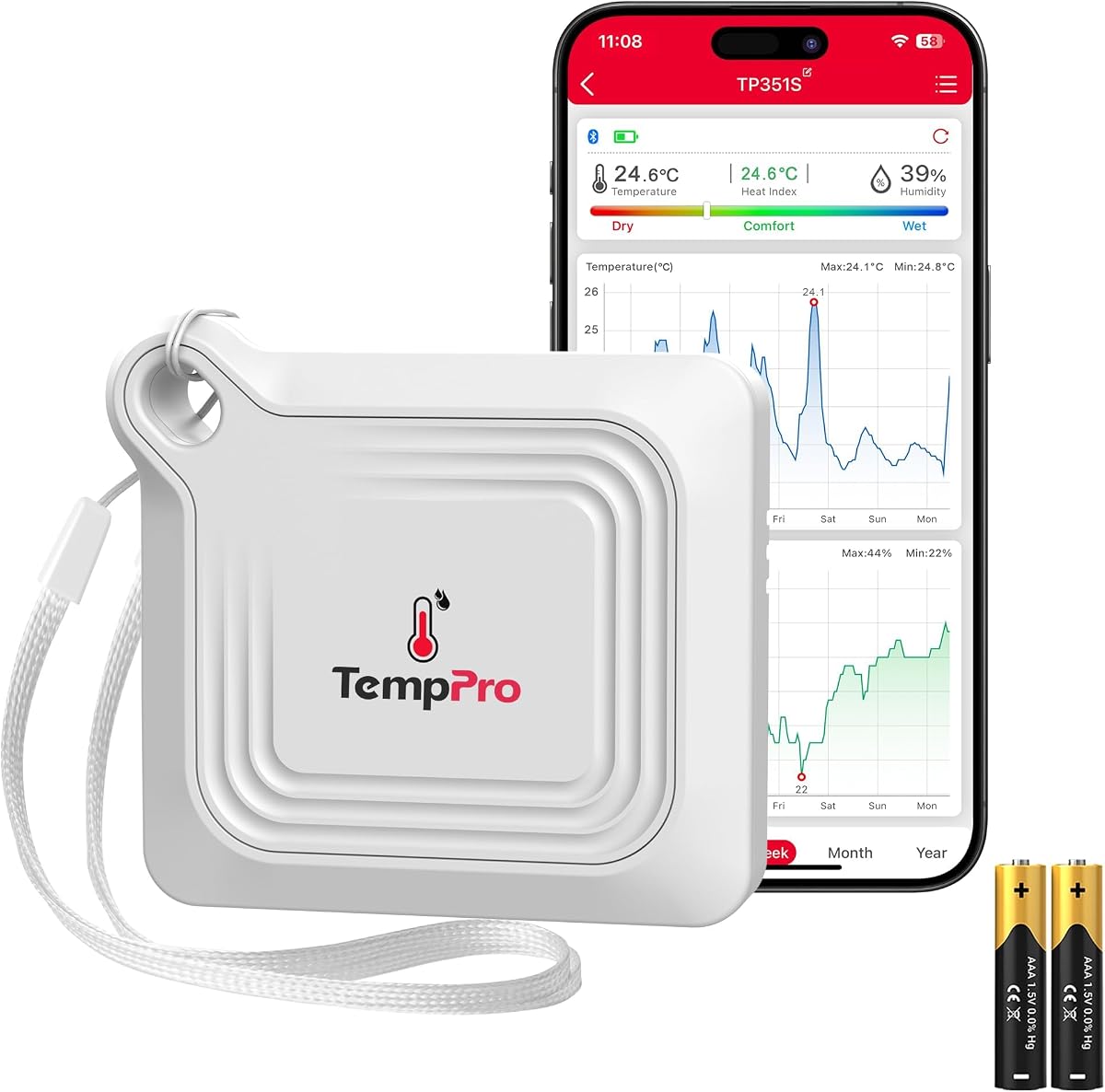


The TempPro TempAir Digital Hygrometer stands out as the top choice for serious greenhouse enthusiasts who need reliable, waterproof monitoring. With a 4.5 rating, it delivers precise temperature and humidity readings essential for maintaining optimal plant health in varying conditions.
We may earn a commission when you buy through this link, at no additional cost to you.
Its standout feature is the IPX5 waterproof design, ensuring it survives the high humidity typical of greenhouses without damage. The device refreshes every 10 seconds and offers a comfortable24-hour max/min record, helping you track dangerous temperature drops overnight.
While it lacks smart connectivity, the large bold digits and face icons for comfort make it incredibly easy to read at a glance. The magnetic back allows for secure attachment to metal shelving, ensuring it stays in place even in drafty environments.
This model is ideal for gardeners who prioritize accuracy and durability over remote access. If you need a sturdy, dependable device that can withstand steam and moisture while providing clear data, this is the perfect solution.
The IPX5 rating means water jets cannot penetrate the casing, making it safe for use near misters or humidifiers.
The max/min records help you spot night-time cold snaps that could damage sensitive plants before it is too late.
We may earn a commission when you buy through this link, at no additional cost to you.
This Bluetooth-enabled hygrometer is perfect for users who want to monitor their greenhouse from inside their home without walking out into the weather. Its high rating and advanced sensor technology ensure that you receive consistent data without needing to check manually.
We may earn a commission when you buy through this link, at no additional cost to you.
The 260ft range allows you to place the sensor deep inside a large greenhouse while checking the app from your couch. Unlike many competitors, the app does not require user registration, offering a seamless setup process that prioritizes your privacy.
Data storage is a major strength here, as the device keeps a history of two years, allowing you to analyze long-term climate trends. The backlit display ensures you can read the device clearly even in low-light areas of the greenhouse.
Choose this model if you value convenience and historical data analysis. It bridges the gap between simple digital monitors and complex smart systems, making it accessible for tech-savvy gardeners.
The app functions fully without asking for personal data or registration, making setup faster and more secure.
Two years of storage lets you compare seasonal changes and plan your planting schedules based on real data.
We may earn a commission when you buy through this link, at no additional cost to you.
For gardeners who prefer a straightforward tool that focuses solely on temperature extremes, this Max Min thermometer is a solid choice. It tracks the highest and lowest temperatures encountered, which is vital for ensuring your greenhouse does not get too hot or cold.
We may earn a commission when you buy through this link, at no additional cost to you.
The design is specifically tailored for greenhouse use, featuring a clear display that shows current and extreme temperatures side by side. It is easy to switch between Celsius and Fahrenheit, making it versatile for users in different regions.
While it does not track humidity, its simplicity is its strength for those who only need to guard against temperature shocks. The included battery ensures you can mount it immediately on a wall to get started monitoring your environment.
This unit is best for small gardens or specific zones where humidity is managed separately. If your primary concern is preventing frost or heatwaves, this device provides the essential data you need.
By tracking only min and max temps, the display remains uncluttered and easy to read quickly.
The wall mount design keeps the device stable and out of the way, ensuring it measures ambient air correctly.
We may earn a commission when you buy through this link, at no additional cost to you.
This compact device offers an incredible value for gardeners who need reliable readings without breaking the bank. Despite its budget-friendly price, it maintains a high accuracy of ±1°F, ensuring you are not compromising on data quality.
We may earn a commission when you buy through this link, at no additional cost to you.
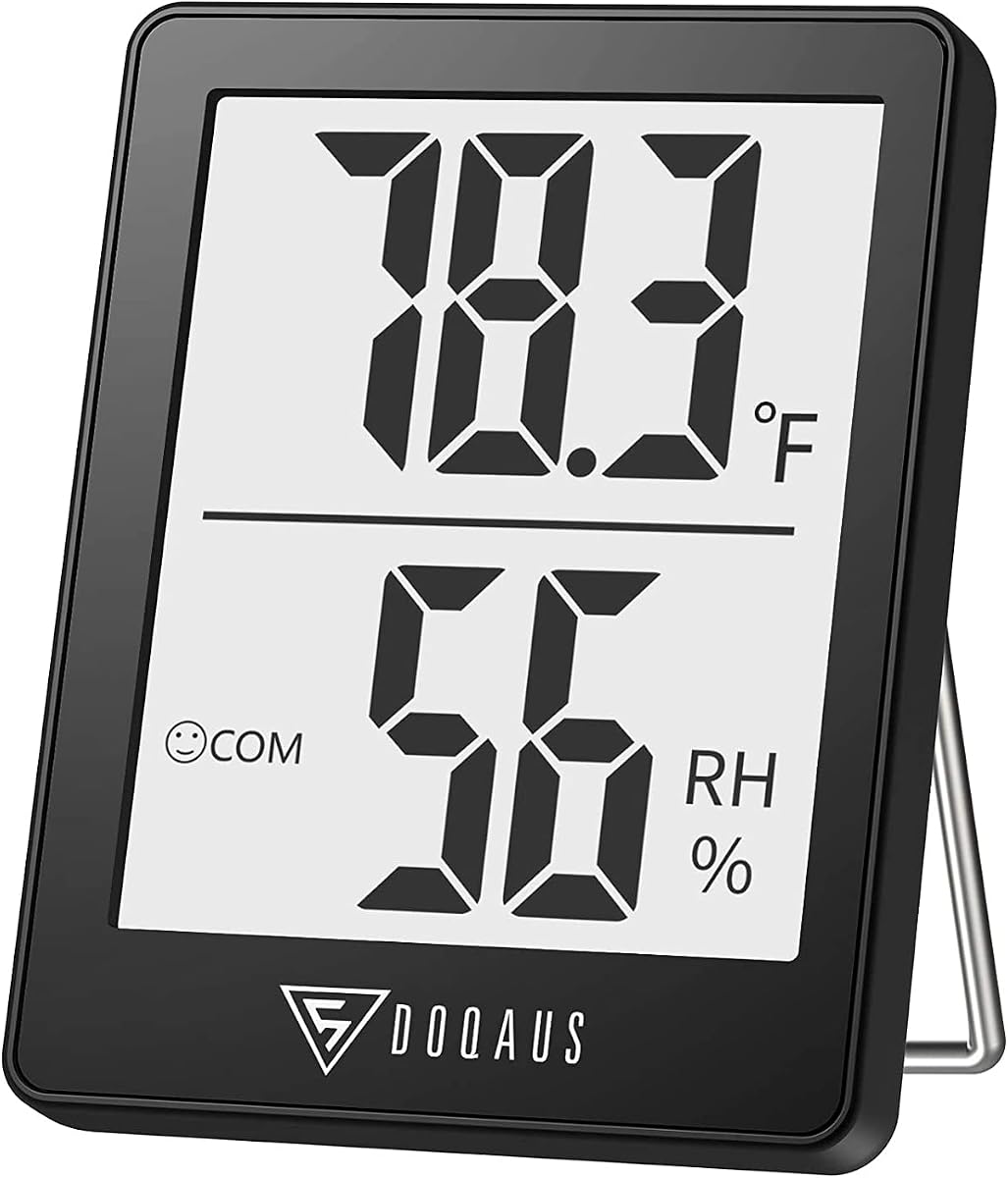
The 3-way mounting options allow you to place it anywhere, whether on a table, hanging from a hook, or attached to a metal surface. The face icons provide a quick visual check on the environment, which is helpful for quick inspections.
While it lacks advanced features like max-min tracking, its fast refresh rate ensures you see changes in conditions almost instantly. This makes it an excellent secondary thermometer for checking different corners of a larger greenhouse.
If you need multiple units to monitor different areas, this affordable model is the smartest choice. It balances cost and performance effectively, making it a favorite among budget-conscious gardeners.
The versatile mounting system allows you to position the sensor exactly where conditions need monitoring.
The face icons simplify complex humidity data into easy-to-understand visual cues for daily checks.
We may earn a commission when you buy through this link, at no additional cost to you.
Analog devices offer a unique charm and reliability, and this large dial thermometer is a prime example. It requires no batteries and operates mechanically, ensuring it continues to work even if electronic parts fail or power is interrupted.
We may earn a commission when you buy through this link, at no additional cost to you.
The stainless steel construction makes it robust against the elements, suitable for outdoor use or high humidity environments. The dial includes zone indications that give you a quick idea of the environment without needing to read exact numbers.
Keep in mind that analog sensors react slower than digital ones, so they are best for long-term trend monitoring rather than quick fluctuations. This makes them ideal for checking the overall stability of your greenhouse environment.
This model is perfect for those who prefer a no-frills, battery-free solution. If you want a device that will last for years with minimal maintenance, this mechanical design is a timeless choice.
Without the need for batteries, this device reduces waste and ensures continuous operation without maintenance.
The dial markings provide immediate visual feedback on whether the temperature is in a safe range.
We may earn a commission when you buy through this link, at no additional cost to you.
This model boasts an impressive 5-second refresh rate, which is faster than many competitors in its class. For plants that react quickly to changes in the air, this speed ensures you are always seeing the most up-to-date data available.
We may earn a commission when you buy through this link, at no additional cost to you.
The display is large and bold, making it easy to read from a distance or across the room. Its lightweight nature makes it easy to move between locations if you need to monitor different zones in your setup.
While the humidity accuracy is slightly lower than high-end digital sensors, it remains sufficient for general monitoring needs. The mounting options ensure you can place it wherever it is most useful without needing extra brackets.
Choose this thermometer if real-time updates are your priority. It provides a quick glance at changing conditions, helping you adjust ventilation or misting systems promptly.
A 5-second refresh rate captures fluctuations that slower devices might miss entirely.
The 2.3-inch screen ensures digits are visible even when viewed from an angle or distance.
We may earn a commission when you buy through this link, at no additional cost to you.
This device extends the range of connectivity significantly, allowing you to monitor from up to 260 feet away. This is particularly useful for large properties or commercial greenhouses where you might be in an office away from the plants.
We may earn a commission when you buy through this link, at no additional cost to you.
The app provides detailed charts and alerts, making it a powerful tool for data-driven gardening. You can set alerts to notify you if temperatures drop too low, adding a layer of protection for your plants.
Accuracy is also a highlight here, with a tolerance of ±0.5°F, which is tighter than most standard digital thermometers. This precision ensures that your environmental controls are based on exact readings rather than estimates.
Select this option if you need to cover a large area and want detailed historical data. It combines the reliability of a digital sensor with the convenience of modern smart technology.
The 260-foot range ensures connection even in large or multi-room greenhouse setups.
Notifications allow you to respond to dangerous climate changes even when you are not near the sensor.
We may earn a commission when you buy through this link, at no additional cost to you.
Buying a pack of three allows you to monitor multiple zones simultaneously, which is essential for large or complex greenhouses. You can place units in different corners to ensure that temperature and humidity are consistent throughout.
We may earn a commission when you buy through this link, at no additional cost to you.
Each unit features the same high accuracy and refresh rate as the single units, ensuring reliable data across your entire space. The face icons provide immediate feedback on comfort levels without needing to interpret numbers.
The value provided by this set is hard to beat, offering three devices for a price lower than buying two separately. It simplifies monitoring by giving you control over your entire environment with one purchase.
This pack is ideal for commercial growers or home gardeners with multiple grow areas. It ensures that no corner of your greenhouse goes unmonitored, protecting your investment in your plants.
Three units allow you to track gradients in temperature and humidity across large spaces.
Purchasing a bulk set reduces the cost per unit significantly compared to buying individually.
We may earn a commission when you buy through this link, at no additional cost to you.
This thermometer features a unique flip-out roof that adds an extra layer of protection against direct sunlight and rain. This design helps ensure that the readings reflect the ambient air temperature rather than direct solar heating.
We may earn a commission when you buy through this link, at no additional cost to you.
The max-min tracking helps you understand the daily range of your greenhouse, which is critical for managing heat stress or frost. The display is large and clear, ensuring you can read it easily even in bright outdoor conditions.
While it lacks humidity monitoring, the focus on temperature protection makes it a specialized tool for climate control. The included battery means it is ready to use right out of the box without extra purchases.
Choose this model if your greenhouse is exposed to the elements and you need a rugged temperature tracker. The protective roof is a small detail that makes a big difference in accuracy.
The flip-out roof prevents direct sun from skewing the temperature readings on the sensor.
Recording daily extremes helps you anticipate heating or cooling needs for your plants.
We may earn a commission when you buy through this link, at no additional cost to you.
Govee is known for smart home integration, and this thermometer continues that legacy with high-end sensor technology. The Swiss-made sensor provides exceptional accuracy, which is valuable for sensitive plants that need strict environmental control.
We may earn a commission when you buy through this link, at no additional cost to you.
The refresh rate is incredibly fast at just 2 seconds, offering near real-time insights into your environment. The app allows you to export data as CSV, enabling detailed analysis for those who track climate data extensively.
Instant alerts ensure you are immediately notified if conditions stray outside your safe range. This proactive approach helps prevent damage before it becomes visible to the naked eye.
This model is best for tech-savvy gardeners who demand precision and data export capabilities. If you want to analyze your climate data scientifically, this is the most advanced option available.
CSV export allows you to import data into spreadsheet software for detailed climate analysis.
Alerts notify you immediately of dangerous conditions so you can act before damage occurs.
We may earn a commission when you buy through this link, at no additional cost to you.
Choosing the right thermometer involves balancing accuracy, durability, and features based on your specific greenhouse needs.
Accuracy is the most critical factor because even small errors can lead to mismanaged environmental conditions. Look for devices with ±1°F or better temperature accuracy and ±3% RH or better humidity accuracy.
Always check if the sensor is calibrated and if the device offers consistent readings over time.
Greenhouses are humid environments that can damage electronics over time. Look for models with IPX5 or higher water resistance ratings to ensure they survive the moisture.
Robust construction like stainless steel or reinforced plastic will extend the life of the device.
Smart thermometers allow you to monitor conditions remotely and receive alerts. This is useful if you are away from the greenhouse for long periods.
Ensure the app is user-friendly and offers features like data logging and export for long-term tracking.
Max-min tracking helps you identify the highest and lowest temperatures your greenhouse reaches overnight. This is vital for preventing frost or heat stress.
Choose a device that retains these records even after a power reset or battery change.
The display should be large enough to read from a distance, especially if the device is mounted high or far away.
Backlit screens are beneficial for reading in low-light conditions, such as early mornings or evenings.
Flexible mounting options like magnets, stands, or wall hooks allow you to place the sensor where air circulation is best.
Avoid devices that only stand on flat surfaces if you have limited space or need to hang them.
Long battery life reduces the frequency of maintenance. Check if the device requires common batteries that are easy to replace.
Devices with auto-sleep modes or low-power Bluetooth can significantly extend battery life.
Consider the overall value rather than just the upfront cost. A slightly more expensive unit with better durability might save money in the long run.
Compare features like data storage and refresh rate to ensure you get the functionality you need for your budget.
Place the thermometer away from direct sunlight, heaters, or misters to ensure it reads the ambient air temperature accurately. Mounting it at plant level or halfway up the greenhouse provides the most relevant data for your crops.
Regularly check the device to ensure the display is readable and the battery is functioning. For digital models, resetting the max-min records weekly helps you track daily trends more effectively.
Clean the exterior with a soft, dry cloth to remove dust or condensation that could affect the sensor. If using an analog model, ensure the dial is not obstructed by debris and that the mechanism moves freely.
Humidity levels affect how plants transpire and absorb nutrients. High humidity can encourage mold and fungal diseases, while low humidity can stress plants and reduce growth. Monitoring both temperature and humidity helps you maintain a balanced environment.
Yes, analog thermometers are often made of stainless steel and mechanical parts that resist corrosion. However, they generally have lower accuracy compared to digital sensors and may be slower to react to rapid changes.
Ideally, you should check your thermometer at least once a day. If you have smart alerts, you can monitor it continuously. Frequent checks help you catch sudden drops or spikes that could harm your plants.
Mount it at the height of your plants, away from direct heat sources or cold drafts. Avoid placing it in corners where air circulation is poor, as this can give false readings about the overall greenhouse environment.
It means the power supply is running low and may not sustain accurate readings soon. Replace the battery promptly to ensure continuous monitoring and avoid losing data tracking capabilities.
Most smart Bluetooth thermometers work without WiFi because they connect directly to your phone. However, you will need your phone to be nearby to see the data. WiFi models allow remote access from anywhere.
Most tropical and vegetable plants thrive between 65°F and 75°F during the day. Night temperatures can be slightly lower, but ensure they do not drop below 50°F for most common crops to prevent cold damage.
To calibrate, place your thermometer in an ice water bath (32°F) or boiling water (212°F) and check the reading. If there is a discrepancy, check if your device has a calibration offset feature or adjust accordingly.
We have highlighted the TopPro TempAir Digital Hygrometer as the top pick for its waterproof design and accuracy. Other great options include the Govee Smart Bluetooth for remote monitoring and the DOQAUS for fast refresh rates.
Prioritize durability and accuracy above all else to ensure your investments in plants are protected. Consider your need for data tracking and connectivity before making your final decision.
Remember to check current prices and availability on Amazon for the most up-to-date deals. Happy gardening and may your greenhouse thrive with the right tools.