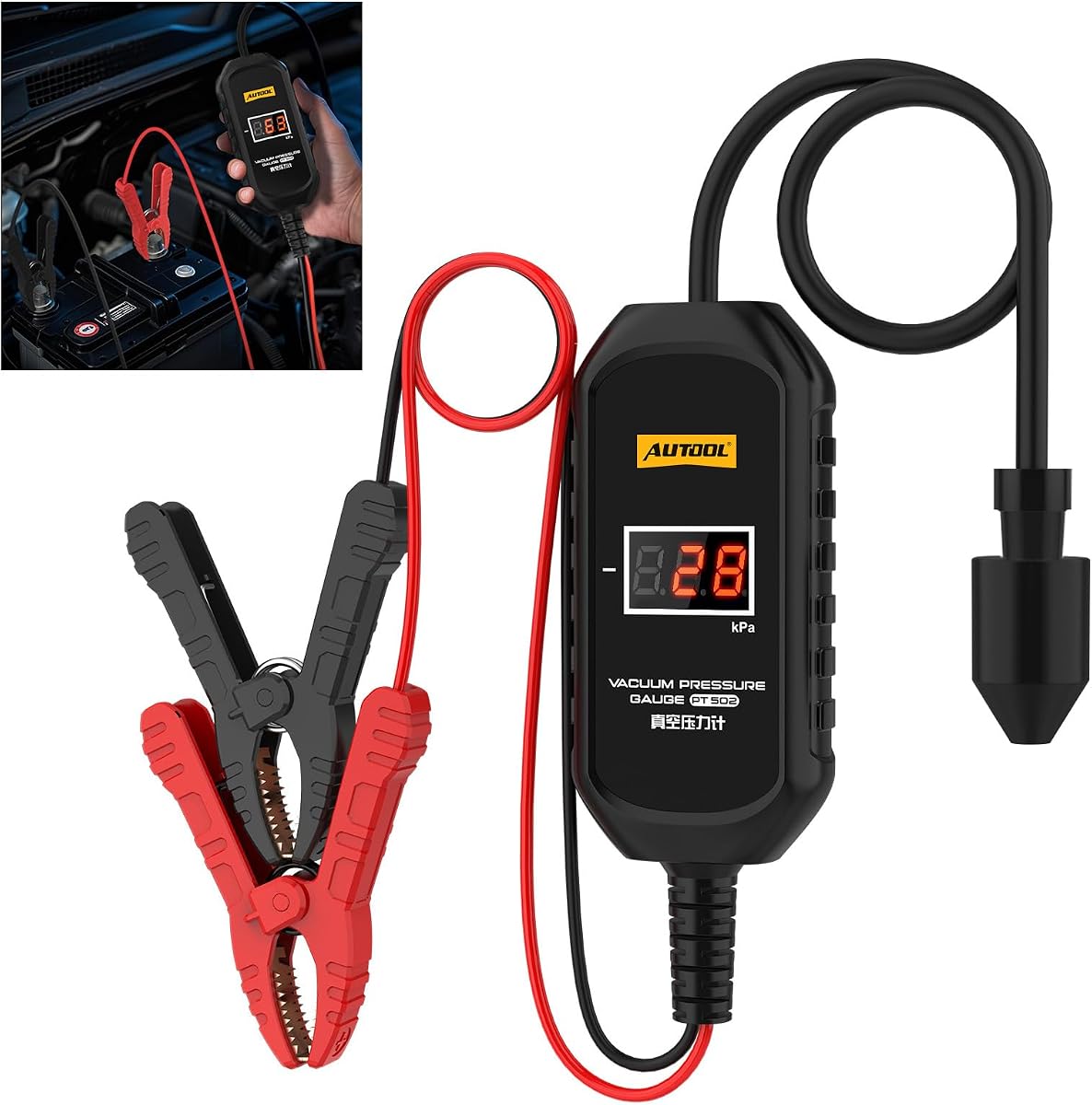
AUTOOL PT502 Digital Vacuum Pressure Gauge
4.4Editor score
12V car powered
Wide measuring range
Compact design
Selecting the right digital vacuum gauge is essential for HVAC technicians and automotive professionals who demand precision in their diagnostic workflows. A quality gauge ensures systems are free from moisture and non-condensable gases, preventing costly failures and extending equipment lifespan significantly.
We have carefully evaluated ten leading models based on accuracy, sensor technology, user interface, and durability. Our analysis includes both wired and wireless options, covering a range of price points and specialized features designed to meet diverse field requirements.
Each pick highlights specific strengths such as smart evacuation modes or wireless connectivity. Keep in mind that product availability and pricing fluctuate frequently, so always verify current details before making your final purchase decision today.
4.4Editor score

4.5Editor score

4.3Editor score
As an Amazon Associate we earn from qualifying purchases.
The following table provides a side-by-side comparison of all ten products evaluated in this guide. Review the key specifications and features to identify which model best aligns with your specific professional or hobbyist requirements.



The CPS VG200 stands out as a premier choice for professionals requiring certified accuracy. With a rating of 4.5 stars, it is trusted for its NIST calibration and robust design that withstands demanding field conditions effectively.
We may earn a commission when you buy through this link, at no additional cost to you.
Its automatic temperature compensation ensures readings remain consistent regardless of environmental shifts. The large 5-digit LCD display offers excellent visibility, while the included T-fitting and hook provide immediate utility upon unboxing.
While the price point is higher than entry-level alternatives, the investment pays off in reliability. The 400 PSI sensor protection prevents damage during accidental overpressure, a common risk in busy shop environments.
This gauge is ideal for HVAC technicians who prioritize precision and durability. If you need a tool that delivers consistent results every time without constant recalibration, this model is a top recommendation.
NIST standards ensure that your measurements are traceable and trustworthy for compliance purposes.
The padded case and high-pressure sensor protection extend the lifespan of the unit significantly.
We may earn a commission when you buy through this link, at no additional cost to you.
The Digital Vacuum Gauge Pro offers advanced diagnostic capabilities that go beyond simple pressure reading. It features specific modes for monitoring evacuation and detecting leaks, which can streamline the troubleshooting process significantly.
We may earn a commission when you buy through this link, at no additional cost to you.
Its ±0.2% FS accuracy is a strong selling point for precise work. The auto calibration function removes the need for manual adjustments at different altitudes, making it versatile for field use across various regions.
However, the rating suggests mixed user experiences with ease of use. The feature-rich interface might be overwhelming for casual users, and the build quality may not match premium competitors in terms of ruggedness.
This gauge is best suited for technicians who need detailed data on system integrity. If you require specific leak detection data without additional tools, this model provides a convenient all-in-one solution.
Monitoring water vapor saturation helps ensure moisture is removed, preventing future system issues.
The pressure differential display gives a clear indication of seal integrity instantly.
We may earn a commission when you buy through this link, at no additional cost to you.
The Super Stars Digital Micron Vacuum Gauge focuses on portability and essential functions for quick checks. Its Pirani sensor ensures fast readings, which is beneficial when time is critical during service calls.
We may earn a commission when you buy through this link, at no additional cost to you.
The built-in vacuum alarm helps technicians avoid over-evacuation. The backlit LCD ensures visibility in dark equipment cabinets, and the power-saving design helps extend battery life during long days.
Despite these functional benefits, the lower rating indicates potential durability concerns. Users should handle the unit with care as it may not withstand rough drop conditions as well as heavier models.
This unit works well for mobile technicians needing a lightweight option. If you prioritize speed and basic accuracy over heavy-duty construction, this gauge delivers value for the price.
The Pirani sensor technology allows for rapid stabilization of readings in the field.
Audible alerts let you set the gauge down and focus on the pump connection.
We may earn a commission when you buy through this link, at no additional cost to you.
The Pro HVAC Micron Vacuum Gauge is designed to handle a wide range of HVAC service tasks. With a 0-75,000 micron range, it can measure everything from atmospheric pressure to deep vacuum levels effectively.
We may earn a commission when you buy through this link, at no additional cost to you.
Its dual calibration system allows for both full-scale and zero-point adjustments, ensuring accuracy over time. The smart temperature compensation corrects for sensor drift, which is vital in fluctuating outdoor environments.
Users have noted that the unit can feel somewhat basic compared to higher-end digital models. The refresh rate is decent but not instantaneous, which might be noticeable during rapid pressure changes.
This gauge is suitable for general HVAC maintenance work. If you need a tool that covers the full spectrum of vacuum requirements without complex app features, this offers a solid middle ground.
Being able to adjust zero-point manually adds a layer of control for precise diagnostics.
The 1/4 inch SAE connector ensures compatibility with most standard hoses and tools.
We may earn a commission when you buy through this link, at no additional cost to you.
The Supco VG64 is tailored for HVAC professionals working with various refrigerant types. It supports A2L refrigerants, making it future-proof for evolving industry standards regarding flammability and environmental impact.
We may earn a commission when you buy through this link, at no additional cost to you.
Its sensor is designed to maintain accuracy even when exposed to oil residue. This feature reduces maintenance time, as the gauge does not require frequent cleaning to perform correctly.
The range is limited to 12,000 microns, which is sufficient for most evacuation tasks but not for deep vacuum leaks. This limitation is acceptable for standard service but might not suit specialized leak testing.
This model is a reliable choice for daily HVAC service. If you work with multiple refrigerant types and want a tool that stays clean longer, the Supco VG64 is a practical option.
Support for A2L ensures you are ready for the next generation of cooling systems.
Oil-resistant sensors save time on maintenance and keep your readings accurate.
We may earn a commission when you buy through this link, at no additional cost to you.
The Elitech VGW-Mini introduces wireless capabilities that allow for remote monitoring. This feature is useful for documenting data over long periods without needing to physically check the device constantly.
We may earn a commission when you buy through this link, at no additional cost to you.
The H2O status judgment compares ambient temperature to saturation temperature. This helps technicians understand the state of moisture in the system, which is critical for proper evacuation protocols.
While the app offers great potential, some users find the setup process involved. The oil film inside the head must be removed during connection, which is a specific step that can be easily overlooked.
This gauge is best for users who value data logging. If you need to prove evacuation times for clients or want to track trends over time, the wireless features provide significant utility.
Exporting data to Excel helps in creating professional reports for clients.
Visualizing water vapor state adds a layer of diagnostic depth to basic pressure reading.
We may earn a commission when you buy through this link, at no additional cost to you.
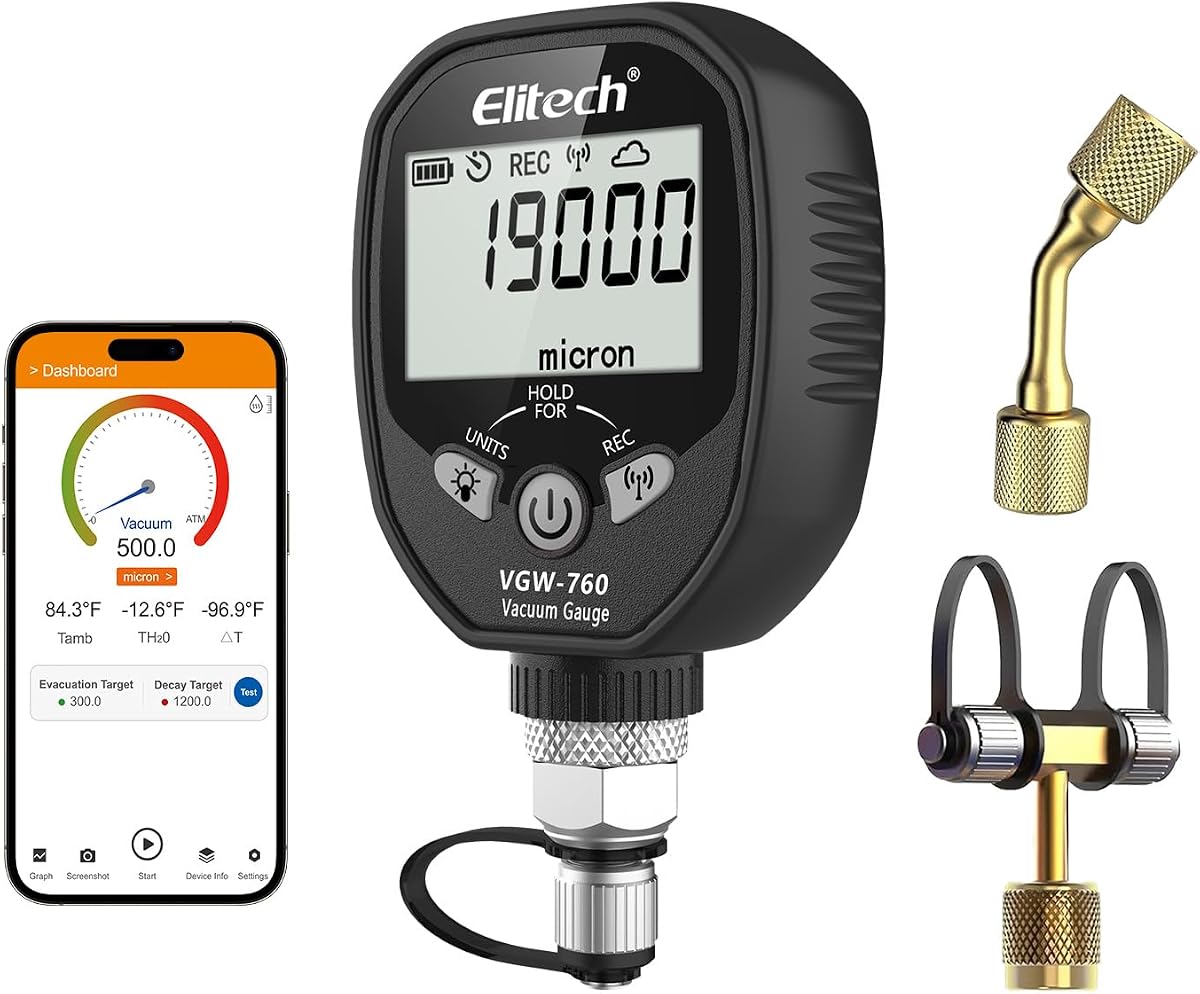
The Elitech VGW-760Pro offers a wide measurement range extending up to atmospheric pressure. This makes it versatile for testing leaks as well as deep vacuum, covering the full spectrum of HVAC diagnostics.
We may earn a commission when you buy through this link, at no additional cost to you.
It features the same H2O status judgment and app integration as the Mini model. The larger range allows for more detailed analysis of system conditions, which can be crucial for large-scale commercial units.
Users should be mindful of the oil film note during setup to ensure accurate readings. While the wireless features are powerful, they require a stable connection to function as intended during critical tasks.
This gauge is ideal for professionals needing full system visibility. If you require a single tool that can handle leak detection and evacuation verification with data logging, this is a strong candidate.
Measuring up to 760,000 microns allows you to test system integrity before pumping down.
Notifications ensure you are alerted to changes even when you are not looking at the screen.
We may earn a commission when you buy through this link, at no additional cost to you.
The testo 552i is a premium wireless probe designed for integration with other smart HVAC tools. Its single-digit resolution provides confidence that evacuation targets are truly reached and verified during service.
We may earn a commission when you buy through this link, at no additional cost to you.
The 45-degree angle design allows for stress-free installation at service ports. This ergonomic detail saves time and reduces strain when working in tight spaces or awkward positions on complex equipment.
While the price is higher than generic alternatives, the build quality and app ecosystem justify the cost for professionals. The IP54 rating ensures that the device can handle dust and water exposure in harsh conditions.
This probe is perfect for modern service teams using digital workflows. If you value seamless connectivity and high-resolution data for documentation, this model represents the top tier of vacuum measurement.
Single-digit resolution allows for accurate verification of deep vacuum requirements.
The angled probe reduces the need to awkwardly position hoses during connections.
We may earn a commission when you buy through this link, at no additional cost to you.
The AUTOOL PT502 is an affordable option tailored specifically for automotive vacuum diagnostics. Its 12V power supply means it draws directly from the car, reducing the need for batteries in the field.
We may earn a commission when you buy through this link, at no additional cost to you.
The gauge supports a range from -101 kPa to 0 kPa, which is ideal for engine intake and exhaust testing. Temperature compensation maintains stable readings, which is critical for accurate engine diagnostics.
It lacks the micron range found in HVAC models, making it unsuitable for refrigerant systems. However, for mechanical diagnostics and leak testing, it provides excellent value and functionality for the cost.
This tool is perfect for automotive technicians or DIY enthusiasts. If you need a reliable way to check engine intake systems without spending much, this is a highly practical choice.
Direct car power prevents battery failure during critical diagnostic sessions.
Designed for intake and exhaust systems, it fills a niche that HVAC gauges do not.
We may earn a commission when you buy through this link, at no additional cost to you.
The Digital Vacuum Gauge with 11 Units stands out for its high user satisfaction rating. It offers broad unit selection, allowing technicians to work in preferred measurement systems without conversion effort.
We may earn a commission when you buy through this link, at no additional cost to you.
Its Pirani sensor ensures accurate micro-pressure detection for HVAC systems. The built-in buzzer provides visual and sound alerts, which helps in setting and maintaining target vacuum levels during operations.
The package includes a tool bag and necessary connectors, offering a complete solution for immediate use. However, some users may find the brand less familiar compared to established industry names.
This gauge is great for those seeking variety and ease of use. If you need a flexible tool that comes ready to work and has proven reliability based on ratings, it is worth considering.
Supporting 11 units eliminates the need for conversion charts during international work.
Periodic buzzer prompts help keep you informed without staring at the screen constantly.
We may earn a commission when you buy through this link, at no additional cost to you.
Choosing the right digital vacuum gauge depends on your specific application, whether HVAC automotive, or industrial. Several critical factors influence performance and long-term value.
Consider the full range of pressure your gauge can measure. Deep vacuum applications require gauges that can read lower micron levels, while automotive needs may focus on atmospheric ranges. Ensure the device covers the limits required for your systems.
Always verify that the gauge can read at least to the lowest pressure you expect to encounter during evacuation or diagnostic testing to avoid incomplete data.
Most professional gauges use Pirani sensors for their balance of speed and accuracy. These sensors are often resistant to oil residue, which is common in refrigeration systems. Better sensors maintain accuracy over time with less cleaning.
Look for sensors that are rated for high overpressure to protect the device from accidental damage during setup or testing procedures.
Ambient temperature changes can cause sensor drift. Gauges with automatic temperature compensation adjust readings in real time to counteract these environmental effects. This feature is critical for maintaining accuracy in field conditions.
Ensure the device offers auto-compensation rather than manual adjustment to save time and prevent user error during quick service calls.
A clear display with backlighting is essential for working in dark equipment cabinets. The interface should allow for quick unit switching and easy navigation of menus. Large screens improve readability for all technicians.
Check that the display supports the units you use most frequently to avoid confusion and conversion steps while on the job.
Wireless gauges allow for remote monitoring and data logging via smartphone apps. This connectivity can streamline documentation and reporting for compliance or client proof. Bluetooth allows integration with digital manifolds.
Decide if you need advanced data export or just basic readings. Simple gauges are often more robust and easier to use if advanced connectivity is not strictly required for your workflow.
Tools used in the field face rough handling and exposure to dust. Look for gauges with robust housing and protection ratings like IP54. Durable materials extend the lifespan of the tool in demanding environments.
Check if the package includes a padded case or carrying bag to protect the device when transported in a service vehicle.
Professional work often requires verified accuracy. Gauges with dual calibration or zero-point adjustment allow you to ensure precision regularly. This is especially important for leak testing where small errors matter.
Opt for models that maintain calibration over time to reduce the need for frequent factory servicing and ensure consistent results.
Prices vary significantly based on features and brand reputation. Determine if you need advanced smart features or just reliable readings. Sometimes simpler tools provide better long-term value due to lower complexity and maintenance needs.
Consider the total cost of ownership including accessories and potential battery replacements when comparing different models across the market.
Proper connection is the first step to accurate readings. Ensure your gauge is connected to the vacuum port using clean, leak-free hoses. A good seal is essential for reliable data. Check all fittings before starting any test to avoid false readings. Secure the hose connections tightly to prevent air ingress that skews the results.
Allow the gauge to acclimate to the environment before use. Temperature compensation works best when the sensor has stabilized. Wait a few minutes after placing the gauge to get steady readings. This step helps to reduce initial drift and ensures that your data reflects real conditions. Avoid direct sunlight or extreme heat sources.
Clean and store the gauge properly after each job. Remove any oil or debris from the sensor port with a clean cloth. Keep the device in a protective case to avoid physical damage during transport. This maintenance practice will help preserve sensor accuracy and functionality over many years of service.
A vacuum gauge typically measures pressure in general units like PSI or inches of Mercury. A micron gauge focuses on extremely low pressure levels measured in microns to assess deep vacuum quality. Both are useful but micron gauges are specific for HVAC evacuation verification. Micron gauges offer finer detail for drying refrigeration systems. Standard vacuum gauges are better for high-pressure leak checks.
Temperature compensation ensures that readings remain accurate despite changes in ambient temperature. Without it, sensor drift can occur leading to false pressure data. This feature is critical when working outdoors or in varying climates. It saves time by removing the need for manual recalibration. Consistent readings help in reliable diagnostic decisions.
Automotive engines require gauges that measure negative intake pressure in kPa or inches of Mercury. Standard HVAC micron gauges focus on deep vacuum and may not cover the full automotive range. Look for tools labeled for automotive diagnostics. Some multi-use gauges support both refrigerant and engine ranges. Always check the measurement limits before purchase.
Professional standards recommend annual calibration for tools used in critical work. Daily zero-point checks help catch drift early before it impacts results. If you drop the gauge or suspect errors recalibrate it immediately. Many models allow user calibration. This ensures your data remains trustworthy for client reports.
Wireless gauges offer convenience and data logging capabilities. However wired gauges are often more durable and require no batteries. Choose based on your workflow needs. If documentation is key go for wireless. If robustness is priority pick wired. Both types can deliver accurate readings when used correctly.
Select units based on your industry standards or client requirements. HVAC technicians often use microns or Torr for evacuation. Automotive pros prefer kPa or inches of Mercury. Most gauges allow easy switching between multiple units. Set it once to avoid conversion errors during service. Consistency is key for accurate records.
Use clean hoses and avoid connecting directly to oil-filled ports. Some gauges have oil-resistant sensors designed for refrigerant environments. Wipe the sensor tip gently after use. Remove oil film if provided with the kit. Regular cleaning preserves accuracy and extends the sensor life significantly.
Higher price often reflects better build quality and advanced features. But a mid-range model might be enough for your needs. Focus on accuracy and durability rather than brand name. Consider if you need smart features or just readings. Good value comes from matching the tool to your specific tasks.
Choosing the right digital vacuum gauge depends on your specific needs and work environment. The CPS VG200 remains a top pick for accuracy and reliability. For budget conscious buyers the AUTOOL PT502 offers great value in automotive settings. Advanced users may prefer the wireless connectivity of the testo 552i.
Prioritize features like automatic temperature compensation and robust sensor technology. These elements ensure consistent results regardless of conditions. Durability is also key for tools that face daily use. Investing in a reliable unit saves time and money over its lifespan.
Always check current pricing and availability as these details change frequently. We recommend comparing multiple models to find the best fit for your budget and tasks. Use this guide to narrow down options that meet your technical requirements effectively.